































While official data points to declining poverty, the lived reality of economic class is often measured in more intimate terms—from the type of work one does to the ability to save for the future. These indicators paint a nuanced picture of social standing, relevant from Jakarta’s urban centers to Bali’s tourist-driven economy.
DENPASAR, Indonesia — As President Prabowo Subianto recently highlighted declining extreme poverty at the World Economic Forum, a more complex conversation about economic class and well-being continues across Indonesian society. Beyond official statistics, social scientists and economists often identify five tangible markers that delineate the boundaries between the lower and middle classes—a framework that resonates deeply in the context of Bali’s unique socio-economic landscape.
These indicators, relating to housing, work, financial security, lifestyle, and education, offer a lens through which to understand the daily realities and constraints faced by different segments of the population, including the island’s large informal workforce and service industry employees.
1. Housing: The Foundation of Security
The nature and location of one’s home serve as the most visible indicator of economic standing. The ability to afford a comfortable, secure residence in a decent neighborhood is a primary threshold. In Bali, this contrast is stark: from the villa compounds of expatriates and affluent locals to the densely packed family compounds (banjar) where tourism workers often live, housing remains a primary and often burdensome expense.
2. Work: The Nature of Livelihood
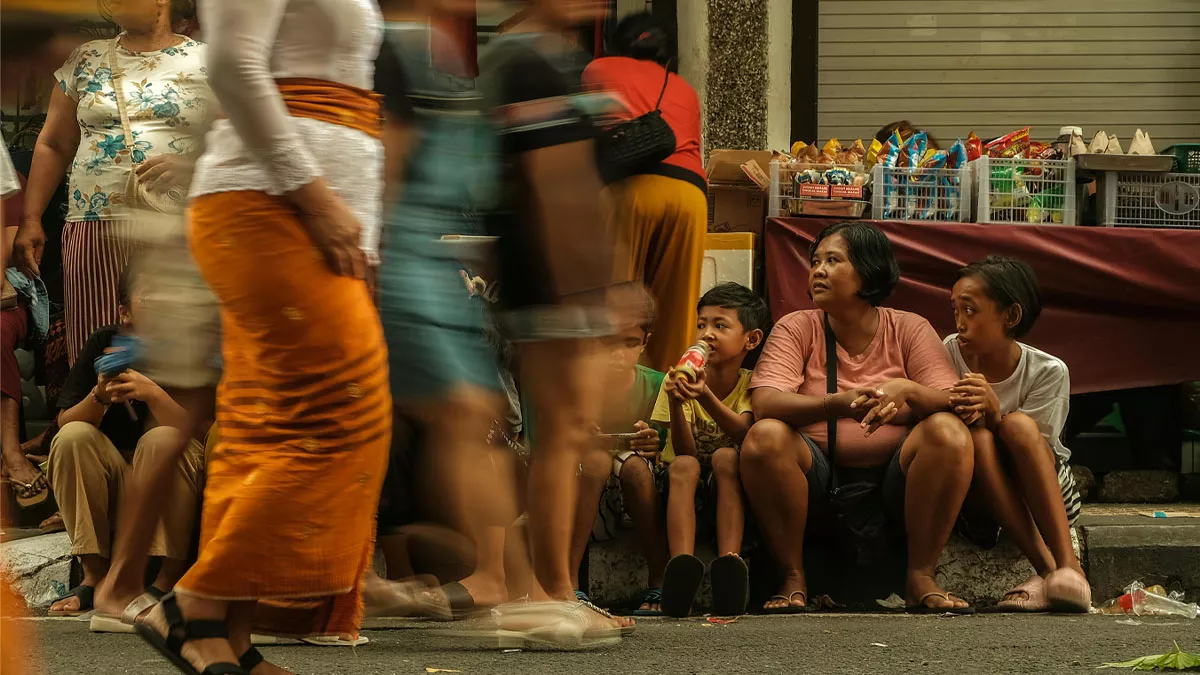
Employment type is a powerful class signifier. Jobs in the vast informal sector—street vendors, motorcycle taxi drivers (ojek), casual construction laborers, and many hospitality staff—typically offer low wages, no benefits, and little job security, placing workers firmly in the lower economic strata. As career expert Nathan Brunner notes, managerial or specialist roles are hallmarks of the middle class. In Bali, a hotel manager or a certified dive instructor occupies a different economic plane than the cleaner or pool attendant at the same resort, despite both being essential to the tourism machine.
3. Savings and Investment: The Buffer Against Uncertainty
The capacity to save and invest is perhaps the most critical differentiator. For the working class, income is often fully consumed by daily needs, leaving little to no buffer for emergencies, let alone long-term wealth building. A lack of a retirement plan or substantive savings is a defining characteristic of economic precarity. For Bali’s many gig-economy workers, an accident or a tourism low season can mean immediate financial crisis.
4. Lifestyle: The Freedom of Discretion
The ability to enjoy small pleasures without severe financial strain—an annual holiday, a meal at a restaurant, or replacing a broken appliance without panic—signifies a crucial shift from subsistence to stability. In Bali, this might mean a local family being able to afford a trip to a water park or dining out, luxuries that are out of reach for those whose entire budget is allocated to absolute necessities.
5. Education: The Pathway and The Barrier
Educational attainment remains a strong predictor of economic mobility. A university degree often, though not always, opens doors to higher-paying, more stable careers. Systemic barriers, including cost and access, frequently prevent individuals from lower-income backgrounds from pursuing higher education. In Bali, a young person’s choice between entering the tourism workforce immediately after high school or pursuing a university degree can set two profoundly different life trajectories.
A Bali-Specific Lens
For Bali’s global community of expatriates and long-term visitors, understanding these markers fosters a deeper awareness of the island’s social fabric. The server at a favourite café, the driver for the day, and the artisan in the market each navigate these economic realities daily.
This framework challenges simplistic narratives of “poverty” versus “wealth,” revealing instead a gradient of security, opportunity, and vulnerability. It underscores that true development is not just about raising incomes but about expanding access to secure housing, dignified work, financial resilience, and quality education—a goal as relevant for Indonesia’s national agenda as it is for the future of its most famous island.