



































DENPASAR, Bali — The forced removal of 50-year-old New Zealander Andrew Joseph McLean from Bali on the evening of Friday, January 30, 2026, closed a four-month legal and administrative drama. His deportation from I Gusti Ngurah Rai International Airport, under police escort, followed a definitive court ruling and served as a stark demonstration of Indonesia’s stringent immigration protocols when foreign residents become entangled with the law.
The Denpasar District Court had found McLean guilty of minor assault, sentencing him to 20 days’ imprisonment—a penalty rendered academic by his immediate expulsion from the country. This final act untangled a complex web that began with a restaurant dispute and was compounded by separate criminal allegations.
A Dispute Unravels a Life in Bali
Official accounts from the Denpasar Immigration Detention Center (Rudenim) trace the sequence to September 2025 at a Ubud restaurant. A conflict over an unpaid bill escalated into a physical altercation. McLean, reportedly claiming his ATM card was in the possession of his Indonesian partner, N.L.S., was eventually subdued by a combined team of Ubud police, local Pecalang security, and immigration officers.
The immigration response was immediate and severe. His Limited Stay Permit (ITAS), otherwise valid until July 2026, was revoked. By September 17, he was detained at the Denpasar Rudenim.
This detention intersected with a prior criminal complaint. In August 2025, N.L.S. had reported McLean to Badung Police for alleged assault, leading authorities to request a temporary hold on his deportation. While McLean’s legal team cited a bipolar disorder diagnosis requiring consideration, the judicial process moved forward, culminating in a final court verdict on January 28, 2026.
The Legal Mechanism for Removal
With the criminal case resolved, Badung Police recommended deportation to the Bali Regional Immigration Office, citing the totality of McLean’s conduct. This triggered Administrative Immigration Action under Article 75 of Indonesia’s Immigration Law.
“The recommendation and the inkracht [final and binding] court decision were the basis for the deportation,” stated Teguh Mentalyadi, Head of the Denpasar Immigration Detention Center. The enforcement included placing McLean on Indonesia’s immigration blacklist, barring his re-entry for a determined period.
A Lawyer’s Acknowledgement
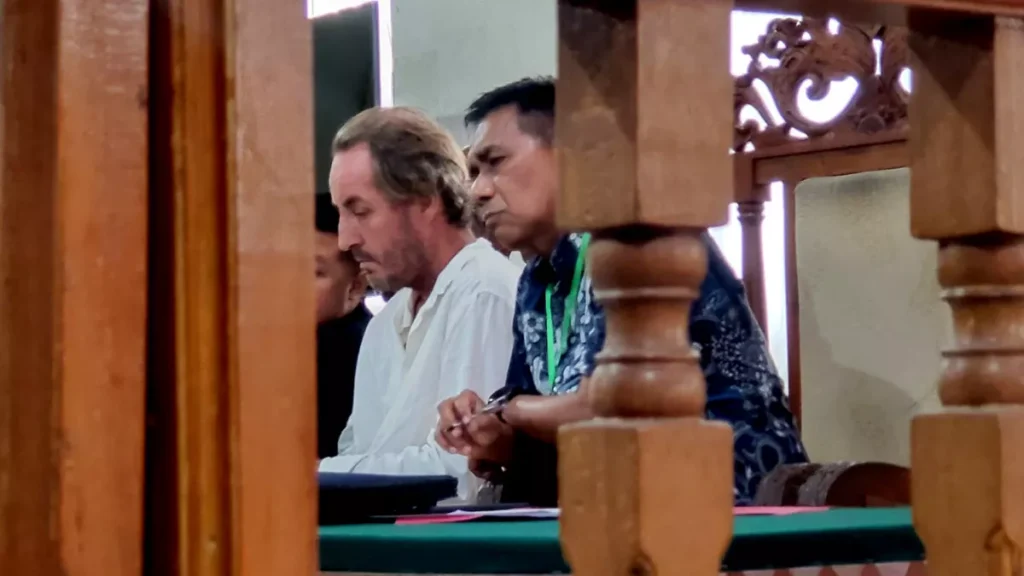
Max Widie S.H., McLean’s legal representative, acknowledged the conclusion of the protracted process. “I extend my thanks to the Immigration authorities for executing their authority in deporting our client, Andrew Joseph McLean, to New Zealand,” Widie stated. He also thanked the press “who have followed this case to ensure it proceeded correctly through the Denpasar District Court.”
A Concluding Lesson for the International Community
For Bali’s expatriate and long-term visitor community, McLean’s case is a sobering study in consequences. It highlights how a single public incident can trigger an inflexible sequence of legal and administrative procedures, where immigration violations are addressed with firm and often irreversible measures.
The episode reiterates a fundamental principle of residency in Indonesia: it is a conditional privilege. When that privilege is judged to have been compromised by actions against public order, the mechanisms for its termination are swift, systematic, and allow little recourse once set in motion.