

































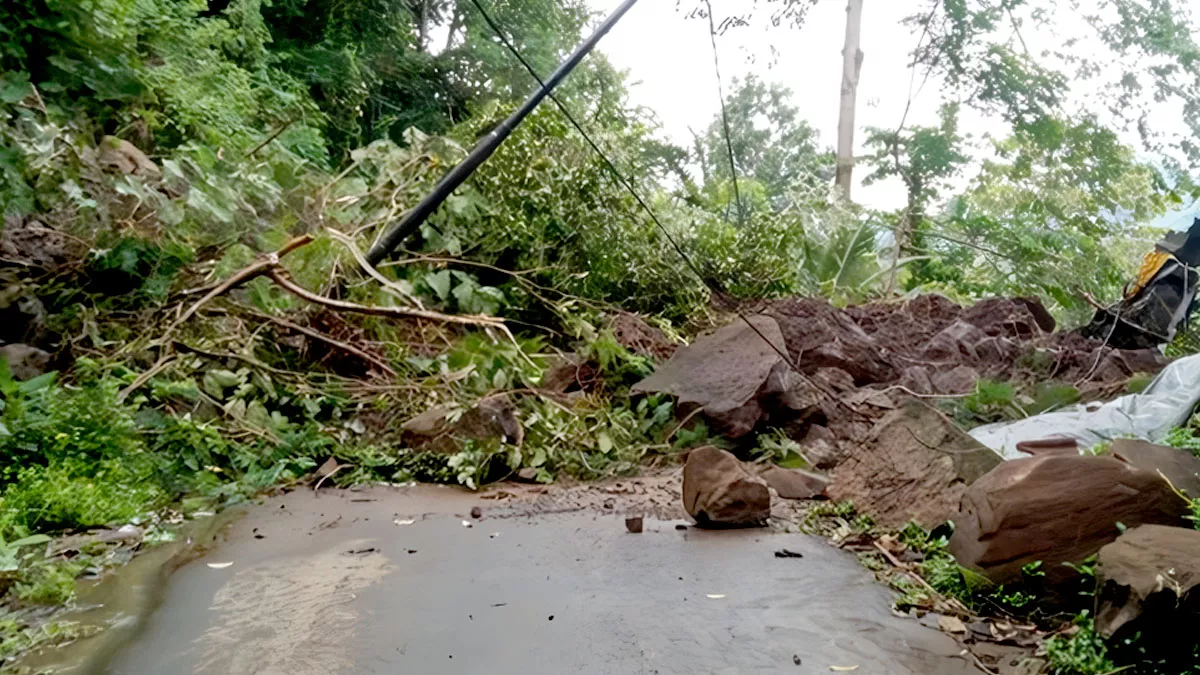
Emergency crews respond to multiple incidents in Karangasem, highlighting the island’s vulnerability to extreme weather during the peak monsoon.
KARANGASEM, Bali — Eastern Bali bore the brunt of severe monsoon rains overnight, with authorities reporting a series of landslides, fallen trees, and localised flooding across the Karangasem regency. The intense downpour, which began Thursday evening and continued into early Friday, triggered at least 13 separate incidents, disrupting road access and injuring at least one person.
The worst of the landslides occurred along a road in Banjar Batu Gede, Duda Timur village, within the Selat district. Preliminary reports from the Karangasem Regional Disaster Management Agency (BPBD) indicate four separate points where earth and debris slid onto the roadway, completely blocking vehicle passage. Public works crews have been mobilised to clear the routes.
“We have coordinated with the Public Works Department to jointly handle the situation so that road access can be reopened,” said Ida Bagus Ketut Arimbawa, Head of the Karangasem BPBD. Flooding was also reported in Antiga Kelod village, Manggis district, where water inundated several homes and streets before receding as the rain subsided.
The Human and Infrastructural Toll
The storms also brought danger from above, with multiple reports of fallen trees across the region. One motorcycle rider was injured by a falling tree and is receiving intensive medical care, authorities confirmed.
The cluster of incidents serves as a stark annual reminder of Bali’s geographical and climatic duality. While the southern tourist hubs face challenges with ocean-borne trash during the west monsoon, the island’s eastern and northern slopes—with their steep volcanic topography—are acutely susceptible to erosion and flash flooding during periods of intense rainfall.
For residents and travelers in these areas, the events underscore the very real, if seasonal, risks. Authorities have issued renewed calls for caution. “We urge the public to always be vigilant when planning activities outside or even inside the home,” Arimbawa stated, expressing hope that the initial count of 13 disasters would not rise further.
For Bali’s broader community, including those in the drier south, the news from Karangasem is a sobering check. It illustrates that the island’s famous beauty is matched by its vulnerability to natural forces, with different regions facing distinct climate-induced challenges.
The efficient response of local disaster agencies becomes a critical, if often unseen, component of the island’s overall resilience, ensuring that disruptions in more remote areas are managed before they can ripple into the wider flow of island life.