

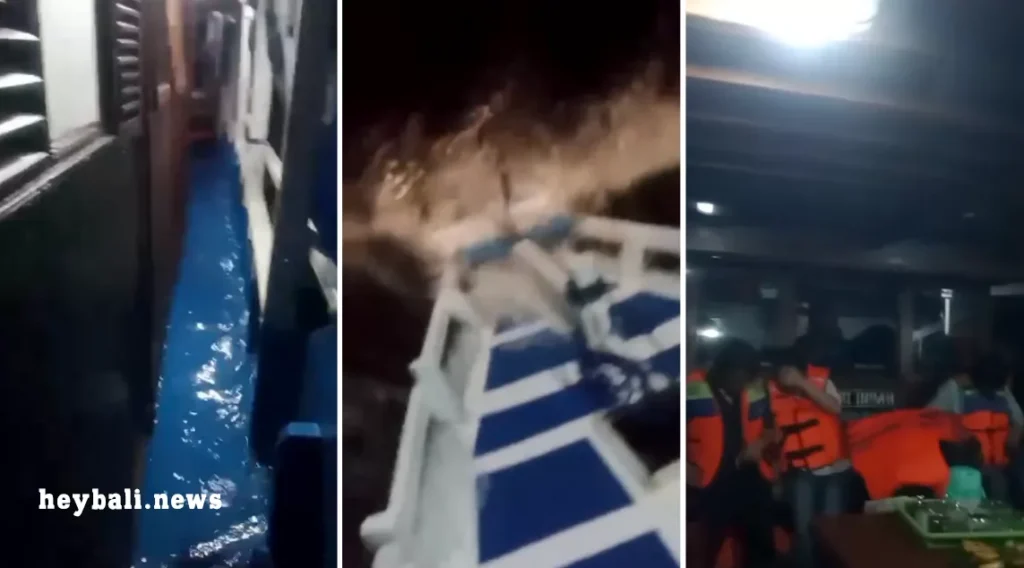
LABUAN BAJO, Indonesia — Search and rescue teams resumed operations on Saturday for a Spanish family of four, missing after the tourist pinisi schooner they were aboard sank in the Komodo National Park on Friday night. New details from authorities reveal the vessel lost power and succumbed to a sudden, powerful swell only 30 minutes into its voyage.
According to Fathur Rahman, Head of the Maumere Search and Rescue Office, the wooden-hulled pinisi departed from Komodo Island en route to nearby Padar Island at approximately 8:00 PM local time on December 26. At 8:30 PM, the vessel experienced a critical engine failure.
“The ship experienced engine failure and sank at 8:30 PM local time,” Fathur stated on Saturday.
With its primary propulsion lost, the ship was left helpless in the face of treacherous sea conditions. Stephanus Risdiyanto, Head of the Class III Harbormaster and Port Authority (KSOP) in Labuan Bajo, described the marine environment as exceptionally dangerous, with a “swell”—a sudden, high wave—of two to three meters striking the area.
“The wave height that occurred in the field was a swell, a high wave that came suddenly between two to three meters and occurred in a short period,” Stephanus explained.
Of the eleven people on board—six Spanish tourists, four crew members, and one tour guide—seven were successfully rescued on Friday night. The four who remain missing have been identified as one family:
- Martin Carreras Fernando (husband),
- Martines Ortuno Maria Lia (wife),
- and their two children, Martin Garcia Mateo
- Martinez Ortuno Enriquejavier.
An intensive three-hour search conducted overnight by a joint SAR team, coordinated by the national agency Basarnas, scoured an area of approximately one nautical mile but failed to locate the missing individuals or the sunken vessel, hampered by darkness and the severe swell.
Analysis: A Convergence of Mechanical Failure and Extreme Weather

This tragedy appears to be a catastrophic convergence of a technical malfunction and the severe maritime weather that has plagued the region. For days, official warnings from the Meteorology, Climatology, and Geophysics Agency (BMKG) and the local harbormaster had been in effect, alerting vessels to dangerous swells and high waves generated by a distant tropical system.
The incident raises urgent questions about vessel preparedness and operational decisions. A key point of investigation will be why the pinisi was sailing on this route after nightfall, during an active weather advisory, and whether all safety protocols were followed.
Implications for the Maritime Tourism Industry

For the international tourism community, from operators in Labuan Bajo to travel agents in Bali booking Komodo packages, this is a profound tragedy and a stern warning. It underscores several non-negotiable principles:
- The Primacy of Weather Advisories: Official warnings about swell and wave height are not suggestions; they are critical risk assessments that must dictate operational decisions.
- Vessel Readiness: Regular, stringent mechanical maintenance is a lifeline in remote waters. Engine failure in calm seas is an inconvenience; in heavy swell, it can be fatal.
- Safety Over Itinerary: No schedule or booked tour is worth jeopardizing passenger safety. The industry must institutionalize the authority of captains to cancel or reroute trips without commercial pressure.
The ongoing search efforts, now in daylight, face the immense challenge of locating survivors in a vast, open seascape still influenced by rough conditions. The hearts of the community are with the rescue teams and the family of the missing. This event will undoubtedly lead to rigorous scrutiny of safety standards in one of Indonesia’s most iconic but challenging marine tourism destinations.
VIDEO: “God, are we sinking?”
— Hey Bali (@Heybaliinfo) December 27, 2025
A terrifying night at sea near Padar Island, Komodo National Park.https://t.co/X6mca7HXNn#VIDEO #Komodo #PadarIsland #LabuanBajo #Indonesia #BreakingNews #SeaConditions #ExtremeWeather #MaritimeSafety #BaliTravel #HeyBaliNews pic.twitter.com/Myal561uQa