
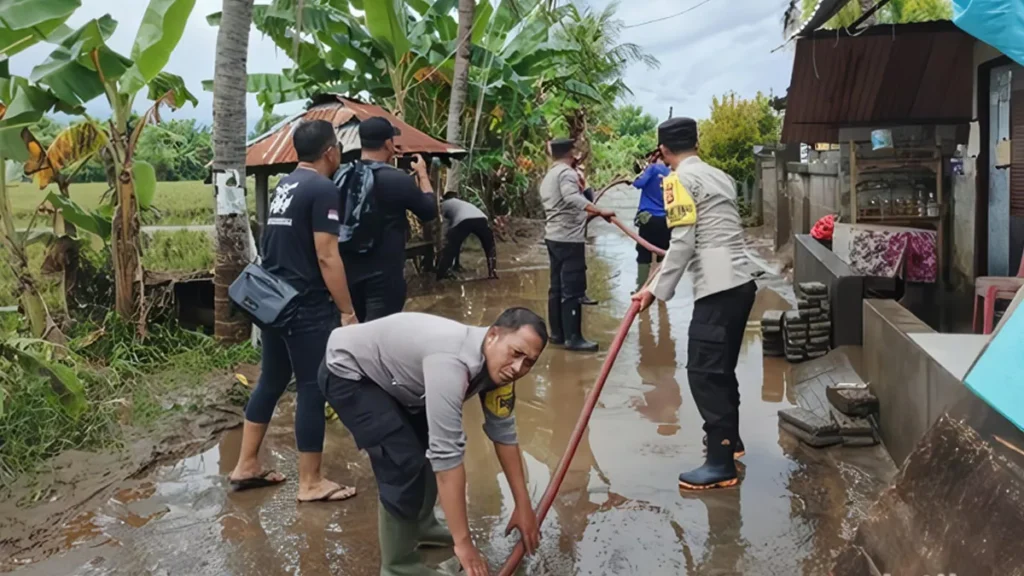
As heavy rains pounded northern Bali, a familiar scene unfolded in the village of Banjarasem: a river burst its banks, sending muddy water into homes and forcing dozens of residents to flee, a stark reminder of the climate pressures facing communities beyond the island’s tourist centers.
SERIRIT, Buleleng — In the early hours of Sunday morning, the Banyu Raras River in North Bali’s Seririt district could no longer contain the torrential rains. Swelling rapidly, it overflowed into the nearby community of Kalanganyar, inundating at least 11 homes with a mix of floodwater and sediment. The sudden event forced 21 families—approximately 60 individuals—to abandon their homes and seek refuge in the local community hall (wantilan) and village meeting pavilion.
According to Buleleng Police spokesperson Iptu Yohana Rosalin Diaz, the flooding was a direct result of sustained, high-intensity rainfall that overwhelmed the river’s capacity.
“The water entered residents’ homes, causing flooding and mud in the residential area,” Diaz confirmed. While no casualties were reported, the event caused significant material damage, including five collapsed garden walls, the loss of livestock, and a concrete mixer swept away by the current.
Community and Agency Response in the Mud
In the aftermath, the affected community did not face the crisis alone. By Sunday morning, a coordinated response was underway. Personnel from the Seririt Police Precinct, led by local chief Kompol I Ketut Suparta, joined forces with the Seririt District Head, the Buleleng Disaster Management Agency (BPBD), local fire services, and residents themselves in a large-scale gotong royong—a traditional communal work effort—to clear streets and homes of thick, deposited mud.
Simultaneously, humanitarian aid was mobilized. BPBD Buleleng coordinated with the Social Service Agency to distribute essential supplies to the 21 affected households, including food staples, blankets, sleeping mats, hygiene kits, and clothing.
A Pattern Beyond Paradise: Climate Stress in Local Focus
For the international community in Bali, such events offer a crucial, ground-level perspective often absent from the island’s glossy portrayal. While South Bali grapples with traffic and urbanization, villages in regions like Buleleng face a different set of climate-related vulnerabilities: increasingly unpredictable and intense rainfall, aging or inadequate water management infrastructure, and the ever-present risk of rivers breaching their banks.
This incident in Banjarasem is not an isolated one; it reflects a pattern of seasonal flooding that challenges agricultural and residential communities across the island. It underscores a reality where climate change is not a distant threat but a present disruptor of daily life, demanding resilience from local populations and effective planning from authorities.
The swift community-led cleanup and official aid response demonstrate Bali’s capacity for collective action in the face of adversity. However, the recurring nature of such floods also raises pressing questions about long-term adaptation strategies, watershed management, and infrastructure resilience for the island’s more vulnerable corners—ensuring that the security of all Balinese communities keeps pace with the island’s global fame.