
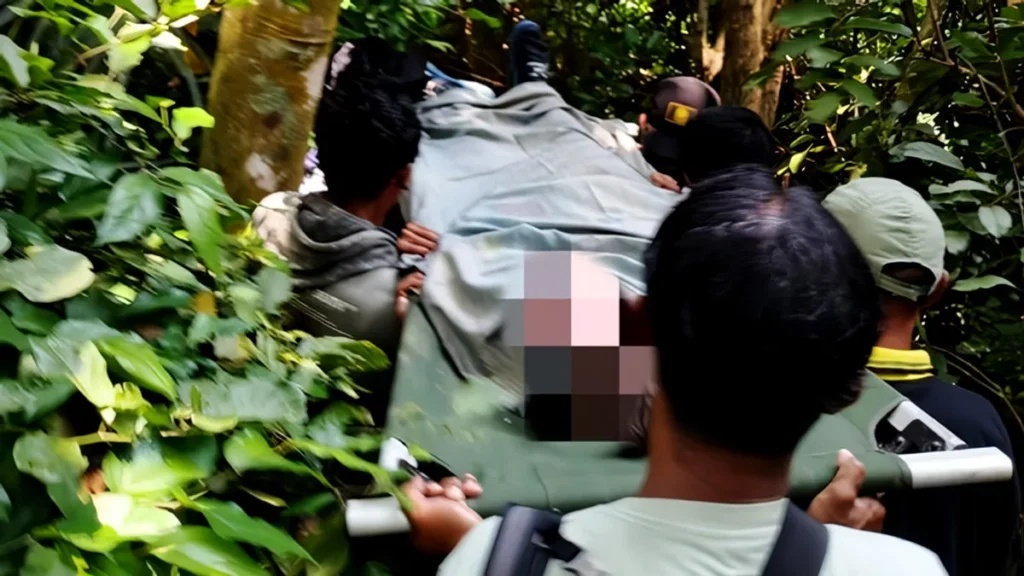
BULELENG, Bali — The trails of West Bali National Park offer a postcard-perfect escape: a serene expanse of mangrove forests, savannah, and lowland monsoon jungle teeming with rare birdlife. It is a landscape that promises adventure and a deep connection with nature, a compelling draw for visitors seeking to move beyond Bali’s beaches and temples. This idyllic image, however, was shattered last Friday by a sobering and tragic event that serves as a critical reminder: the island’s natural beauty can be deceptively demanding.
An American national, 61-year-old Brad Alan, passed away during a guided trek in the Teluk Terima area of the park. According to police reports, the incident occurred just minutes after the trek began. Having walked only about 100 meters, Mr. Alan reportedly experienced severe shortness of breath, lost consciousness, and could not be revived. He was pronounced dead en route to a local community health center. Preliminary authorities have cited exhaustion as the cause.
As one of Bali’s last remaining protected wilderness areas, West Bali National Park is often perceived as pristine and controlled—an assumption this incident quietly challenges. For the island’s large community of expatriates and adventure-seeking tourists, the event transcends a single news bulletin. It prompts urgent questions about preparedness, the unique challenges of the tropical environment, and the shared responsibility between guides, visitors, and tour operators.
Beyond the Trailhead: Understanding the “Hidden” Risks
The tragedy underscores a fundamental misconception: that a short, guided walk in a national park is a low-risk activity. In Bali’s climate, several factors converge to create a potent challenge, even for seemingly manageable excursions.
- Heat and Humidity: The tropical climate is an immense physiological stressor. High heat and oppressive humidity dramatically increase the heart’s workload and the rate of dehydration, which can sneak up on even experienced hikers from temperate climates.
- Deceptive Terrain: The initial sections of a trail can be misleading. Flat, shaded paths can quickly give way to uneven ground, subtle inclines, and obstacles that demand more energy than anticipated.
- The Cumulative Toll of Travel: Tourists often embark on such activities while still affected by long-haul flight fatigue, jet lag, and a disrupted routine—factors that significantly lower one’s resilience and capacity for physical exertion. For travelers over 50, or those returning from long-haul flights, medical clearance and a rest day before strenuous activity should be considered essential, not optional.
“The conditions here are not like a hike in a European forest or an American national park,” explained a longtime expat and certified wilderness first-aid trainer based in Ubud, who asked not to be named due to the sensitivity of the topic. “The heat is a constant, draining presence. A person’s baseline fitness can be rendered irrelevant if they don’t actively manage hydration, pace, and their own body’s signals. Pride or the desire to keep up can be dangerous.”
The Guide’s Role and Visitor’s Responsibility
The presence of a local guide, as in this case, is a vital safety layer but not an absolute guarantee. A professional guide’s responsibility extends beyond knowing the trail; it includes assessing a client’s fitness at the outset, controlling the pace, carrying emergency supplies (including communication devices for areas with no signal), and possessing the training to recognize and respond to medical distress.
Conversely, visitors have a non-negotiable duty to self-assess with brutal honesty. This means:
- Disclosing pre-existing health conditions to operators and guides.
- Hydrating aggressively before, during, and after activity.
- Listening to one’s body without hesitation and speaking up at the first sign of dizziness, nausea, or extreme fatigue.
- Choosing an activity level that matches one’s true current fitness, not an aspirational self-image.
A Community’s Sobering Moment
The response from local authorities was swift, with police and park officials coordinating the evacuation to the Melaya II Community Health Center in neighboring Jembrana Regency. The victim’s body was subsequently transferred to Jembrana Hospital for further procedures, pending the arrival of family members. The U.S. Consulate has been notified and is involved in the process.
In a statement, Buleleng Police spokesperson Iptu Yohana Rosalin Diaz confirmed that, following coordination, the victim’s family and the hotel where he was staying have presently declined an autopsy, awaiting final instructions from the family. This decision brings the immediate investigative chapter to a close, but the broader questions about safety protocols remain wide open.
For Bali’s tourism ecosystem, this is a moment for quiet reflection and proactive improvement. It highlights the need for standardized safety protocols, mandatory first-aid and emergency response training for all commercial guides, and clearer communication of risks to visitors.
The lush trails of West Bali will continue to call to those yearning for wildness. But this tragedy implores everyone who answers that call—from the adventure tour company to the individual traveler lacing up their boots—to replace assumption with preparation, and to respect the formidable power of the tropical wilderness, no matter how gentle it may first appear. In Bali—as in wilderness destinations worldwide—the jungle offers beauty freely, but safety only to those who prepare.