
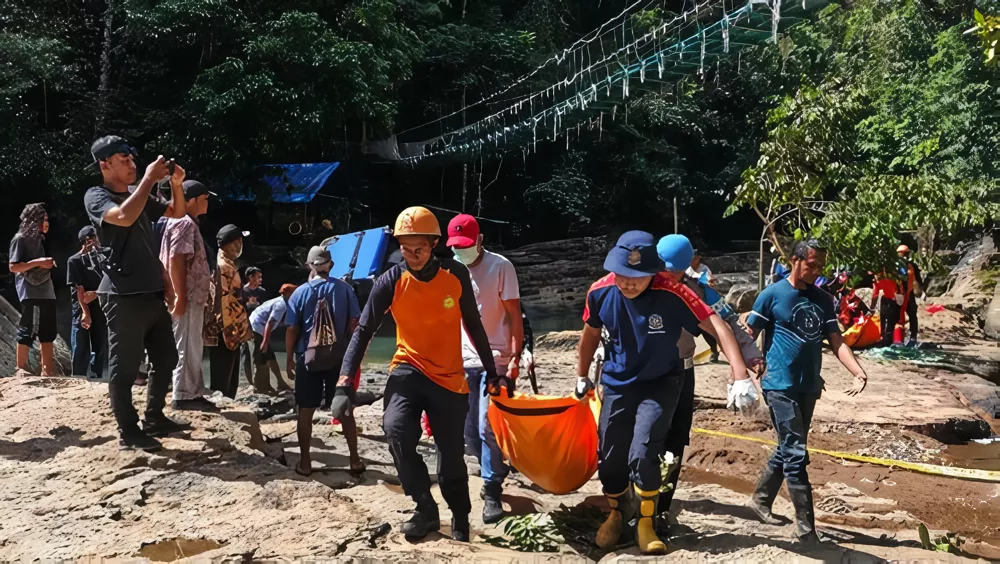
Police have summoned the head of West Manggarai’s tourism agency as investigations into the Cunca Wulang tragedy expand to include potential criminal negligence.
LABUAN BAJO, Indonesia – The wooden bridge had been rotting for years.
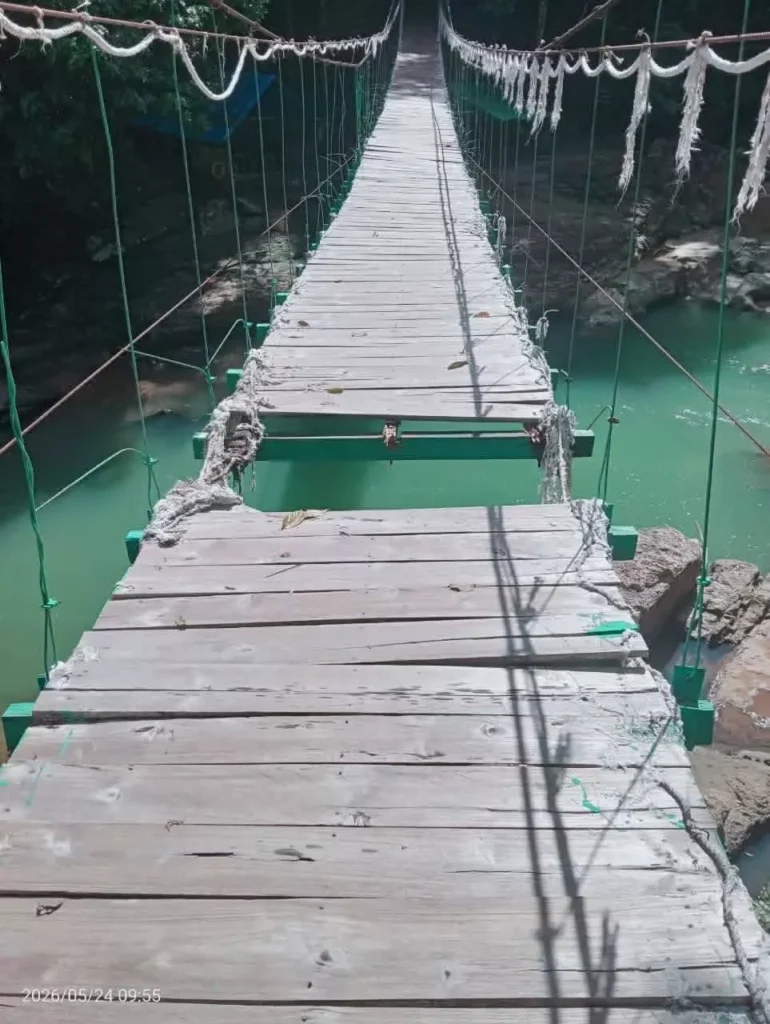
It spanned a ravine approximately 20 meters above the ground at Cunca Wulang Waterfall, one of the mainland’s most popular attractions near the gateway to Komodo National Park. On May 24, it collapsed while two Austrian tourists were crossing.
Jurgen Perjul, 55, and his wife Astrid Perjul, 57, fell to their deaths.
Now, Indonesian authorities are asking a question that should have been asked long before the bridge gave way: who was responsible?
On Tuesday, police investigators summoned Peter A. Rasyid, the head of West Manggarai’s Tourism, Creative Economy, and Culture Agency — the office directly responsible for managing the Cunca Wulang tourist site.
“Still examining witnesses regarding the management of the Cunca Wulang attraction,” said AKP Lufthi Darmawan Aditya, chief of criminal investigations for the Manggarai Barat Police.
He declined to provide further details about what Rasyid said during questioning.
A Growing List of Witnesses
The tourism chief’s summons marks a significant escalation in the investigation.
Previously, police had interviewed five key witnesses:
- The head of Cunca Wulang Village, as the local authority
- The ticket retribution officer at the waterfall entrance
- The local tour guide who accompanied the victims
- The driver of the victims’ rental car
- A local police officer who first secured the scene after the collapse
Those interviews focused on what happened. The questioning of Rasyid shifts the focus to why the site was allowed to operate with a bridge that investigators have described as rotten and unfit for use.
“Based on our examination in the field, the bridge was in a state of severe decay,” a police source familiar with the investigation told local media last week.

Criminal Negligence on the Table
Police are now actively investigating whether the deaths constitute criminal negligence under Article 359 of the Indonesian Criminal Code, which addresses cases where negligence causes the loss of another person’s life.
“We will examine all aspects, including tourism safety standards, responsibility for facility management, and any elements of negligence that may have occurred,” said AKBP Christian Kadang, chief of the Manggarai Barat Police.
He added: “Everything will be processed according to applicable legal provisions.”
The investigation has also widened to include the flow of retribution fees collected from visitors. Police previously disclosed that they found evidence of “an imbalance” between what tourists paid and the safety facilities provided.
At Cunca Wulang, investigators found no warning signs at dangerous points and no accident insurance for visitors — despite official entry fees being collected and channeled to both the district tourism office and the village government.
A Premier Destination With a Fatal Gap
Cunca Wulang Waterfall is not a hidden or remote location.
It is promoted as one of the mainland’s premier attractions for visitors to Labuan Bajo, the bustling town that serves as the launching point for Komodo National Park boat trips. The journey from Labuan Bajo takes approximately 90 minutes by road.
The site features a series of cascading waterfalls, natural pools, and a suspension bridge that offered dramatic views — until it gave way.
For years, visitors had crossed that bridge without incident. But rot does not announce itself. It accumulates. Wood weakens. And without regular inspection and maintenance, what seems safe eventually becomes deadly.
What This Means for Travelers
For international visitors planning trips to Labuan Bajo, the investigation raises uncomfortable questions.
If a premier waterfall attraction managed directly by the district tourism office could operate with a rotten bridge, no warning signs, and no accident insurance, what other sites face similar gaps?
The investigation is still active. No charges have been filed. But police are now examining not just the bridge, but the system that allowed tourists to keep crossing it.
Travelers to the region are advised to:
- Exercise their own caution when visiting natural attractions
- Inspect wooden bridges and stairs before crossing
- Ask local guides about recent safety inspections
- Recognize that infrastructure standards may vary significantly between different sites
The Victims
Jurgen and Astrid Perjul were a married couple from Austria.
They arrived at Cunca Wulang Waterfall on May 24, likely expecting a day of sightseeing at one of Labuan Bajo’s recommended attractions.
Instead, they crossed a bridge that should not have been standing.
Moments later, both were dead.
As of last week, their bodies remained at Komodo General Hospital in Labuan Bajo, awaiting repatriation coordinated through the Austrian Embassy in Jakarta.
A Wider Reckoning
The Cunca Wulang tragedy has already triggered ripple effects across the region.
Following the collapse, police launched surprise safety inspections at other natural attractions in Manggarai Barat. At Lake Sano Limbung, inspectors found wooden stairs in a state of decay — the only access for tourists. The site was temporarily closed.
At the Thousand Waterfalls site in Sano Nggoang, conditions were better. But police still warned management about the vulnerability of wooden infrastructure to changing weather.
“Wooden infrastructure in open natural areas is highly vulnerable to weathering,” said Ipda Risbel Pandiangan, chief of Sano Nggoang Police, after his inspection. “We advise management to schedule daily structural checks before operating hours.”
The question now is whether these inspections will continue once the news cycle moves on — or whether Cunca Wulang becomes just another tragedy that prompted temporary reform, followed by a slow return to the same neglect.
The Investigation Continues
Police have not announced a timeline for completing their investigation.
But the direction is clear.
Investigators are no longer just asking what caused the bridge to collapse. They are asking who knew about the rot, who was responsible for inspections, and why safety measures were never provided.
And with the head of the tourism agency now formally questioned, the investigation has reached the level where policy meets practice.
For the family of Jurgen and Astrid Perjul, the answers cannot come soon enough.
For future visitors, the answers may determine whether other bridges are safe to cross.