
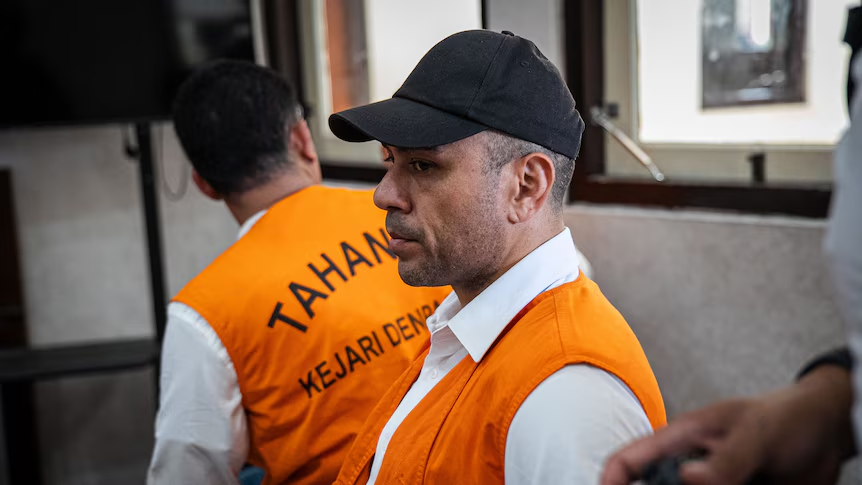
DENPASAR, Bali — An Indonesian court has sentenced an Australian citizen to 12 years in prison for smuggling cocaine into Bali, delivering a verdict more severe than prosecutors requested and underscoring the island’s uncompromising stance on narcotics. The ruling highlights the grave risks and harsh realities of Indonesia’s drug laws for the international community residing in or visiting the country.
Lamar Aaron Ahchee, 43, from Cairns, Queensland, was convicted on Thursday of importing and distributing illicit narcotics. The court found him guilty after police, acting on a tip, tracked the delivery of two international packages to his rented villa near Kuta Beach in May. Inside, concealed within more than 200 Lindt chocolate wrappers, authorities discovered 1.7 kilograms of cocaine, along with a digital scale and mobile phone.


The presiding judge, Tjokorda Putra Budi Pastima, cited several aggravating factors for imposing a 12-year sentence and a fine of 2 billion Rupiah (approximately $127,000 USD), exceeding the prosecution’s request for nine years. “The defendant received a large amount of cocaine, which could harm many people and damage the quality and safety of tourism in Bali,” Judge Pastima stated. He further noted that Ahchee was “evasive and attempted to obscure the facts” during the trial.
Throughout the proceedings, Ahchee maintained he was unaware the packages contained drugs, claiming in a later letter to the court that he believed they held “children’s toys” and that he had been “deceived, coerced and manipulated.” He expressed “sincere remorse” for his actions, which the judges acknowledged as a mitigating factor alongside his polite behavior and lack of prior convictions.
A Stark Reminder in a Global Hotspot
The case unfolds against a backdrop where Bali’s idyllic image contrasts sharply with its status as a target for international drug syndicates. The United Nations Office on Drugs and Crime identifies Indonesia as a major smuggling hub, partly due to its large youth population, despite possessing some of the world’s strictest anti-narcotics laws.
The consequences of violating these laws are severe. According to Indonesian government data, approximately 530 individuals, including 96 foreigners, are currently on death row, predominantly for drug offenses. While Indonesia has not carried out an execution since 2016, the legal framework retains capital punishment for serious drug trafficking.


For Bali’s substantial expatriate and tourist population, the Ahchee verdict serves as a critical, real-time lesson. It reinforces that Indonesia’s legal system treats drug offenses with extreme severity, prioritizing deterrence and public safety, particularly in a region whose economy depends heavily on tourism. The judicial emphasis on protecting Bali’s “quality and safety of tourism” directly links individual actions to broader economic and social consequences for the island.
Ahchee has been remanded to Kerobokan Prison, where he will serve his sentence. The case now stands as a potent, sobering reference point for any foreign national considering involvement with controlled substances in Indonesia, where judicial outcomes can be unforgiving and life-altering.
Hey Bali News provides factual, contextual reporting on legal and social issues in Bali for its international audience, emphasizing the local laws and customs that residents and visitors must navigate.