

Citing ticket prices higher than those to Singapore, Wayan Koster aims to meet aviation regulators, linking affordability directly to the island’s economic security.
DENPASAR, Bali — In a move that underscores the fragile economics of mass tourism, Bali’s Governor, I Wayan Koster, announced plans on Friday to formally appeal to national aviation authorities for a reduction in flight ticket prices to the island. The intervention comes as the provincial government grapples with a notable decline in domestic tourist arrivals, a trend the Governor directly attributes to the high cost of air travel.
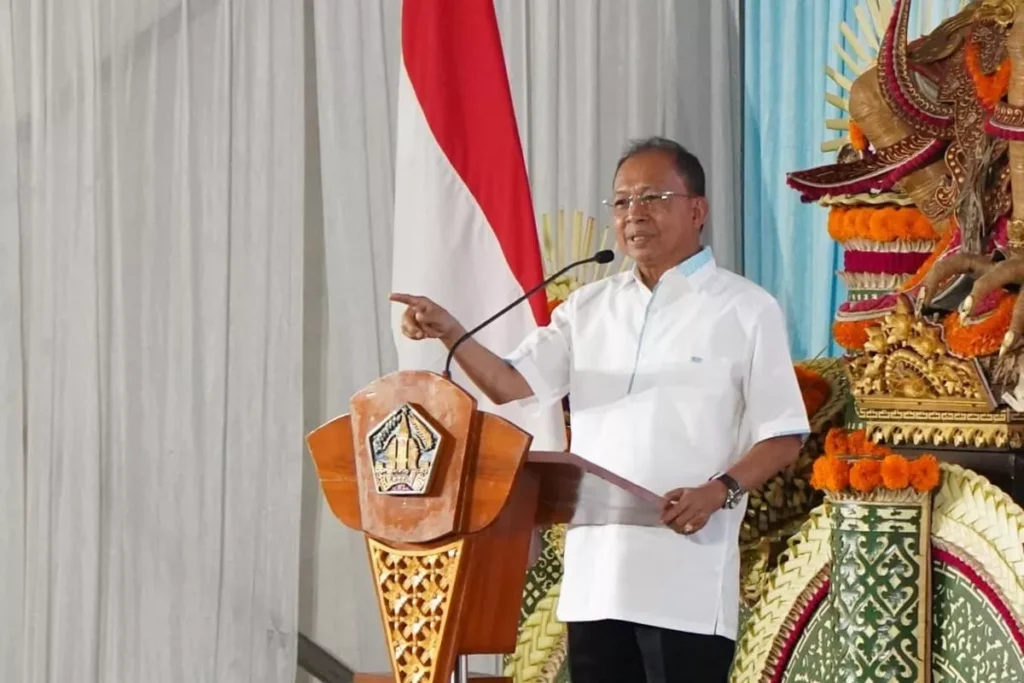
“Unfortunately, domestic [tourism] has declined. Upon checking, one of the factors is that flight tickets to Bali are very expensive,” Governor Koster stated during a ceremony at the Governor’s Office.
“People are complaining it’s more expensive than flying to Singapore, Malaysia, or Thailand.” He revealed a coordinated strategy with the governors of West Nusa Tenggara (NTB) and East Nusa Tenggara (NTT) to jointly lobby the Director General of Civil Aviation, seeking a competitive reassessment of fares.
The High Stakes of Accessibility
With Bali’s economy roughly 66% dependent on tourism, the affordability of access is not merely a convenience issue but a foundational economic concern. A sustained drop in the domestic market—which traditionally provides a stable visitor base—poses a significant threat to the island’s service and hospitality sectors. Governor Koster’s planned meeting with the Ministry of Transportation frames the ticket price not as a commercial airline decision in a vacuum, but as a matter of urgent regional policy requiring central government intervention.
Security: The Other Pillar of Tourism Confidence
Alongside the economic barrier of ticket prices, Governor Koster emphasized security as the inseparable twin pillar of tourism success. He outlined a unique challenge for Bali: maintaining safety not just for residents but within a landscape defined by constant, high-volume visitor activity.
“Because tourism is determined partly by the issue of security, we all have the duty to maintain security in Bali so it remains well-managed, conducive, comfortable, safe, and peaceful,” he said. The Governor warned that any perception of deteriorating security would resonate far beyond the island, deterring potential visitors and damaging Bali’s brand of tranquil hospitality.
To bolster this front, he pointed to the Sipandu Beradat program—a collaborative security framework uniting the military, police, and traditional village (adat) communities. However, Koster conceded the initiative, launched in 2022, has yet to reach its full potential, partly due to pandemic disruptions. He called for renewed solidarity, urging an end to public blame and “especially on social media,” which he said creates a false impression of a “non-conducive and uncomfortable” Bali.
A Two-Front Campaign for Bali’s Future
Governor Koster’s dual focus reveals a strategic recognition of the modern tourism economy’s vulnerabilities. On one front, he wages an economic campaign to lower the tangible barrier of cost for Indonesian travelers. On the other, he pursues a socio-political campaign to preserve the intangible yet critical asset of perceived safety and social harmony.
For Bali’s businesses, expatriate residents, and international tourists, the Governor’s actions signal a proactive, if defensive, stance. The island is not passively awaiting a market correction but actively negotiating its position within national transport policy while attempting to fortify its social fabric. The outcome of these efforts—cheaper tickets and calmer social discourse—will directly shape whether Bali can reclaim its growth trajectory or must recalibrate its expectations in a more expensive and competitive regional landscape.