

As health authorities implement airport screenings, medical experts detail the complex zoonotic chain of the Nipah virus and issue specific guidance to protect public health on the island.
DENPASAR, Bali — In response to outbreaks in neighboring Asian countries, Bali’s health authorities are intensifying surveillance for the Nipah virus, a zoonotic pathogen with a high fatality rate in humans. The heightened vigilance is grounded in a clear understanding of the virus’s transmission pathways, which experts emphasize often begin with fruit bats and can involve intermediary animals like pigs.
“The bat is the host, and other animals like pigs are a host that can replicate this virus so it can be transmitted to humans,” explained Dr. I Gusti Ayu Raka Susanti, Head of the Disease Prevention and Control Division at the Bali Provincial Health Office, in an interview with Tribunnews Bali. “Pigs are susceptible to transmitting this virus, especially since humans also consume pork.”
The Zoonotic Pathway: From Bats to Human Plates
According to the World Health Organization (WHO), fruit bats of the Pteropodidae family are the natural reservoir for the Nipah virus, carrying it without showing symptoms. Human infection can occur through several distinct routes:
- Direct animal contact: The initial 1999 outbreak in Malaysia and Singapore was primarily driven by direct exposure to infected pigs or their contaminated tissues.
- Contaminated food: Consuming fruits or raw date palm juice contaminated by bat saliva or urine is a common transmission route, as seen in outbreaks across Bangladesh and India.
- Human-to-human spread: The virus can also spread directly between people, particularly through close contact with secretions from infected individuals, notably in household or healthcare settings.
Dr. Raka Susanti highlighted the foodborne risk, stating, “The Nipah virus is in bat saliva. If, for example, it eats a fruit, its saliva remains on it. If we then consume it, or perhaps another animal like a pig consumes it, it can become infected. That is what we must be wary of.”

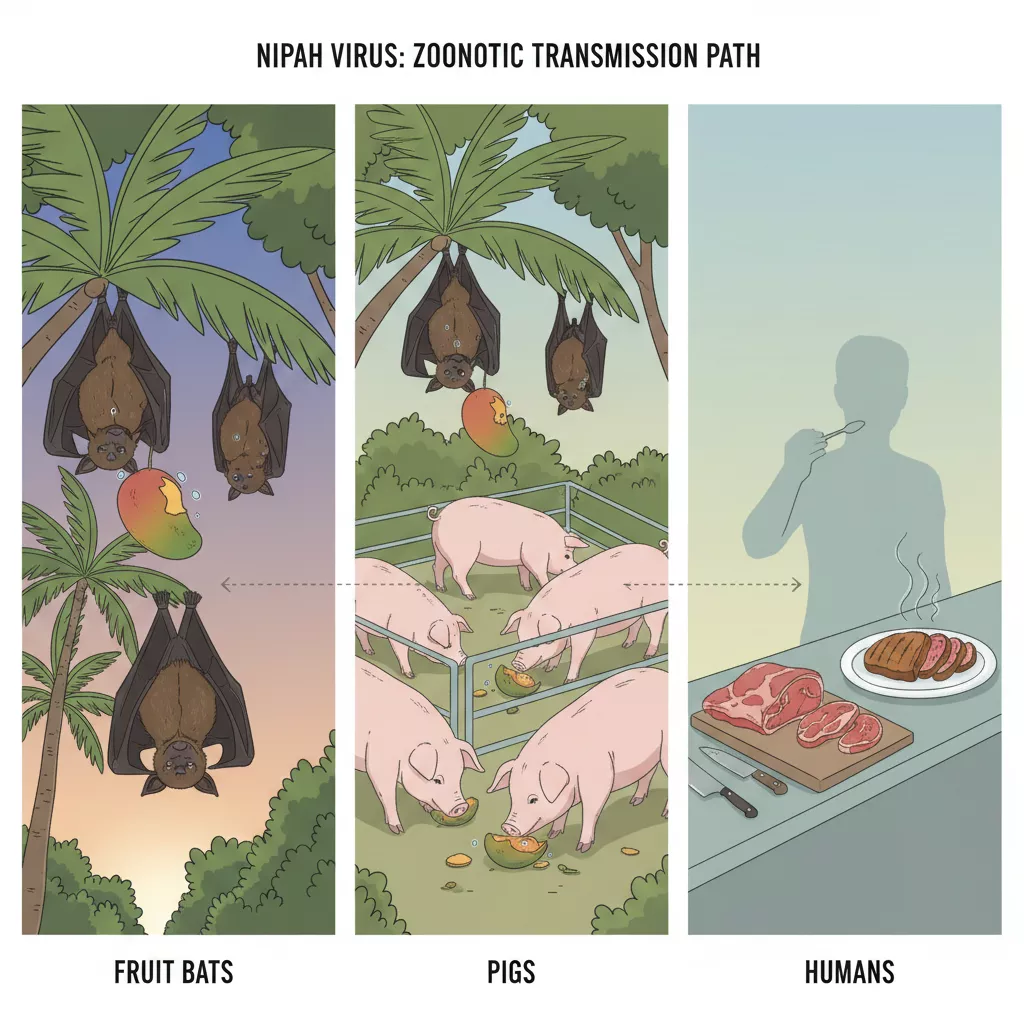
A High-Consequence Pathogen
The WHO classifies Nipah virus infection as a priority disease, underscoring the urgent need for research. In humans, it can cause a range of illnesses from asymptomatic infection to severe acute respiratory syndrome and fatal encephalitis (brain inflammation).
The case fatality rate is estimated to be between 40% and 75%. There are currently no specific vaccines or treatments; medical care is limited to managing severe symptoms.
Practical Guidance for Prevention
In light of these risks, Bali health officials are issuing clear, preventative guidance focused on breaking the chain of transmission. Key recommendations include:
- Avoiding undercooked meat, particularly pork. Ensuring all meat is thoroughly cooked destroys the virus.
- Not consuming fruits that may have been partially eaten or contaminated by bats.
- Practicing rigorous hygiene, including frequent handwashing with soap.
“The primary prevention we are advocating to the public is, of course, how to anticipate or prevent it by continuing to apply clean and healthy living behaviors,” Dr. Raka Susanti emphasized.
A Proactive Stance for a Global Hub
For Bali’s residents and its global community of visitors, this advisory represents a proactive, science-based approach to public health. While the immediate risk is assessed as low, the guidance reflects a prudent understanding of global health dynamics.
The measures aim to protect both the island’s population and its international guests, ensuring that awareness and simple precautions mitigate potential risks associated with this high-consequence pathogen.