
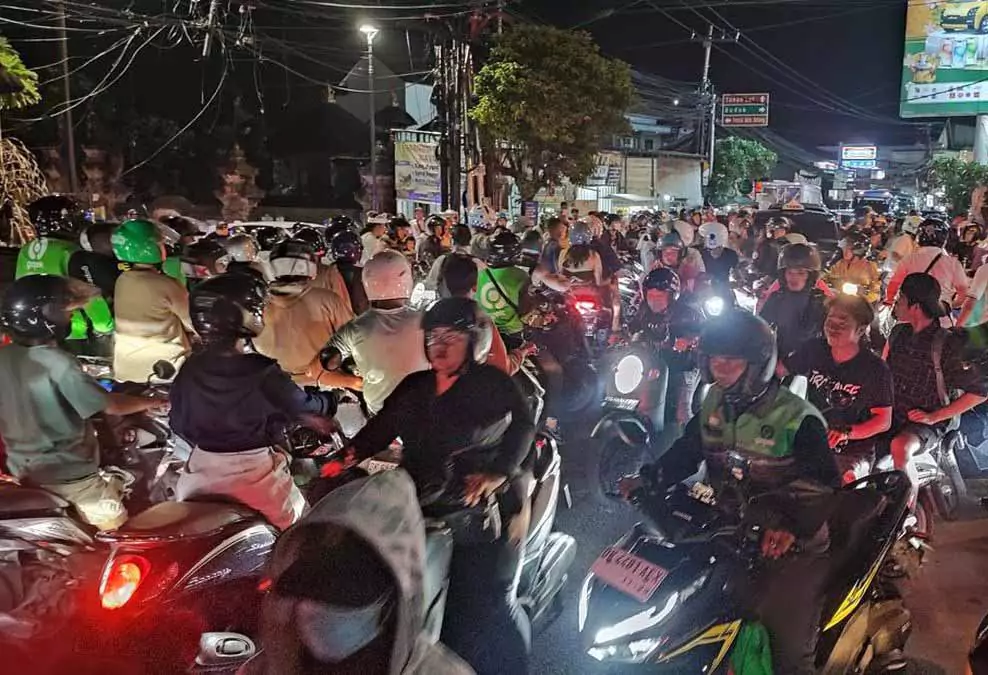
Bali received roughly 16.3 million visitors in 2025, nearly four times the island’s own resident population, and according to Governor I Wayan Koster, that surge is now colliding head-on with infrastructure the island simply wasn’t built to handle.
“Our infrastructure and public services have not been fully able to keep pace with the rise in activity. Traffic congestion has become a primary concern,” Koster said in a statement Tuesday, July 21, 2026.
A Record Year, By the Numbers
Of the 16.3 million total arrivals in 2025, 7.05 million were international tourists and 9.3 million were domestic travelers, figures that dwarf Bali’s own population of approximately 4.5 million people.
Bali remains Indonesia’s dominant gateway for international tourists, accounting for 45.8% of the country’s total foreign visitor arrivals. The average international tourist spent $1,522 per visit, according to Koster, contributing to an estimated Rp 176 trillion in tourism-driven economic activity for the island in 2025, nearly half of Indonesia’s entire national tourism sector output.
The Cost of Success
But Koster was candid about what that scale of growth is now costing the island. Beyond traffic, he pointed to land-use conversion, rising waste volumes, ecosystem disruption, and growing pressure on clean water availability as consequences requiring urgent attention.
Among these, Koster identified traffic congestion as the most pressing, warning that it directly threatens both the visitor experience and Bali’s competitiveness as a global tourism destination.
“If congestion is not addressed soon, Bali risks a decline in destination quality and tourism competitiveness. That’s why expanding infrastructure capacity must become a priority, so tourism growth continues alongside environmental sustainability and public welfare,” he said.


What This Means for Anyone Visiting or Living in Bali
For travelers planning a trip and expats already navigating daily life on the island, this isn’t an abstract policy concern, it’s the lived reality behind the hour-long drives between Canggu and Seminyak, the gridlock approaching Uluwatu at sunset, and the increasingly unpredictable travel times to Ngurah Rai Airport during peak season.
The governor’s acknowledgment that infrastructure “has not been fully able to keep pace” effectively confirms what many visitors and residents have already concluded firsthand: Bali’s road network, largely unchanged in scale for years, is now absorbing tourist volumes it was never designed to carry.
What’s Being Done About It
To address the congestion, Bali’s provincial government plans to accelerate road infrastructure development and expand a maritime logistics route connecting Ketapang, Gilimanuk, and Karangasem, an effort aimed at shifting some transportation demand off the island’s congested road network.
Koster framed infrastructure investment as the central factor determining whether Bali’s tourism sector can keep growing sustainably. “Infrastructure development is key to ensuring Bali’s tourism sector growth remains sustainable amid the continuing rise in visitor numbers to the island,” he said.
What’s Next
For now, no specific timeline has been announced for the road expansion projects or the Ketapang-Gilimanuk-Karangasem logistics corridor. With visitor numbers showing no signs of slowing, the question facing Bali’s government isn’t whether infrastructure needs to expand, but whether it can be built fast enough to keep pace with an island that, by the numbers, now hosts nearly four tourists for every resident.