
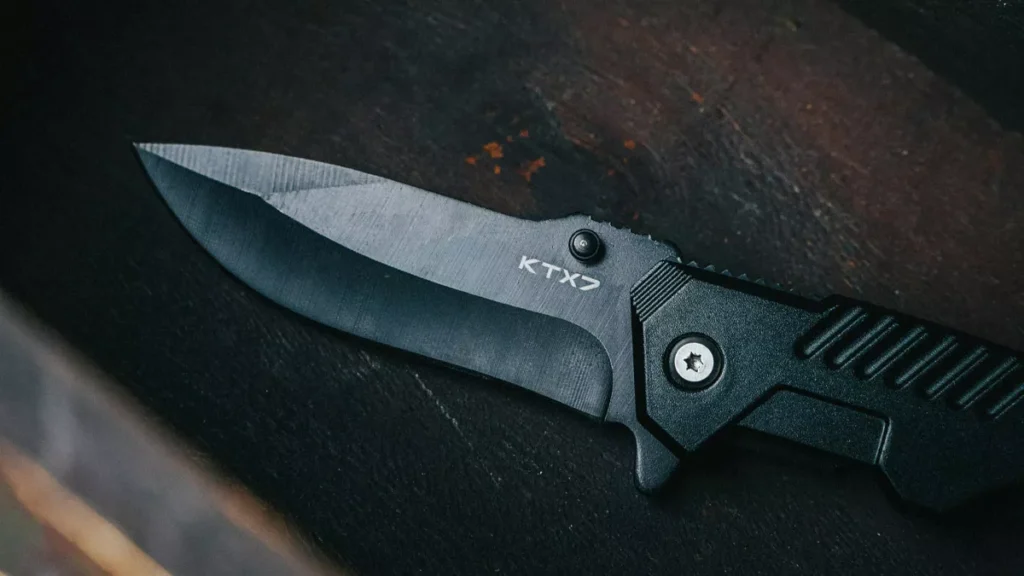
A recent arrest in Denpasar highlights Indonesia’s stringent weapons law. For expats and travelers, misunderstanding what constitutes an “illegal sharp object” could carry severe consequences.
DENPASAR, Bali — On a Sunday afternoon in early February, two young men were arrested near the Bajra Sandhi Monument in Denpasar. Police found them consuming alcohol and in possession of two items that would alter the trajectory of their immediate future: a yellow-handled kitchen knife and a wooden-handled machete.
Neither weapon had been used. No one was injured. Yet both individuals, identified only as E (23) and RP (20), now face a legal process that could result in up to a decade behind bars.
Their stated motive, according to East Denpasar Police Chief Kompol I Ketut Tomiyasa, was self-defense. Under Indonesian law, that explanation is unlikely to suffice.
For Bali’s international community—expats building lives on the island, travelers passing through, and global citizens who consider this home—the case offers a stark reminder: Indonesia’s regulations on sharp objects are not advisory. They are statutes with teeth.
The Law: UU Darurat No. 12/1951

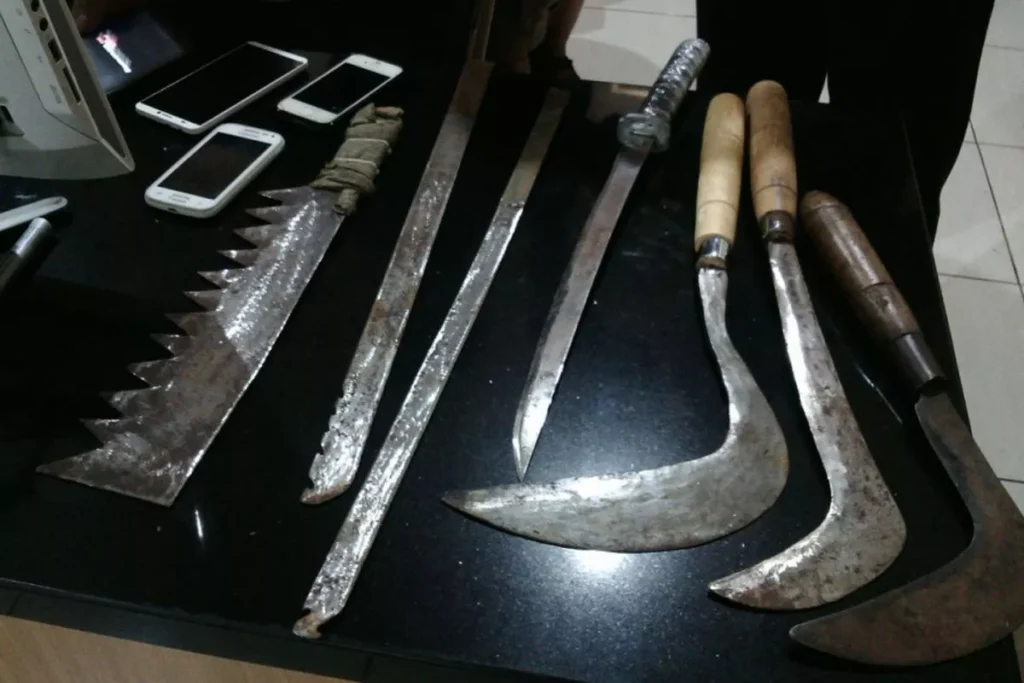
The legal framework governing sharp objects in Indonesia predates Bali’s tourism boom by decades. Emergency Law Number 12 of 1951, enacted in the early years of Indonesian independence, criminalizes the possession, carrying, or use of sharp objects without legitimate authorization.
Article 2, paragraph 1 carries a maximum penalty of ten years imprisonment.
“The law does not require that the weapon be used, nor that a victim exists,” explains Iptu I Gede Adi Saputra Jaya, Public Relations Officer for the Denpasar Police. “The act of carrying itself, under certain conditions, constitutes a violation.”
What Counts as an Illegal Sharp Object?
Not all blades are treated equally under Indonesian law. The prohibition applies to objects whose form, nature, or function is primarily to injure—specifically those that are sharp, pointed, or bladed.
Prohibited items typically include:
- Daggers and stilettos
- Badik (traditional Southeast Asian blade)
- Kerambit (curved claw-like knife)
- Bayonets
- Swords and samurai blades
- Sickles (celurit) carried outside agricultural context
However, context is everything. A kitchen knife inside a villa kitchen is unremarkable. The same knife, tucked into a waistband at a late-night gathering in a public space, becomes evidence.
“The key is purpose and manner of carrying,” Adi Saputra emphasizes.
Permitted Exceptions
Certain sharp objects are exempted when carried for legitimate, demonstrable purposes:
- Kitchen knives for food preparation
- Machetes or sickles for farming and gardening
- Tools used by tradespeople in their work
- Ceremonial implements for religious or traditional rituals
- Heirloom objects kept as collections, not carried in public
The burden of establishing legitimacy rests with the carrier.
How Police Assess Threat
Officers do not evaluate weapons in isolation. Adi Saputra outlines a multi-factor assessment protocol used in the field:
1. Type of object. A folding utility knife differs from a fixed-blade combat knife. A parang carried at 3:00 PM near rice fields reads differently from one carried at midnight in an urban entertainment district.
2. Manner of carrying. Is the object concealed? Readily accessible? Positioned for rapid deployment?
3. Context and timing. Nighttime possession receives greater scrutiny. Locations with histories of conflict or crime elevate risk assessment. Congregations of intoxicated individuals trigger additional caution.
4. Behavioral indicators. Agitation, threatening speech, involvement in disputes, or visible intoxication all inform an officer’s determination of unlawful intent.
The “No Victim, No Use” Principle


Perhaps the most misunderstood aspect of Indonesian weapons law is that completed harm is not a prerequisite for prosecution.
“Even if the weapon has not been used, the individual can still be processed,” Adi Saputra states plainly. “No victim is required. No act of cutting or stabbing is required.”
This forward-looking enforcement philosophy prioritizes prevention over remediation—a stance that can feel alien to visitors from jurisdictions where weapons offenses are triggered by demonstrable threat or actual use.
Practical Implications for Bali’s Global Community
For expatriates and long-term visitors, several everyday scenarios warrant careful reconsideration:
Vehicle storage. A machete kept in a car for “emergencies” or “property maintenance” may be interpreted as ready access to a prohibited weapon. If the tool is genuinely for work, it should be transported in a manner consistent with that purpose—secured, declared if relevant, and accompanied by contextual evidence of legitimate use.
Kitchen knives in transit. Transporting cooking equipment between residences, villas, or catering locations is generally acceptable if the items are packaged appropriately and the journey is demonstrably related to their intended use. A chef transporting knives in a roll between commercial kitchens occupies different legal territory than an individual with a sheathed blade in a backpack at 2:00 AM.
Traditional and ceremonial items. Bali’s rich ritual culture involves numerous sacred objects, some of which are bladed. The law accommodates these when carried in genuine ceremonial context. The distinction between a keris worn as part of traditional attire at a temple ceremony and one concealed during leisure activity is both legally and culturally significant.
Collection and hobby items. Antique blades, souvenirs, and collectibles should remain in private spaces or be transported in sealed, inaccessible packaging with clear provenance. Display items are not carry items.
A Preventable Consequence
The two men detained near Bajra Sandhi now face a criminal justice process that will evaluate not whether they caused harm, but whether their possession of sharp objects in a public space, while intoxicated, constituted unlawful carriage under the 1951 Emergency Law.
Their case is not exceptional. Police across Bali routinely conduct operations targeting illegal weapons possession, particularly during periods of heightened social tension or around major holidays.
For international residents and visitors, the calculus is straightforward: objects that would be unremarkable in many jurisdictions can, under Indonesian law, become the basis for severe criminal sanction. The absence of a victim does not imply the absence of a crime.
An Advisory from Hey Bali News
Bali’s legal framework reflects both its sovereignty as part of the Republic of Indonesia and its specific cultural values regarding order, public safety, and communal harmony. Visitors and residents are not expected to memorize the Emergency Law of 1951. They are expected to exercise judgment.
When in doubt, leave it at home. The machete in the trunk, the folding knife in the daypack, the antique blade acquired from a market stall—each carries potential consequence disproportionate to its perceived utility.
Ten years is not a symbolic penalty. It is real, enforceable, and increasingly enforced.
And unlike the wounds a blade might inflict, a prison sentence does not heal.