
JAKARTA / BALI — For an island that has marketed itself as the ultimate tropical escape, the numbers coming out of Bali this year are nothing short of staggering. According to Bali’s governor, the foreign exchange generated by international travelers is now an estimated Rp 170 trillion, a sum equivalent to more than half of Indonesia’s total tourism earnings.
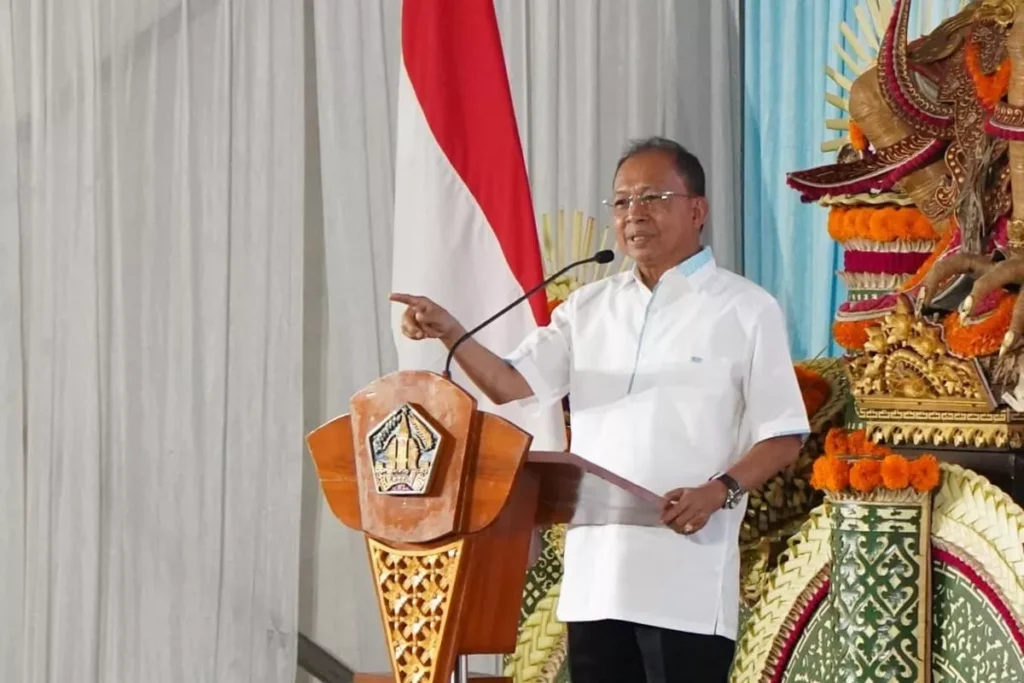
“It is estimated that revenue from foreign visitors to Bali will reach Rp 170 trillion, or about 53 percent of national tourism foreign exchange,” Governor Wayan Koster said on January 7, 2026, during the groundbreaking of the Singaraja–Mengwitani shortcut in Gitgit Village, Buleleng. “This sector is the backbone of Bali’s economy.”
Koster’s figures, if accurate, mark a remarkable rebound for the island’s tourism industry — one that appeared to slow during the pandemic years. With 7.05 million visitors arriving by December 2025, Bali has clearly surpassed its pre-pandemic total of around 6.2 million, according to the governor’s office. “So if someone says Bali is quiet, that is not correct,” Koster insisted. “What we are seeing is significant growth.”
The Currency of Visitors
Behind Governor Koster’s declaration lies a narrative of regained momentum: rising hotel occupancies, crowded restaurants, and a widening circle of services aimed at foreign visitors. Bali’s economic development notes place hotel occupancy rates in many regions consistently between 75 and 85 percent, a level of demand that would be enviable in numerous international gateway cities.
But these confident totals also invite another set of questions about distribution and management.
“The celebration of record arrivals should not blind Bali to the weak points in its tourism ecosystem,” said Tri Wibowo Santoso, Director of LSDI Lingkar Study Data dan Informasi, a research institution focused on tourism data and public services. “Numbers can show recovery, yet they do not automatically show justice. You may have impressive tallies without those figures reaching farmers, drivers, and small workers who actually host the tourists.”
That tension between quantity and quality still resonates with expatriates and long-term residents, many of whom see an island bustling with visitors but uneven in social and infrastructural growth. Santoso added that the first measure of a destination is service at the point of arrival.
“If Ngurah Rai becomes a space of confusion in pricing and transport, then the grand promise of quality tourism begins with a crack in its very first twenty minutes.”
Luxury Lobbies and Local Realities


In central areas such as Seminyak and Ubud, high-end resorts and restaurants cater to affluent tourists. Meanwhile, in more rural regencies, local farmers and small-scale entrepreneurs often feel sidelined from the economic bonanza.
“In Bali, tourism revenue isn’t just a statistic,” says Made Sudharta, a small-business owner in eastern Bali. “It’s our livelihood — but it’s also unpredictable. We see dollars and euros pass through our streets, yet our own children sometimes leave the island for work.”
Sudharta’s perspective reflects a recurring theme among public commentators: that while foreign exchange figures look impressive on paper, they do not automatically solve structural issues such as wage disparities, land use changes, or the rising cost of living for locals.
Measuring Success Beyond Numbers

Governor Koster also highlighted how tourism contributes directly to Bali’s broader economy. He noted that the sector now accounts for approximately 66 percent of Bali’s economic activity, up from pre-pandemic levels. This is significant, but it also suggests a high degree of dependency on one industry.
“In many ways, Bali’s economy has placed all its eggs in the tourism basket,” notes tourism consultant Giostanovlatto. “That can be powerful in good times, but it also makes the province vulnerable to external shocks — whether global recessions, natural disasters, or pandemics.”
Bali’s growing tourism echoes its global reputation as a top destination. Yet the editorial question arises: at what point does success become too concentrated, too narrow, or too fragile?
Voices From the Ground
At a seaside cafe in Kuta, James Turner, a long-term expatriate and hospitality professional, offers his own assessment:
“Yes, the numbers are strong. But when you’re living here, you notice traffic congestion, strained water resources, and little in the way of housing affordability for staff. The headline stats don’t show that.”
Turner’s comment is not a rejection of tourism’s value, but a call for more thoughtful stewardship.
“As visitors, we want beaches and culture,” he said. “But we also want to know that our dollars are helping a community thrive, not just feeding beachfront price inflation.”
Editorial Reflection

Bali’s reported Rp 170 trillion in tourism revenue is, by many measures, a triumph. Yet success is seldom measured by totals alone. For the expatriate and visitor alike, the lived experience — whether navigating a crowded taxi queue at Ngurah Rai International Airport or negotiating the price of a beachfront meal — speaks to a challenge that transcends glossy arrival boards.
Quality tourism — the kind that enriches both visitor and host — requires more than just counting bodies and receipts. It demands equitable growth, resilient infrastructure, and policies that stretch beyond mere economics. Bali’s next chapter depends not only on how many arrive, but on how well the island welcomes, sustains, and includes them.