
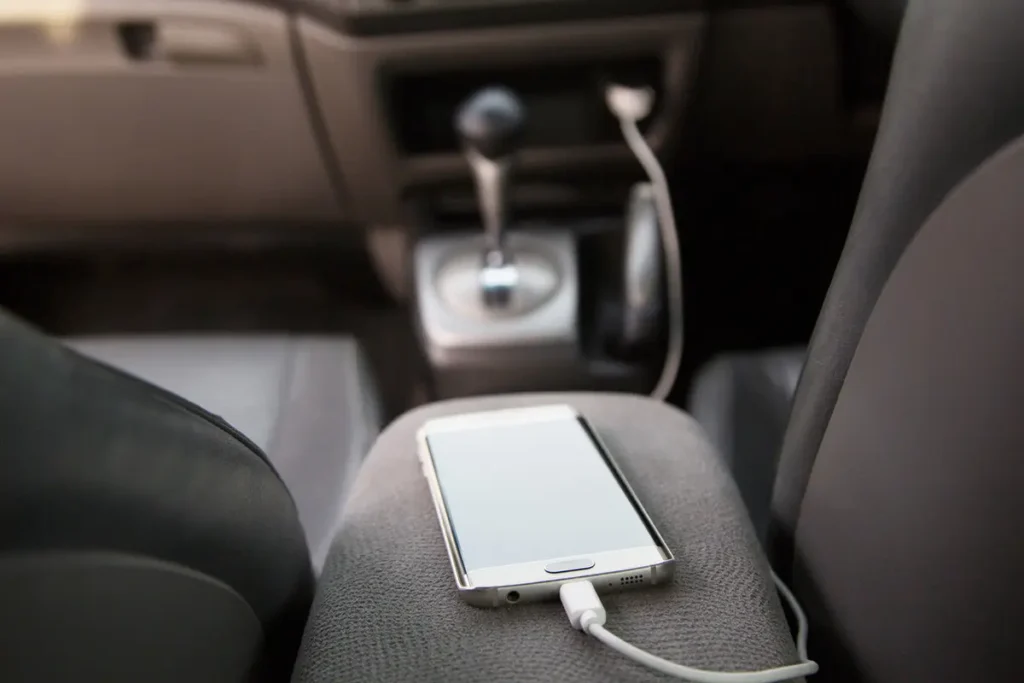
Does fast charging damage battery ? – If you’ve ever grabbed your phone off a fast charger in Canggu, felt how warm it got, and wondered whether you were quietly wrecking your battery, you’re not alone, and it turns out the answer is more nuanced than a simple yes or no.
Fast charging technology has transformed how we power our devices. Many smartphones can now go from nearly empty to over 50% charged in roughly half an hour. Some electric vehicles can add hundreds of kilometers of range in a similarly short charging window. But batteries aren’t indestructible, their capacity naturally declines over time, and pushing more power into them faster raises an obvious question: does fast charging accelerate that decline?
According to scientists cited by Live Science, the answer is yes, fast charging can contribute to battery degradation, but the full picture is more complicated than it first appears.
How Fast Charging Actually Works
Lithium-ion batteries, used in the vast majority of smartphones, work by moving lithium ions between two electrodes, the cathode and the anode. The key difference between standard and fast charging comes down to how quickly those ions move.
Standard charging can take several hours, while fast charging increases current and power so a battery can reach a full charge in about an hour or less.
“Standard charging uses a lower current, allowing lithium ions to enter the anode gradually. This process generates minimal heat and only creates a small amount of mechanical stress,” said Zhiyuan Jiang, Associate Professor at the Department of Chemical Engineering and Technology, Xi’an Jiaotong University, China.
A battery’s ability to handle fast charging also depends on its materials, internal structure, and battery management system. Stanislaw Zankowski, a battery researcher at the University of Oxford, compared the charging process to city traffic that needs careful regulation to avoid gridlock.
The Damage Fast Charging Can Cause
Despite its convenience, fast charging can accelerate battery aging through a process called lithium plating.
Under very rapid charging conditions, some lithium ions don’t get properly absorbed into the anode and instead form a metallic deposit on the electrode’s surface. Over time, this gradually reduces the battery’s energy storage capacity. In extreme cases, these deposits can even form needle-like structures capable of damaging internal battery components and creating safety risks.
Fast charging also generates more heat than standard charging, the higher the current, the higher the resulting temperature. Excessive heat accelerates the chemical reactions inside a battery, causing its internal materials to degrade faster. In very rare cases, excessive heat can cause a battery to swell, catch fire, or undergo thermal runaway.
The good news: modern smartphones, laptops, and electric vehicles are equipped with a Battery Management System (BMS) that continuously monitors voltage, current, and temperature during charging. If temperatures rise too high, the system automatically slows the charging rate to protect both safety and battery lifespan.
Why This Matters More in Bali’s Climate
Here’s where the science becomes especially relevant for anyone living in or visiting Bali: experts recommend an ideal charging temperature of 20 to 25 degrees Celsius. Bali’s tropical climate routinely runs well above that range, and daily habits common on the island, leaving a phone charging on a motorbike seat in direct sun, charging a device inside a parked car, or fast-charging poolside on a hot afternoon, push batteries even further outside their comfort zone.
For anyone relying on a smartphone for navigation, ride-hailing apps, or staying connected while traveling, or for the island’s growing number of electric scooter and EV users, understanding this heat sensitivity isn’t just a technical curiosity. It directly affects how long your device or vehicle battery will hold up.
How to Protect Your Battery, Especially in a Hot Climate
To maintain battery health, experts recommend avoiding charging in overly hot environments, such as inside a parked car or in direct sunlight, conditions that are hard to avoid entirely in Bali but worth minimizing where possible.
Additional recommendations include:
- Charge in shaded, well-ventilated spaces whenever possible, rather than direct tropical sun
- Keep battery levels between 20% and 80% for daily use rather than routinely charging to 100%
- Avoid leaving devices connected to a charger after reaching full charge if it isn’t necessary
- Where possible, favor standard charging over fast charging for overnight or non-urgent charging
According to researchers, these simple habits have a greater long-term impact on battery lifespan than whether you use fast charging or standard charging alone, a useful takeaway for anyone navigating Bali’s heat with a phone, laptop, or EV in hand.