

A senior minister’s declaration that providing free meals is a more urgent national priority than creating jobs has ignited a complex debate about Indonesia’s most pressing challenges and the philosophical direction of its new government.
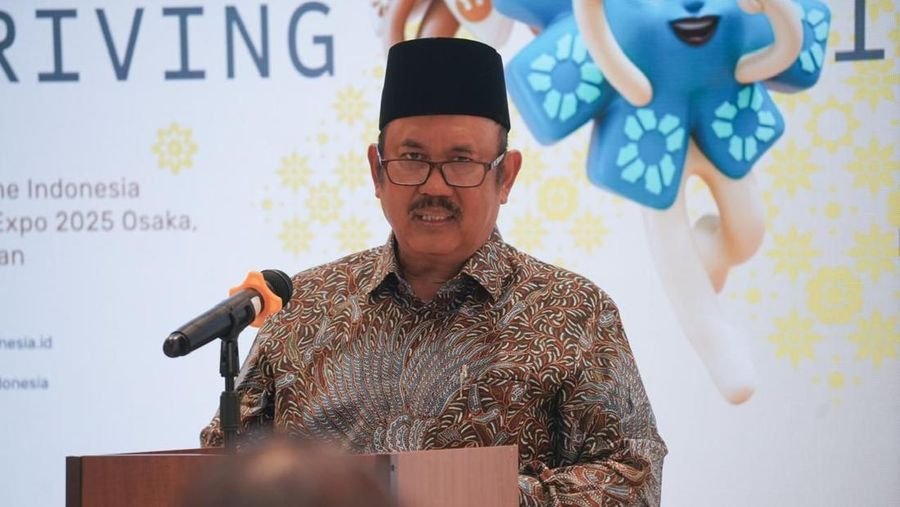
JAKARTA, Indonesia — In a statement that has reverberated through economic and policy circles, Indonesia’s National Development Planning Minister, Rachmat Pambudy, framed the government’s priorities in stark, human terms. At a public forum this week, he argued that the Free Nutritious Meals (MBG) program is currently more urgent than job creation, a remark that has prompted both applause for its empathy and criticism for its perceived economic myopia.
“Are free meals important? Very important. Are they more important than providing jobs? I say free meals are more urgent than jobs,” Minister Rachmat stated at the Prasasti Economic Forum. He anchored his argument in the immediate, visceral reality of child malnutrition and stunting, suggesting that waiting to solve poverty solely through employment would come too late for many.
“If we give a fishing rod [a job], they might already be dead. Try to see our brothers and sisters in the remote corners of our villages. They are hungry.”
A Clash of Philosophies: Immediate Relief vs. Long-Term Empowerment
The minister’s comments cut to the heart of a classic development dilemma: the tension between providing direct social welfare and fostering self-sufficiency through economic opportunity. Critics of the statement argue that it creates a false dichotomy, questioning why a nation cannot aggressively pursue both simultaneously. They point out that sustainable livelihoods empower citizens to pay for their own meals, schooling, and electricity—something a temporary meal program cannot guarantee.
Furthermore, skeptics question the capacity and execution of the massive MBG program, which has already been marred by reports of poisoning incidents, raising concerns about whether the urgent solution is being implemented safely and effectively.

The Government’s Counter-Narrative: Meals as an Economic Engine
In defending the program’s centrality, President Prabowo Subianto has presented MBG not merely as charity but as a macroeconomic stimulus. Speaking at the World Economic Forum in Davos, he framed it as a catalyst for grassroots economic activity, claiming it has already engaged over 61,000 micro-enterprises and created hundreds of thousands of jobs within the program’s own supply chain. “That is why I believe our growth will reach an impressive figure. Our social policies must increase productivity and generate growth,” Prabowo asserted.
This positions MBG as a dual-purpose tool: immediate social relief and a novel, state-driven jobs program, attempting to bridge the very gap Minister Rachmat’s remark seemed to widen.
A Bali Perspective: Livelihoods in the Visitor Economy
For observers in Bali, where the economy is overwhelmingly driven by tourism and its related job market, this national debate has a distinct flavor. The island’s prosperity is directly tied to job creation in hospitality, services, and creative sectors. A statement seemingly deprioritizing employment can feel disconnected from the reality here, where a stable job is the foundation of family welfare and community stability.
The controversy underscores a fundamental question for the new administration: in a diverse archipelago facing both acute poverty and the need for competitive growth, how does a government accurately triage urgency? Is the most urgent task feeding hungry children today, or is it building the economic engine that ensures no child goes hungry tomorrow? Minister Rachmat’s provocative remark has ensured this question is no longer confined to policy papers but is now a matter of urgent public discourse, with the government’s ability to deliver on both fronts being the ultimate test.