
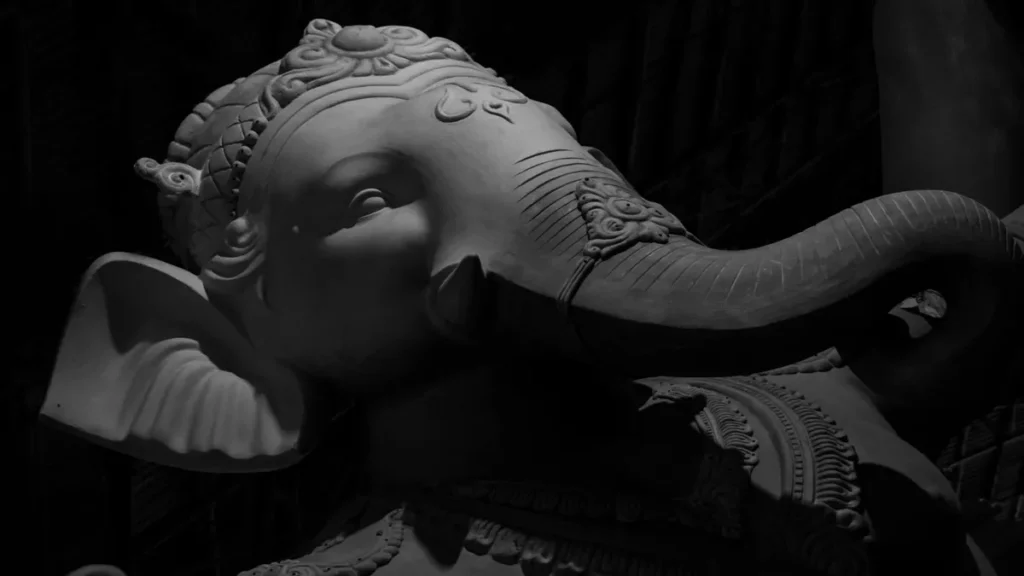
BADUNG, Bali — In Bali, you will see him everywhere.
At temple gates, in family courtyards, beside shop entrances, even in the corners of modern cafés and hotels—an elephant-headed figure seated in stillness, watching without intrusion.
To many visitors, he is simply part of the landscape. Decorative. Photogenic. Familiar.
But in Bali, Ganesha is not decoration.
He is a philosophy—one that lives quietly at the threshold of daily life.
Not an Object, but a Presence
In Balinese Hindu practice, sacred images are not merely symbolic representations. They are understood as points of connection—spaces where the human and the divine meet.
Ganesha, known as Ganapati, is among the most revered of these presences. The son of Shiva and Parvati, he is invoked at the beginning of all things: ceremonies, journeys, decisions, even conversations.
He is known as the remover of obstacles.
But in Bali, that role is interpreted with nuance.
Obstacles are not always external. Often, they are internal—ego, impatience, imbalance, the inability to listen or adapt. Ganesha does not simply clear the path. He teaches how to walk it.

A Philosophy Written in Form
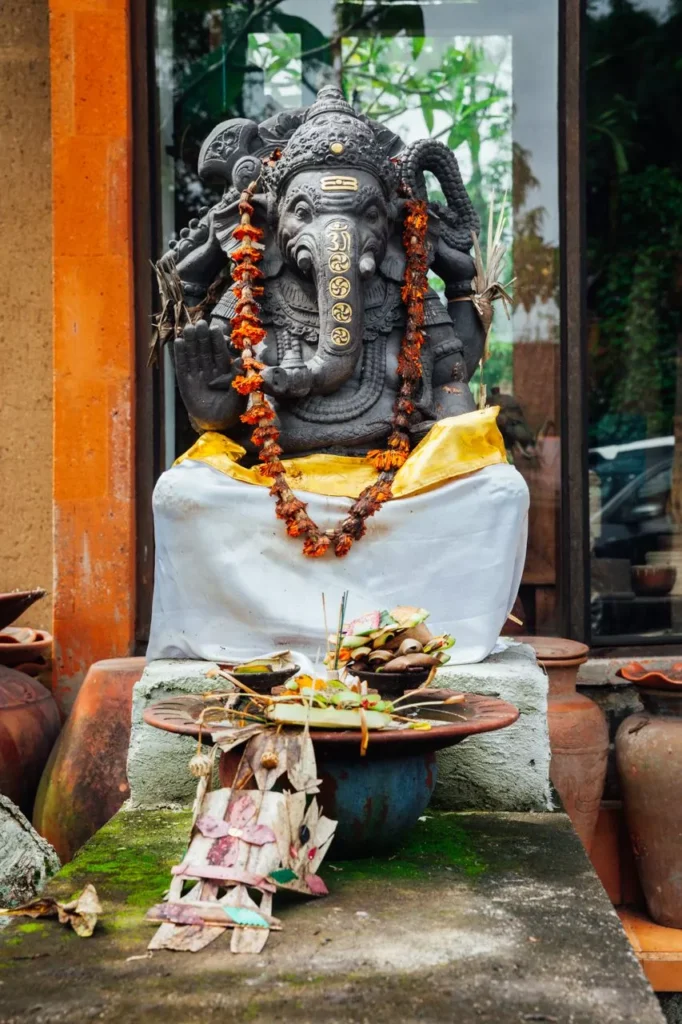
Every aspect of Ganesha’s form carries meaning, but in Bali, those meanings are not abstract—they are lived.
The elephant head is not just a symbol of intelligence. It reflects a way of thinking: calm, deliberate, capable of facing difficulty without panic.
His small eyes suggest focus—not on everything, but on what matters.
His large ears and small mouth offer a principle that resonates deeply in Balinese culture: listen more than you speak. Understanding begins with attention, not expression.
The trunk, flexible yet strong, is perhaps the most telling. It represents adaptability—the ability to respond to life with both strength and sensitivity. To hold firm when needed, and to yield when necessary.
The broken tusk introduces a quieter truth: that imperfection is not failure. In Balinese interpretation, it is a reminder that loss, when accepted, becomes part of wisdom.
Even his full, rounded body carries meaning—not excess, but abundance received with gratitude.
These are not isolated symbols. Together, they form a kind of ethical framework—one that values awareness, restraint, and balance.
Ganesha and the Balance of Life
In Bali, Ganesha is often understood through the lens of Tri Hita Karana—the principle that well-being arises from harmony between three relationships: with the divine, with other people, and with nature.
In this context, Ganesha’s role as a remover of obstacles becomes something more profound.
He represents the work required to maintain balance.
To live in harmony, one must continuously remove what disrupts it: arrogance, disconnection, disregard for others, or imbalance with the natural world.
Seen this way, the statue is not a charm for good fortune.
It is a reminder of responsibility.

Why He Stands at the Threshold
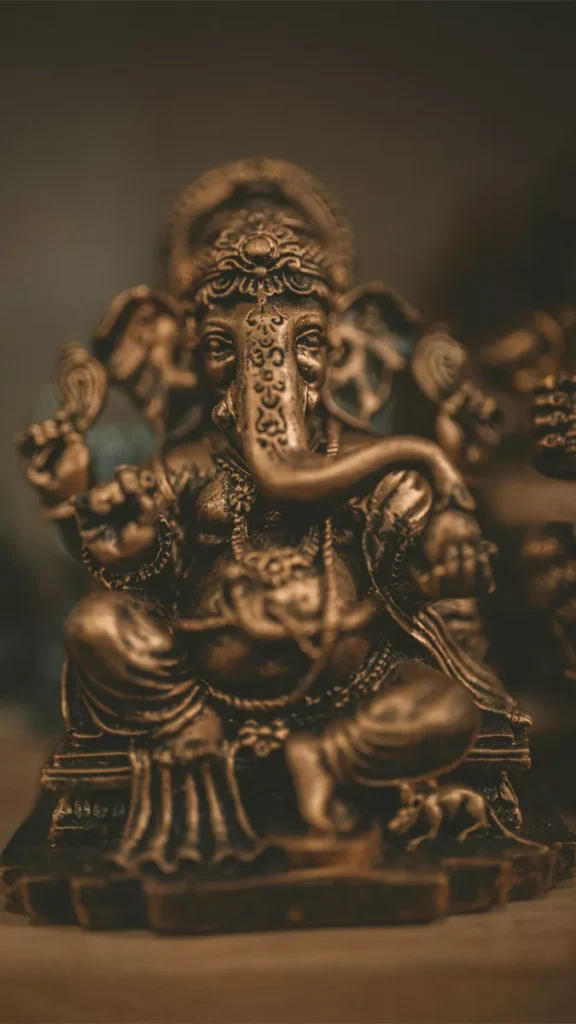
Across Bali, Ganesha is most often placed at entrances—temples, homes, schools, businesses.
This is not accidental.
The threshold is a significant space in Balinese thought. It is where intention meets action. Where the internal becomes external.
To place Ganesha there is to acknowledge that every beginning matters.
Before entering, one is reminded to pause. To be aware. To carry the right intention forward.
In a rapidly changing Bali—where tradition and modern life intersect—this placement takes on new meaning.
The presence of Ganesha in commercial spaces, roundabouts, and public areas reflects a worldview in which the sacred is not confined to ritual, but integrated into everyday life.
An Insight for the Modern World
For many outside Bali, Ganesha is associated with luck, success, or prosperity.
But the deeper teaching is less about outcomes—and more about process.
In a world defined by speed, reaction, and constant noise, Ganesha represents something increasingly rare: thoughtful action.
To listen before speaking.
To adapt without losing direction.
To accept imperfection without resistance.
To begin with intention, not impulse.
These are not religious instructions alone.
They are principles that translate across cultures.
More Than a Statue
It is easy to walk past Ganesha in Bali without noticing him.
That is, in a way, part of the point.
He does not demand attention. He offers it—quietly, consistently, at every threshold.
And for those willing to look beyond the surface, he reveals something deeper:
That wisdom is not something distant or abstract.
It is something practiced—moment by moment, choice by choice.
At the Threshold
In Bali, Ganesha does not simply guard entrances.
He defines them.
He exists in that brief, often overlooked space before action—when a person decides how to move forward.
And in that moment, his presence asks a simple question:
Not what lies ahead.
But how you will meet it.