

As Indonesia’s top billionaires climb the global wealth rankings, their strategic capital allocation—rooted in commodities, banking, and infrastructure—quietly shapes investment confidence across Bali’s tourism-driven economy.
DENPASAR, Bali — On the Bloomberg Billionaires Index, they appear as numerical abstractions: net worth in U.S. dollars, percentage changes year-to-date, and global rankings tracked to the decimal. But in Bali—where capital, confidence, and construction are closely intertwined—the trajectory of Indonesia’s wealthiest individuals often functions as a broader economic signal.
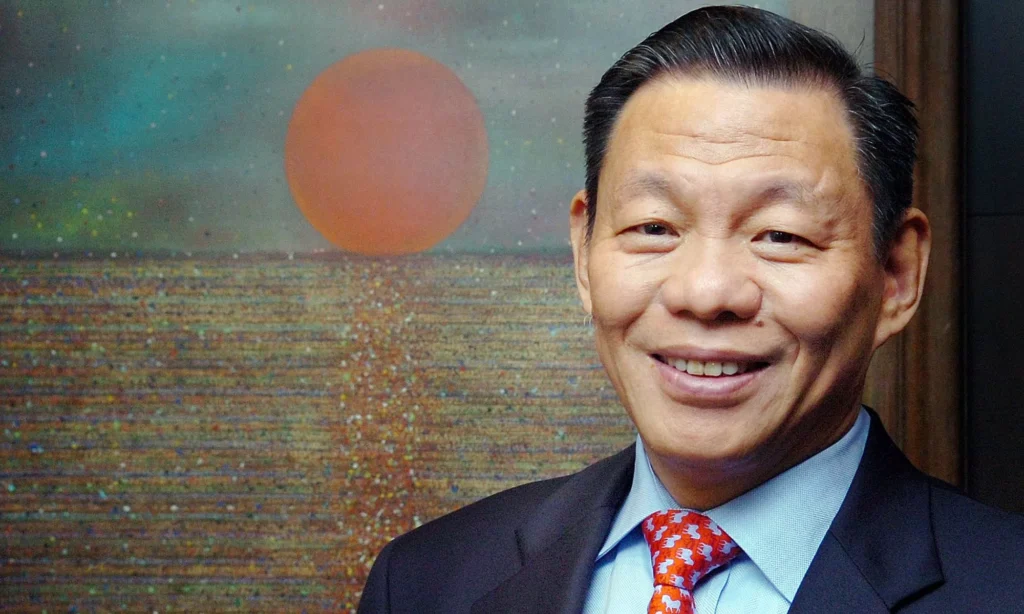
Recent updates to global wealth rankings show renewed momentum among Indonesia’s financial elite. Sukanto Tanoto, founder of Royal Golden Eagle Group, now holds an estimated net worth of US$23.3 billion—a 7.3 percent increase since January that has lifted him above Malaysian tycoon Robert Kuok in the global ranking. His gains reflect steady performance across diversified industrial and resource-based assets.
Yet he remains second nationally. Prajogo Pangestu retains the top position, with an estimated US$34 billion fortune anchored in petrochemicals and energy through Barito Pacific and affiliated ventures. The gap between the two underscores the scale of capital concentration within Southeast Asia’s largest economy.

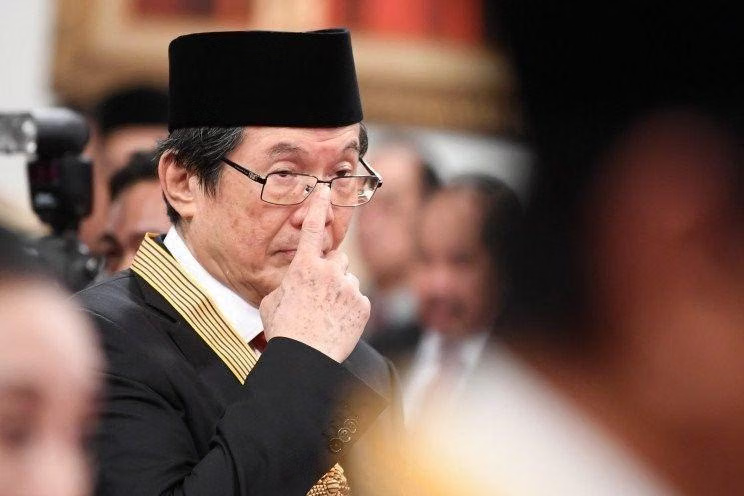
Behind them are Low Tuck Kwong, whose wealth remains closely tied to global coal markets, and banking magnates Budi and Michael Hartono, whose diversified holdings extend well beyond tobacco into financial services and digital ventures, including a controlling stake in Bank Central Asia, Indonesia’s largest publicly listed bank.
For Bali’s expatriate business community, property investors, and hospitality operators, these names matter—not as personalities, but as indicators of where domestic capital may flow next.
The Capital Pipeline
Indonesia’s largest private fortunes remain structurally linked to commodities: coal, palm oil, timber, petrochemicals, and the financial institutions that evolved alongside them. As global commodity prices fluctuate, so too does the liquidity available for diversification.
Bali occupies a distinct position in this capital cycle. The island does not generate wealth from extraction; it absorbs it. When commodity cycles are strong, Indonesian conglomerates often expand into real estate, hospitality, renewable energy, infrastructure, and financial services—sectors that intersect directly with Bali’s development trajectory.
This does not imply that each billionaire invests directly in Bali. Rather, it reflects a broader pattern: when domestic high-net-worth liquidity increases, secondary markets—including Bali’s property and tourism ecosystem—tend to experience stronger capital inflows, whether through direct ownership, bank financing, private equity participation, or affiliated investment vehicles.
Why the Rankings Matter
At first glance, a shift of US$1.6 billion in net worth over six weeks may seem distant from the concerns of a villa operator in Umalas or a restaurateur in Uluwatu. Yet such changes often mirror underlying corporate performance and commodity pricing cycles, influencing bank lending appetite, infrastructure expansion priorities, renewable energy investment, and corporate diversification into hospitality and property—sectors to which Bali remains structurally exposed.
Indonesia’s wealth concentration also operates within a national development framework that encourages downstream industrialization and infrastructure modernization. As large conglomerates reposition for long-term growth—whether through energy transition, digitalization, or logistics—regions perceived as stable, internationally visible, and consumption-driven tend to attract parallel investment interest.
Bali, by virtue of brand strength and global recognition, frequently benefits from this perception.

A Balanced Ecosystem of Capital
It would be reductive to suggest Bali’s economy hinges solely on a handful of Indonesian tycoons. The island’s growth has long depended on a layered ecosystem:
- Domestic conglomerate financing
- State-owned infrastructure projects
- Foreign direct investment
- Expat-led hospitality ventures
- Small and medium enterprises
Yet domestic capital often plays a stabilizing role that foreign flows sometimes cannot. Unlike short-term speculative investors, large Indonesian business groups frequently deploy patient capital—through banks, holding companies, or family offices—with longer investment horizons.
In periods of global volatility, that distinction becomes particularly significant.
The Commodity Connection
The structural link between commodities and Bali is indirect but persistent.
When global coal demand softens, profits across mining-linked portfolios compress, tightening liquidity and narrowing risk appetite. Conversely, when palm oil or petrochemical margins expand, conglomerate earnings improve, increasing flexibility for diversification into property, hospitality, and infrastructure.
Bali’s real estate market, hospitality expansion, and renewable infrastructure ambitions operate within this wider macro cycle. The island may feel removed from the coal fields of Kalimantan or palm estates of Sumatra, but capital mobility connects them.
Quiet Influence, Not Spectacle
Unlike the conspicuous billionaire culture seen in some global financial centers, Indonesia’s wealthiest figures maintain relatively low public profiles in Bali. Their involvement is typically institutional rather than performative—through financing structures, equity stakes, supply chain integration, philanthropic foundations, or long-term land acquisition strategies.
The effects are rarely immediate or theatrical. They are incremental:
Infrastructure that secures energy reliability.
Banking networks that enable development loans.
Corporate expansions that strengthen supply chains.
Philanthropic initiatives that support cultural and educational programs.
Such contributions rarely generate headlines. But over time, they shape investment confidence.
The View from Uluwatu
From the cliffs of Uluwatu, the daily fluctuations of the Bloomberg Index may seem abstract. The horizon looks unchanged regardless of net worth rankings. The waves break with the same rhythm whether Jakarta’s boardrooms are expanding or consolidating.
Yet capital moves like ocean currents—subtle, directional, capable of reshaping coastlines over time. Indonesia’s wealthiest individuals do not determine Bali’s future alone. But their strategic decisions, rooted in commodity cycles and diversification, influence the broader investment climate within which the island operates.
For those paying attention, the rankings are not spectacles of fortune. They are signals of momentum in an interconnected economy where decisions made in Jakarta boardrooms register, quietly but decisively, along Bali’s coastlines.