
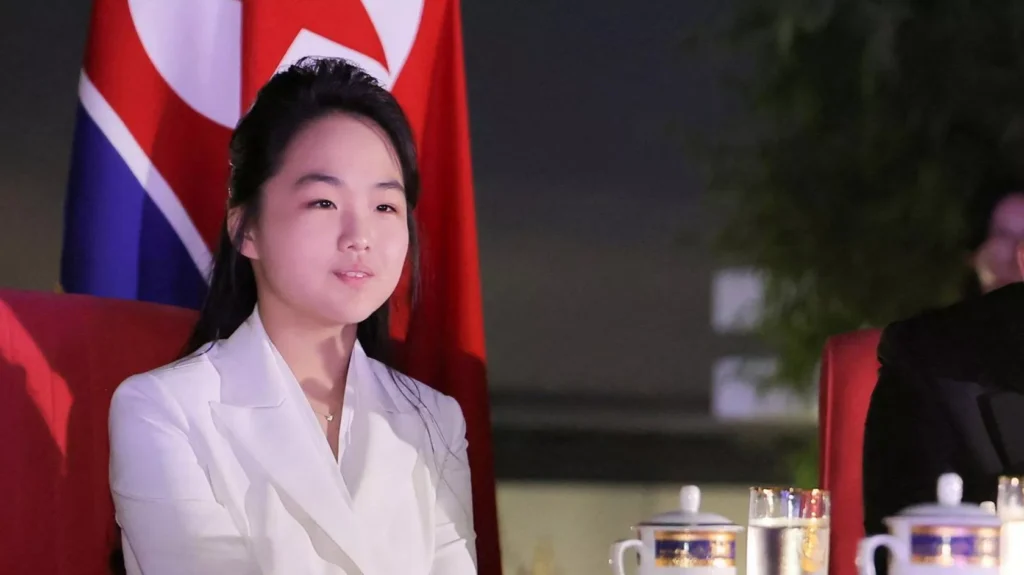
What is the cost of copying a hairstyle in North Korea? According to recent reports, it could mean forced haircuts—and months of hard labor.
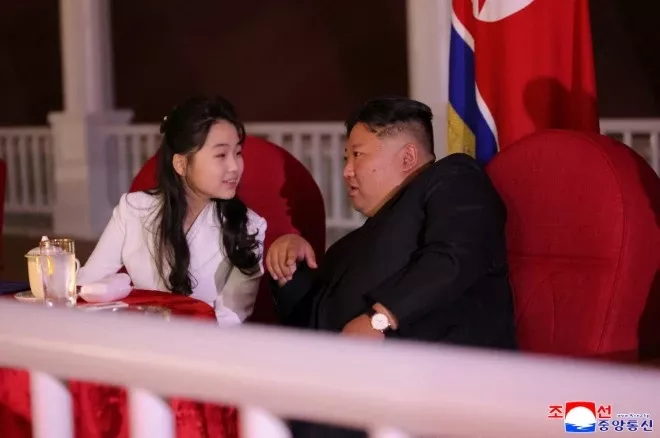
At the center of the story is Kim Ju-ae, the teenage daughter of North Korean leader Kim Jong-un, whose growing public presence has drawn increasing international attention. Over the past year, she has appeared alongside her father at dozens of high-profile events, from military parades to state ceremonies, signaling what many analysts interpret as a carefully managed introduction to public life.
Now, her appearance—specifically her hairstyle—has become the subject of a new and controversial claim.
The Report—and Its Limits
A report published by the British tabloid The Mirror, citing anonymous sources inside North Korea, alleges that authorities have prohibited citizens from adopting Kim Ju-ae’s distinctive hairstyle—an elevated, swept-back look that has become closely associated with her public image.
According to the same report, those who imitate the style may face penalties ranging from forced haircuts to six months of hard labor.
The claims have not been independently verified. Reliable information from inside North Korea remains extremely limited, and reporting often relies on indirect sources.
However, the allegation fits within a broader, well-documented pattern: the North Korean state has long exercised strict control over personal appearance.

A History of Regulating Appearance
For decades, North Korean authorities have issued lists of approved hairstyles for men and women, discouraging styles deemed “non-socialist” or overly influenced by foreign trends.
Campaigns promoting “socialist lifestyle” grooming standards have been documented by defectors and human rights organizations. These guidelines have extended beyond hair to include clothing, behavior, and even naming practices.
In that context, a restriction tied to a member of the ruling family—while unusual—would not be entirely out of character.
Symbolism and Status
What distinguishes this case is not simply the regulation itself, but its symbolic focus.
Kim Ju-ae is not yet formally designated as an heir. Still, her repeated appearances at military events, including moments where she has been publicly acknowledged by senior officials, suggest a carefully curated role within the country’s political narrative.
Her image carries meaning. If reports are accurate, restricting imitation of her appearance may function less as a fashion rule and more as a boundary—defining who may embody authority, and who may not.
Luxury and Constraint
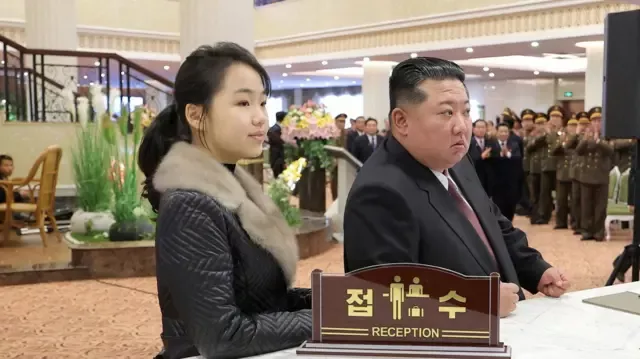
The same source cited by The Mirror also described growing frustration among ordinary citizens, pointing to the contrast between Kim Ju-ae’s public appearances in high-end clothing and the economic realities faced by much of the population.
North Korea continues to face structural challenges, including food insecurity, international sanctions, and limited access to energy resources.
In such conditions, visible symbols of privilege—whether clothing or appearance—can take on political weight.
While these accounts remain difficult to verify independently, they echo a broader theme observed by analysts: the coexistence of strict social control with highly centralized privilege.

Why This Story Resonates Beyond North Korea
For global audiences, stories like this often appear surreal. A hairstyle, in most societies, is a matter of personal expression. In North Korea, it can become a marker of conformity—or a potential violation.
For those living in more open societies, the contrast is stark. Personal appearance is rarely politicized to this degree.
And yet, this is precisely why such reports draw attention. They offer a glimpse into how authority can extend into the smallest aspects of daily life—where even individual identity becomes subject to regulation.
A Note on Uncertainty
It is important to approach this story with caution.
The initial report originates from a tabloid source and relies on anonymous testimony. Independent journalism inside North Korea is not possible, and many claims cannot be verified in real time.
At the same time, the broader framework in which the report sits—state regulation of appearance, symbolic control, and tightly managed public imagery—is well established through years of research, defector accounts, and human rights reporting.