
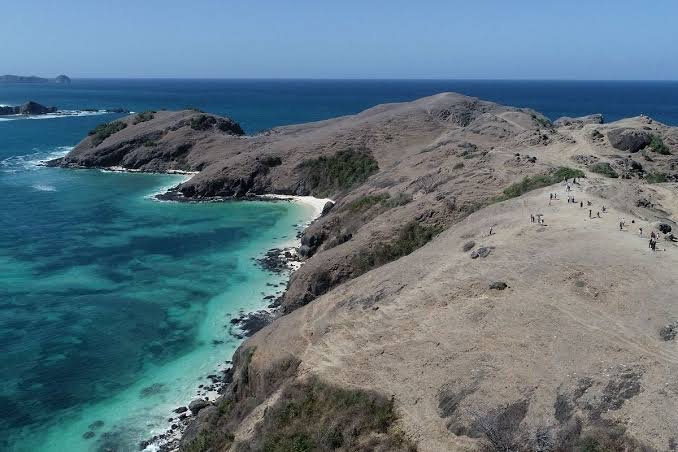
The warning comes as neighboring Lombok, one of Indonesia’s fastest-growing tourist destinations, prepares for a prolonged dry season.
While millions of travelers continue to flock to Bali each year, Indonesian disaster officials are warning that the neighboring island of Lombok and the wider West Nusa Tenggara (NTB) province face one of the country’s highest disaster risks, with drought emerging as the most immediate concern.
According to Indonesia’s National Disaster Management Agency (BNPB), NTB ranked as the fourth most disaster-prone province in the country over the past decade. Officials say geography, climate, and environmental degradation have made the province increasingly vulnerable to natural hazards, particularly during prolonged dry seasons.
For travelers, the announcement is not a reason to cancel a trip. Instead, it highlights the growing environmental pressures facing one of Indonesia’s most popular island destinations just east of Bali.
Authorities said all districts across NTB are now classified as facing moderate to high drought risk, with around 50 sub-districts already experiencing water shortages. Weather agencies also expect an extended dry season linked to climate patterns, raising concerns about water availability for communities, agriculture, and local ecosystems.
Lombok has become an increasingly popular alternative to Bali, attracting visitors with its quieter beaches, Mount Rinjani, the Gili Islands, and expanding luxury tourism developments. But officials acknowledge that climate resilience is becoming just as important as tourism growth.
Governor Lalu Muhamad Iqbal warned that deforestation in parts of Bima and Dompu has made the region significantly more vulnerable to disasters.
“We have to stop acting like firefighters,” he said, calling for long-term forest restoration instead of repeatedly responding to emergencies after they occur.
Environmental experts have long linked forest loss with declining watershed health, reduced groundwater recharge, and greater vulnerability to drought and flooding during extreme weather events.
To prepare for the coming dry months, the provincial government has asked Indonesia’s central government to fund the construction of 106 new groundwater wells to improve water access in vulnerable communities. Officials estimate the project will cost more than Rp 31 billion.
Although Bali itself was not included in the latest warning, environmental challenges rarely stop at provincial borders. Bali and Lombok share similar seasonal weather patterns, and both islands continue to experience growing pressure from climate change, rising tourism demand, and increasing competition for freshwater resources.
For visitors planning to explore Bali and Lombok this year, the message is one of awareness rather than alarm. Popular tourist areas are expected to remain open, but authorities encourage travelers to use water responsibly, particularly during the peak of the dry season.
As tourism continues to expand across Indonesia’s eastern islands, officials say adapting to a changing climate may become just as important as building new hotels, airports, and attractions. For destinations that depend heavily on both nature and tourism, protecting forests and securing water supplies may prove to be the most valuable investment of all.