
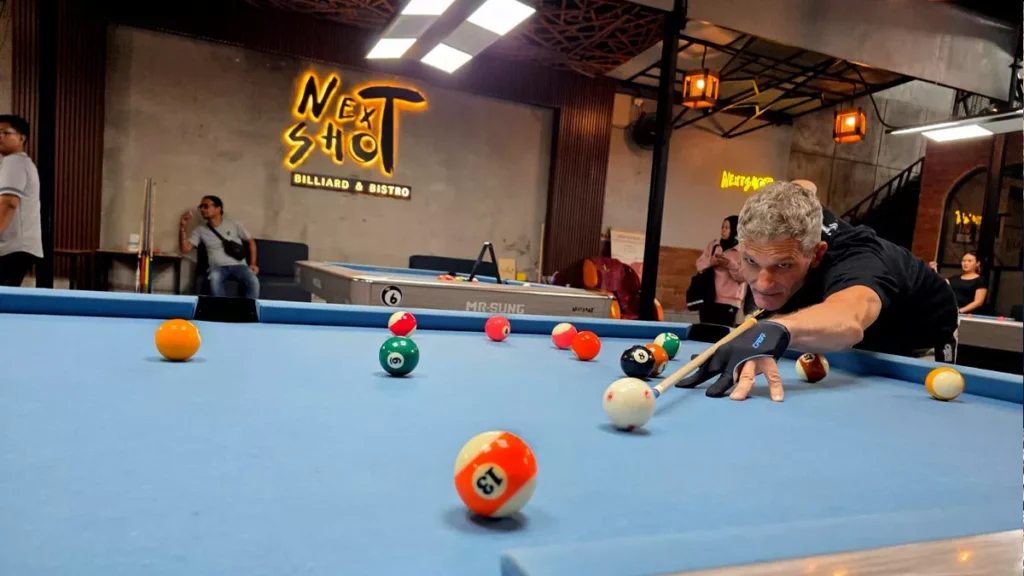
DENPASAR, BALI – For years, billiards in Indonesia carried a familiar stereotype. Pool halls were often associated with cigarette smoke, late-night entertainment, and an environment that families preferred to avoid. But in Bali, that image is beginning to fade.
Across the island, a new generation of billiard venues is emerging with a different philosophy. They are designed not as nightlife destinations, but as welcoming community spaces where beginners, students, families, and experienced players can enjoy the sport together. Comfortable interiors, non-smoking areas, beginner coaching, and community tournaments are gradually redefining what a billiard hall can be.
On Jalan Tukad Yeh Aya in Denpasar, Next Shot Billiard has become one example of this quiet transformation. Since opening in May 2024, the venue has embraced a simple philosophy: billiards should be welcoming to everyone, not just experienced players.
Whether someone walks in alone or has never held a cue before, the goal is to make them feel comfortable enough to play their first game.
“We wanted everyone to feel welcome here,” said co-owner Sandy. “Even if someone comes alone or has never played before, our staff are ready to teach them. We want people to feel at home.”
That philosophy extends beyond customer service. The venue includes dedicated non-smoking areas and a private room where families with children can spend time without exposure to cigarette smoke. The owners believe billiards should no longer be viewed as an adults-only activity.
“Our concept is family-friendly,” Sandy explained. “Parents can bring their children, and beginners don’t need to feel embarrassed. We want to remove the old stigma surrounding billiards.”
The shift reflects a broader change taking place across Bali. As more young Indonesians discover cue sports through social media and local communities, billiards is becoming less about competition alone and more about connection. Friends gather after work, university students spend afternoons practicing together, and newcomers are encouraged instead of intimidated.
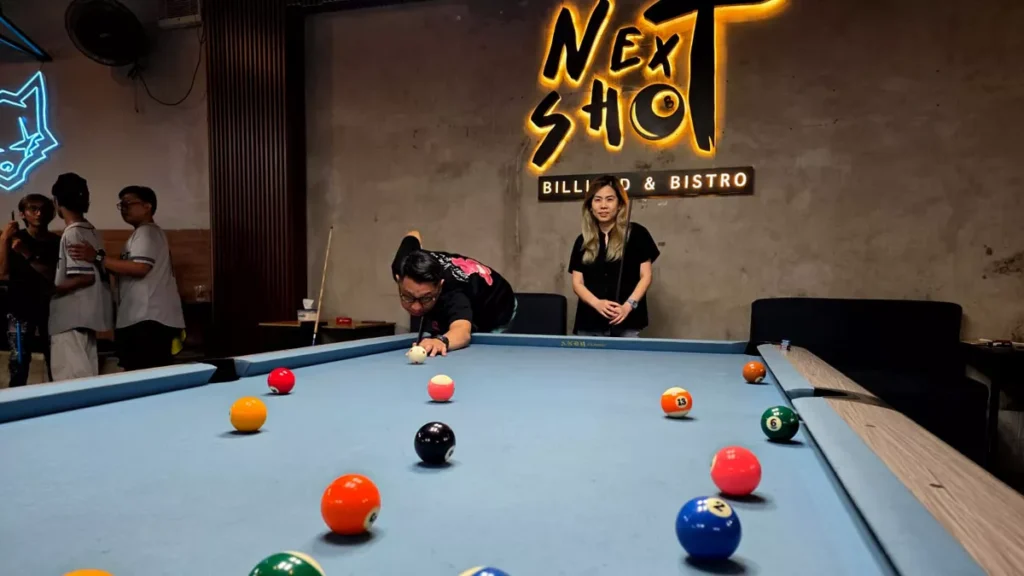
Co-owner Adi Wijaya believes the industry has evolved dramatically over the past decade.
“Years ago, billiard halls had a completely different reputation,” he said. “Today it’s becoming part of people’s lifestyle. You see children learning the sport, young people practicing seriously, and even families spending time together. Billiards has become a place where people socialize.”
NextShot has also focused on introducing beginners to organized competition. Instead of attracting professional athletes, the venue regularly hosts amateur tournaments designed specifically for new players with lower handicap levels, creating an accessible pathway into the sport.
That grassroots approach, observers say, may have implications beyond recreation.
According to Giostanovlatto, Coordinator of the Bali Tourism Journalists Alliance (AJIP Bali), the island has an opportunity to embrace billiards as part of its broader tourism strategy.
“The popularity of billiards is clearly growing, especially among younger people,” he said. “Many new venues have opened across Bali, showing that interest continues to increase.”
Rather than seeing billiards only as a local pastime, he believes it could become another reason for people to visit the island.
“If Bali wants to expand its tourism offerings, the government should pay greater attention to billiards by supporting more national and international tournaments,” Giostanovlatto said. “Billiards is one of the world’s most popular sports, and international events could attract players, spectators, and visitors while creating new opportunities for local businesses.”
The idea aligns with a broader movement within Bali’s tourism industry to diversify beyond beaches and nightlife. Sports tourism has already gained momentum through surfing, marathons, cycling races, and international running events. Billiards, supporters argue, could become another niche capable of attracting year-round visitors.
For now, however, the most significant transformation may not be measured by tournament schedules or visitor numbers. It is reflected in who walks through the door.
Where billiard halls were once seen as places reserved for adults late at night, many are becoming spaces where university students learn together after class, colleagues gather after work, parents introduce their children to the sport, and complete beginners are welcomed without hesitation.
Sometimes, the biggest cultural changes happen quietly. In Bali, they may be unfolding one shot at a time.