
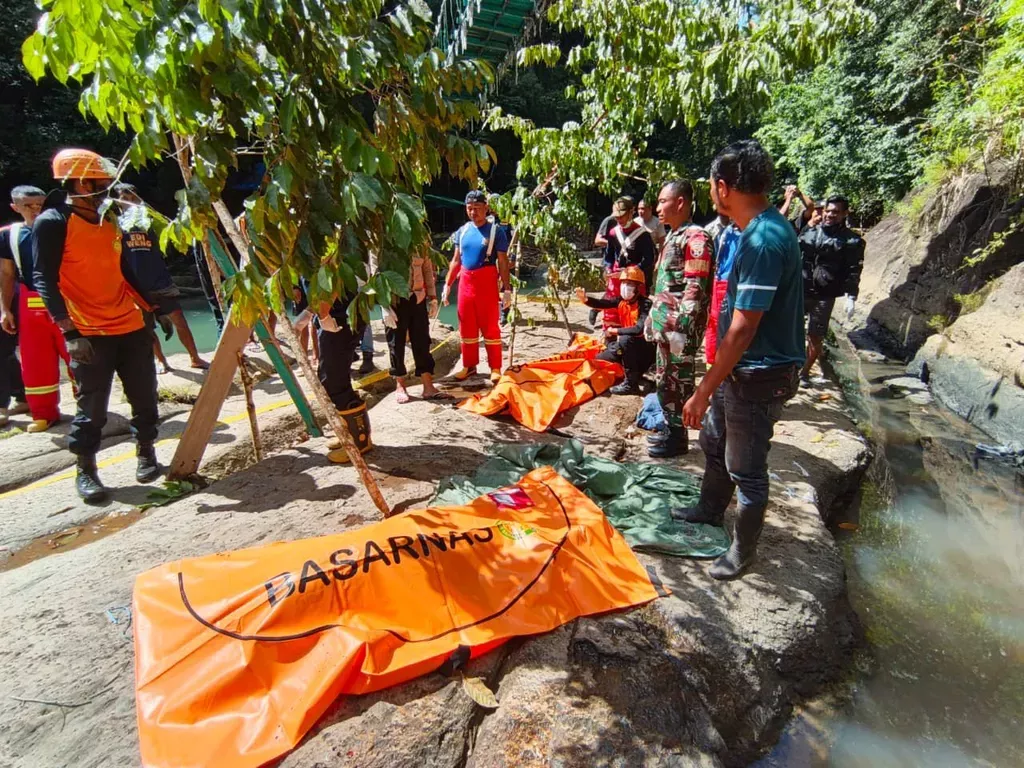
The bridge was rotten. The safety nets were gone. And now, police say the tour guide accompanying two Austrian tourists to their deaths was not certified to lead them at all.
Jurgen Perjul (55) and Astrid Perjul (57), a married couple from Austria, died on Sunday, May 24, 2026, after falling approximately 20 meters when the wooden suspension bridge at Cunca Wulang waterfall collapsed beneath them.
Police have already revealed that the bridge’s wooden supports were rotten, the safety nets were nearly 90 percent missing, and there was no written inspection schedule or warning signs.
Now, they are asking a different question: who was watching the watchers?
“We found facts on the ground that there were no official, certified tour guides accompanying the guests during trekking activities,” said AKBP Christian Kadang, chief of West Manggarai Police, on Tuesday, May 26, 2026.
The Guide
The couple was accompanied by a local guide named Muhamad Muhardin (30), who witnessed the collapse and watched them fall onto the rocks below. He ran back to the ticket post to seek help. He did nothing wrong in the moment of crisis.
But according to police, he should never have been guiding tourists in the first place — at least not without proper certification.
“Local guides there have also never received adequate safety training,” Christian said.
He explained that safety competencies are essential when tourists encounter emergency situations in remote destinations. Cunca Wulang is approximately 1.5 hours by road from Labuan Bajo — far enough that rescue cannot arrive quickly.
The guide had warned the couple about slippery trekking trails due to weather. But that warning, while appropriate, did not address the condition of the bridge itself.
The Broader Failure
The absence of a certified guide is not the cause of the deaths. The bridge collapsed because it was rotting and unsafe.
But the lack of certified guides points to a larger systemic failure: a tourist destination operating without professional oversight, without safety training for staff, and without basic emergency preparedness.
Police have already confirmed there was no written standard operating procedure for routine bridge inspections. No adequate tourist safety system. No warning signs. No accident insurance.
Now, they have confirmed that even the human element — the guide walking beside the tourists — was not properly vetted or trained.
What This Means for Travelers
For international tourists booking trips to Labuan Bajo’s inland attractions, the case raises a difficult question: how do you know if your guide is certified?
In many remote destinations, local guides are hired informally. They know the terrain. They speak the language. They are often friendly and helpful. But friendly and helpful are not the same as trained.
Christian’s statement suggests that in Cunca Wulang, no guide on site had received formal safety training. If an emergency occurs — a fall, a heart attack, a landslide — the person leading you may not know what to do beyond calling for help.
That may not matter on a perfect day. On the day the bridge collapses, it matters very much.
The Investigation Continues
Police are still investigating potential criminal negligence by the management — the West Manggarai Tourism, Creative Economy, and Culture Agency, which runs the site, and the local community tourism group (Pokdarwis) that assists with daily operations.
The waterfall remains closed indefinitely. No date has been set for reopening.
The bodies of Jurgen and Astrid Perjul are scheduled to be repatriated to Austria.
And a tour guide who watched them fall will carry that memory for the rest of his life — certified or not.