
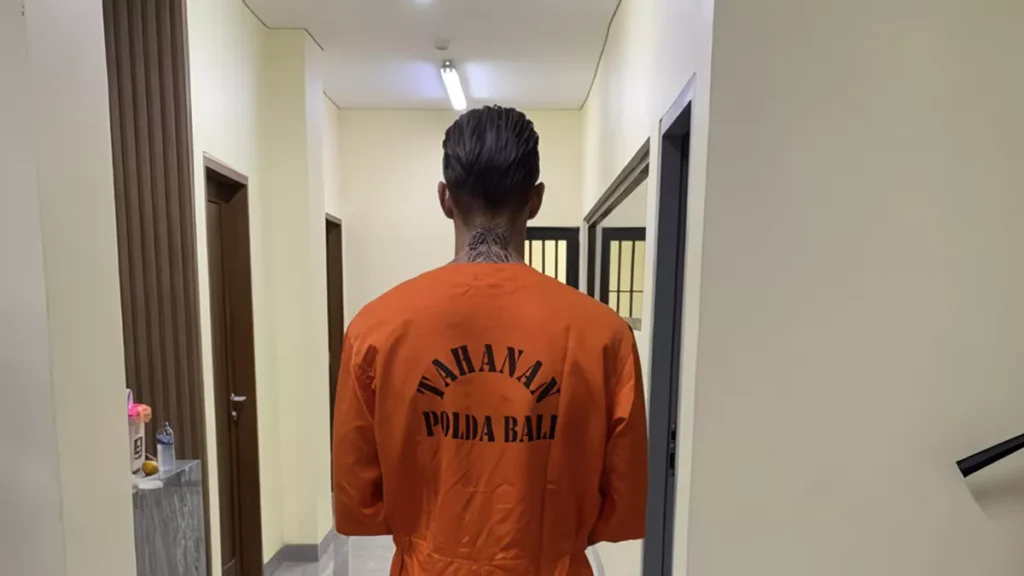
DENPASAR, Bali — What began as a moment of frustration during Bali’s annual Day of Silence has evolved into one of the island’s most closely watched criminal cases involving a foreign visitor.
Indonesian prosecutors are seeking a 15-month prison sentence for a 26-year-old Swiss tourist after an Instagram Story insulting Nyepi, Bali’s sacred Day of Silence, went viral earlier this year and triggered widespread public outrage.
The case has drawn international attention not only because of the proposed sentence, but also because it highlights how social media posts made by visitors can carry serious legal consequences when they are perceived as insulting deeply held religious or cultural traditions in Indonesia.
Prosecutors at the Denpasar District Court have asked judges to sentence Luzian Andrin Zgraggen to one year and three months in prison, with time already spent in detention deducted from any final sentence.
According to the prosecution, Zgraggen violated Article 301(1) of Indonesia’s 2023 Criminal Code, which prohibits the electronic dissemination of insulting content.
A Holiday That Took an Unexpected Turn
Court documents show that Zgraggen arrived in Bali in February for a holiday and was staying at a hotel in Kuta before Nyepi, the Balinese Hindu New Year marked by 24 hours of silence, reflection and island-wide restrictions.
Hotel staff had reportedly informed him in advance that guests would be required to remain inside their accommodation throughout Nyepi, with outdoor activities prohibited and many services operating on a limited basis.
Prosecutors say the tourist became frustrated after discovering he could not leave the hotel to buy food.
Later that evening, he allegedly walked outside, recorded a 22-second video, and uploaded it to his public Instagram Story together with an English caption containing profanity directed at Nyepi and its rules.
Although the post was later deleted, screenshots and screen recordings quickly spread across Indonesian social media, sparking widespread condemnation.
According to prosecutors, the same content was later uploaded again, intensifying the backlash.
An Apology That Didn’t Stop the Investigation
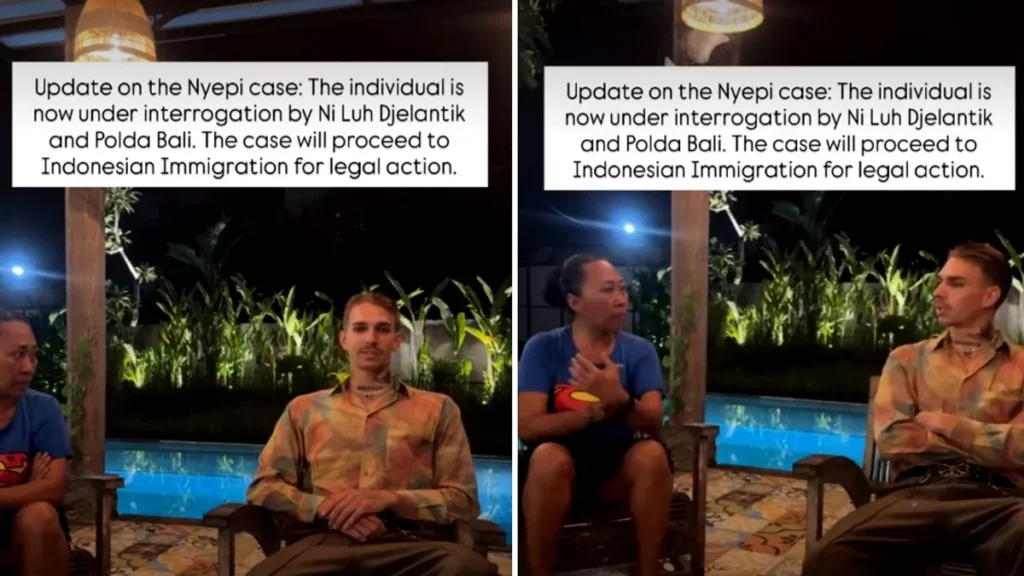
As criticism mounted online, Zgraggen reportedly contacted Balinese activist and Indonesian senator Ni Luh Djelantik in an effort to apologise for the post.
But before the apology could be delivered, officers from Bali Police’s Cyber Crime Unit arrested him when he arrived at her residence.
The court has yet to issue its verdict.
More Than a Public Holiday
For millions of international visitors, Nyepi is one of Bali’s most unique cultural experiences.
For 24 hours each year, the island falls almost completely silent. Flights are suspended, roads are empty, businesses close, lights are dimmed and residents, together with tourists, are expected to remain indoors except in emergencies.
Hotels continue to accommodate guests, but visitors are expected to respect the island-wide observance regardless of their nationality or religion.
The prosecution has become one of the clearest examples of how cultural misunderstandings can quickly escalate into legal proceedings in Indonesia, particularly when amplified through social media.
While Bali remains one of the world’s most welcoming destinations for international travellers, authorities have repeatedly stressed that respecting local customs is not simply a matter of etiquette. In certain circumstances, it is also a matter of law.