
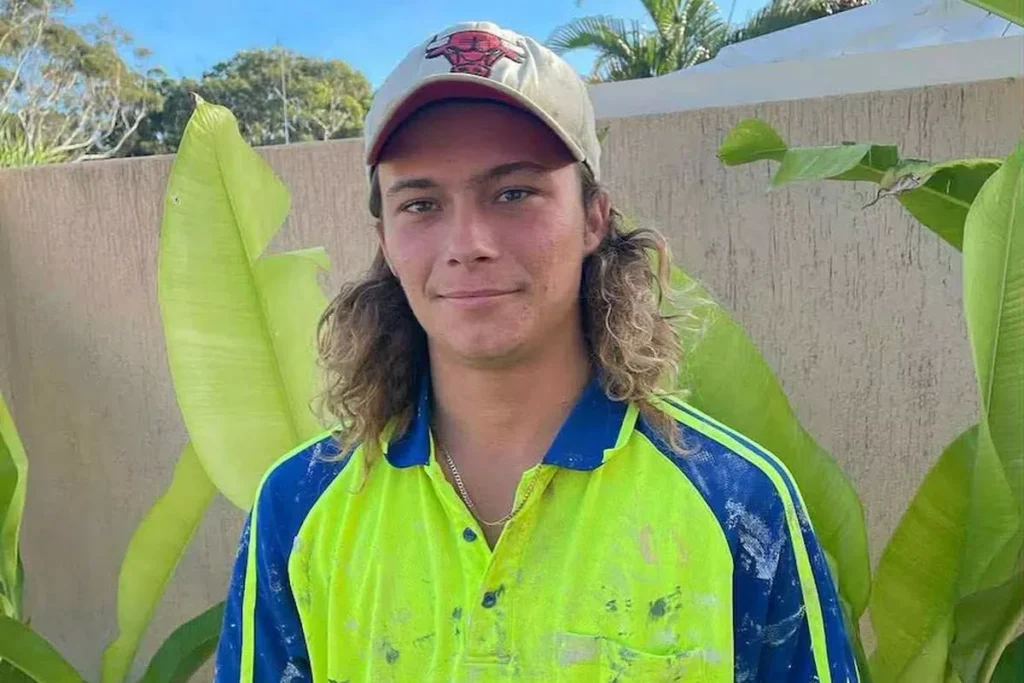
One year ago, 23-year-old Australian Byron Dumschat, also known as Byron Haddow, arrived in Bali for what was supposed to be a holiday.
He never returned home alive.
Twelve months later, his parents say they are still waiting for answers.
Byron died on May 26, 2025, at The Grove Bumbak villa complex in Seminyak, where he had been staying with a friend during a trip to Bali.
What happened during his final hours remains the subject of ongoing investigations in both Indonesia and Australia.
For Byron’s parents, Robert and Chantal Haddow, the frustration is no longer simply about how their son died.
It is about why, a year later, they still say they do not have a clear explanation.
Questions From The Beginning
According to reporting by ABC Australia, the circumstances surrounding Byron’s death raised concerns almost immediately.
The family says the scene where Byron was found had already been cleaned before evidence could be fully collected. The case was also reportedly not formally brought to Bali police until several days after his death.
Initially, Australian authorities informed the family that Byron may have drowned in the villa pool.
But according to the family, subsequent autopsy findings raised further questions.
“He grew up around water — fishing, camping, boating,” Robert Haddow said.
“There’s no way he drowned in a small villa pool.”
The Autopsy Findings
A forensic examination conducted in Bali found high levels of alcohol in Byron’s system as well as traces of antidepressant medication.
The examination also documented bruising to parts of his body, including his forehead, eyelid, and knee, described in reports as injuries associated with blunt force impact.
Police sought information from people believed to have been with Byron during the final hours before his death.
Three Australians who were reportedly present at the villa had already left Indonesia before Bali police were able to interview them, according to reporting cited by the family.
The family says those individuals later provided differing accounts to both them and Australian investigators.
ABC reported there have been no allegations of wrongdoing made against those witnesses.
“Byron meant everything to us,” Chantal Haddow said.
“His life mattered, and the truth matters.”


Investigations Across Two Countries
Australian authorities have remained limited in what they can publicly say.
Australia’s Department of Foreign Affairs and Trade confirmed it provided consular assistance to Byron’s family but said it does not have authority over investigations conducted overseas.
“DFAT has provided consular assistance to the family of an Australian who died in Indonesia in 2025,” a spokesperson said.
“Due to privacy obligations, we cannot comment further.”
The department also emphasized that foreign governments cannot intervene in criminal investigations conducted by Australian authorities, and vice versa.
Meanwhile, Bali police say the case remains under investigation.
The Queensland Coroner’s Court has separately confirmed that an inquest remains ongoing.
Court documents obtained by the family’s legal team reportedly show that Bali police have received interview transcripts and witness statements collected by the Australian Federal Police.
Investigators have also re-interviewed the villa manager and reportedly continue seeking additional expert information.
A Family Searching For Transparency
The family says one of the most difficult parts has been navigating multiple institutions while feeling they have received few clear answers.
“We have been left to face unimaginable grief, confusion, unanswered questions, and a lack of transparency,” Chantal Haddow said.
Robert Haddow says the family increasingly felt forced to conduct parts of the process themselves.
“We have had to move on our own and try to figure everything out ourselves,” he said.
“We haven’t received transparency from anyone.”
The case also prompted changes inside Bali.
Following concerns raised by the family and Australian officials regarding the autopsy process, Prof. Ngoerah Hospital updated procedures so families are informed when organs need to be retained during forensic examinations.
A Push For Change
The Haddow family has since launched a petition urging the Australian government to introduce stronger safeguards when Australians die overseas.
Their requests include clearer reporting systems, better communication with families, stronger accountability mechanisms, and independent review processes when circumstances remain disputed or unclear.
They also want people believed to have been present during Byron’s final hours to provide sworn testimony.
“There were four Australians there,” Robert Haddow said.
“Three came home.”
What Still Remains
One year later, investigations remain active.
No one has been accused of wrongdoing.
No final findings have been released.
For Byron’s parents, however, the passage of time has not reduced the questions.
They say they are not asking investigators to reach a predetermined conclusion.
They are asking for something simpler.
Clarity.
Because for a family still waiting for answers, uncertainty itself can become part of the grief.