
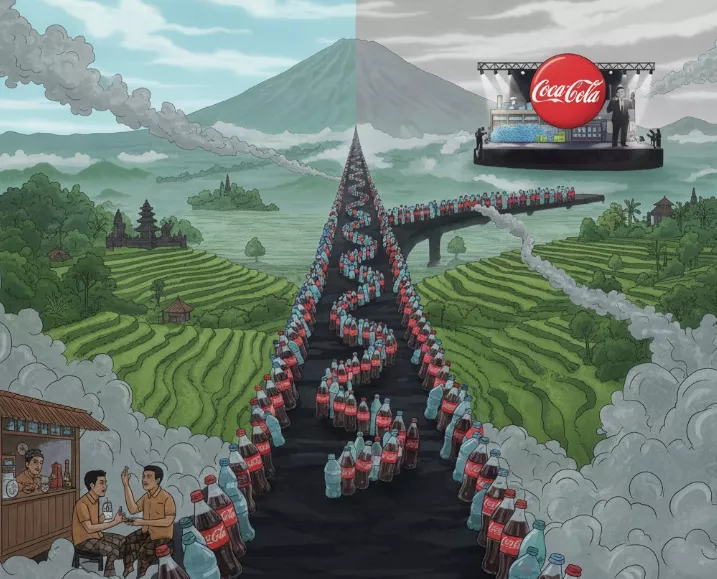
Written by Giostanovlatto, Founder of Hey Bali and Observer of Tourism & Sustainability
Recycle Me Coca-Cola in Bali — In the narrative of sustainability, the distance between a program and a solution is often separated by a long corridor of questions: is this systemic transformation, or merely a symbolic transaction?
From the “Recycle Me” Coca-Cola campaign in Bali—offering Rp 15,000 for 12 used plastic bottles—we are invited to walk that corridor. At its end lies not just the story of waste transformed into plastic pellets, but also a deeper inquiry into how modern corporations design environmental care: as a responsibility, or as a strategy?
The program arrives with a clear promise: collect our bottles, earn money, and the world becomes a shade greener. Yet, behind the convenience of the Grab Express app and OVO digital transfers, a fundamental question lingers, worthy of our consideration: why only Coca-Cola bottles? Can recycling that is exclusive truly be the answer to a plastic crisis that is inherently inclusive?
Between Economic Value and Market Value
Let us do the math. In this Recycle Me Coca-Cola initiative, 12 bottles (less than 1 kilogram) are valued at Rp 15,000. Meanwhile, in Bali’s recycling market, the price for PET bottles hovers around Rp 4,000 per kilogram. A significant discrepancy.
On one hand, this can be seen as a positive subsidy—an incentive deliberately made attractive to boost participation. On the other hand, this figure reflects another question: is that value more akin to a price for consumer emotional engagement than the material worth of the bottles themselves?
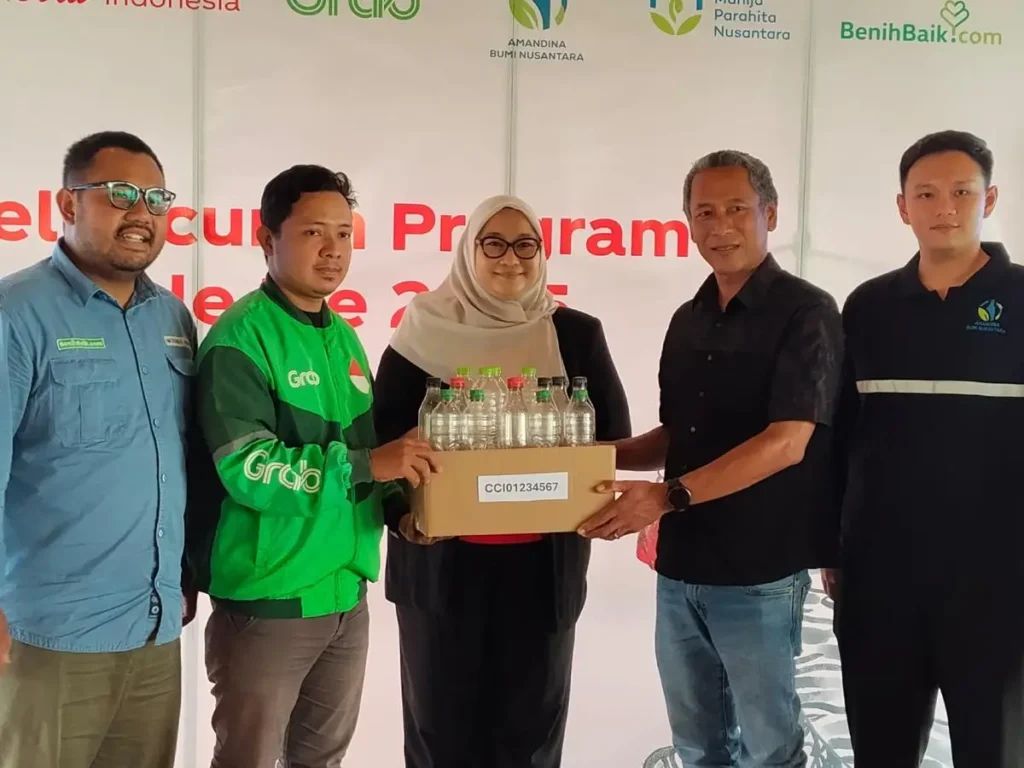
Alexander Bryan Sutjipto of Amandina Bumi Nusantara explains that from 1 kilogram of plastic bottles, about 85% will be processed into pellet form. Technically, the material does have value. However, when the program accepts bottles from only one brand, despite all PET bottles being materially similar, what occurs is a selection based on logo, not on composition.

The Stage of Sustainability vs. The Stage of Marketing
There is a subtle irony in this narrative. On one side, the Recycle Me Coca-Cola program is packaged as part of environmental stewardship—even hailed as a form of cross-sector collaboration. On the other side, the limitation to “Coca-Cola bottles only” reminds us of a classic marketing principle: brand loyalty.
Fauziah Syafarina Nasution, Communications Lead for Coca-Cola Indonesia, states the program exists for education and packaging recovery. But, if the goal is to reduce plastic waste broadly, why not open the doors to all brands? Is this more about managing brand image than managing waste?
This is not about accusation, but about reading the signs of our times. In an era of increasingly critical consumers, sustainability programs are no longer just CSR—they have become part of the most persuasive corporate communication. The question is whether this persuasion is directed at changing consumer behavior long-term, or merely at associating the brand with a “green” aura.
From Recycling to the Unanswered Questions
A program like Recycle Me Coca-Cola deserves appreciation as a first step. It shows producers are beginning to take responsibility—at least for their own packaging. Yet, that responsibility remains reactive and partial.
More fundamental questions arise before recycling even begins: how do we reduce the production of single-use packaging? Or, as is often quipped in casual conversations: “If they truly care for the environment, why not use glass bottles instead?”
The answers are complex, of course. Glass is heavier, more logistically costly, and less practical for a high-mobility lifestyle. But that is precisely where the real challenge lies: will we only busy ourselves with managing waste, without ever seriously changing how we produce and consume?
A Note for Corporations and the Awakened Consumer
The Recycle Me Coca-Cola case is not a bad example. It is, in fact, a sophisticated example of how an environmental issue can be structured into a measurable, engaging program. Yet, it is that very sophistication we must also scrutinize.
As consumers, we may accept the Rp 15,000 incentive—but we must not stop asking questions. As observers, we should appreciate the initiative—but continue to advocate for greater scale and inclusivity. And as corporations, perhaps it is time to manage not just plastic waste, but also the public expectation for more substantive environmental commitment.
In the end, sustainability is not about how many bottles are successfully collected, but about how far we dare to transform the system itself—from product design and distribution models to how we define responsibility. For what we need is not merely recycling, but a cycle that truly circulates—unhindered by the borders of a brand logo.