
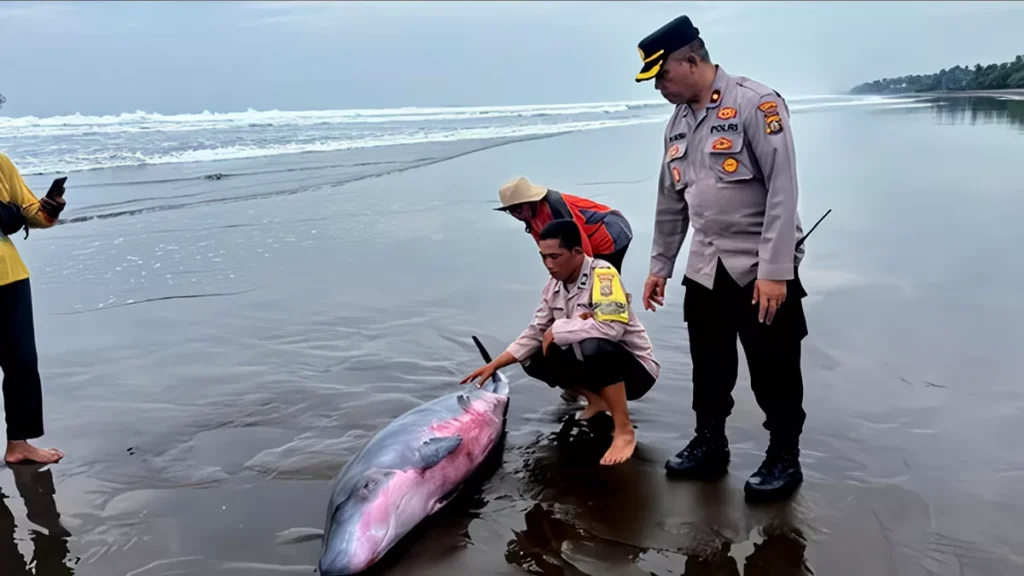
A rare dwarf sperm whale found stranded on Bali’s west coast has died following an intensive, multi-day medical intervention, highlighting the fragility of marine life and the complex challenges of wildlife rescue.
JEMBRANA, Bali — A dwarf sperm whale discovered stranded earlier this week on Tembles Beach has died, despite a sustained emergency rescue operation by veterinarians and conservationists. The protected marine mammal, initially found alive but in severe distress on Monday, January 26, passed away on Wednesday afternoon after its condition deteriorated despite intensive care.
The whale was immediately attended to by a veterinary team from the Indonesian Wildlife Network (Jaringan Satwa Indonesia) in collaboration with the Jakarta Animal Aid Network (JAAN).
In a critical attempt to save it, the animal was transported to a rehabilitation sea pen, ‘Umah Lumba’, in Buleleng Regency for emergency treatment. “The whale did not survive. Its condition was extremely weak from the start,” confirmed JSI veterinarian Deny Rahmadani.
Necropsy Points to Drowning, Not Plastic Ingestion
A post-mortem examination (necropsy) was conducted to determine the cause of death. The results revealed significant lung damage, with the organs discolored and filled with foam—a clear indication that the whale had inhaled a fatal amount of seawater during the stranding, leading to respiratory failure.
Notably, veterinarians did not find any foreign objects, such as plastic debris, within the whale’s digestive system. This finding directs attention away from a commonly cited marine threat and toward the immediate physiological trauma of the stranding event itself.


The Enduring Mystery of the Stranding Cause
While the necropsy identified the mechanism of death, the primary reason for the whale’s initial stranding remains unknown. Experts strongly suspect disorientation, a common cause for deep-water species like the dwarf sperm whale to end up in shallow areas. Determining the root cause of such navigational failure—which could be related to illness, injury, underwater noise, or other environmental factors—requires investigation beyond a standard post-mortem. “A comprehensive examination is needed to know for sure the cause of the whale’s disorientation,” added Deny Rahmadani.
Following the completion of all medical procedures and official reporting to marine authorities, the whale’s remains were buried on site.
A Sobering Reminder for an Ocean-Focused Community
For Bali’s residents and international visitors—a community intrinsically linked to the sea—this event is a poignant reminder of the vulnerability of marine ecosystems. The dedicated, yet ultimately unsuccessful, rescue attempt demonstrates both the compassion and the technical limitations involved in responding to such complex wildlife emergencies.
The death of this rare visitor underscores the silent pressures faced by marine life and reinforces the importance of responsible ocean stewardship, ensuring Bali’s waters remain a safe haven for the diverse species that call them home.