
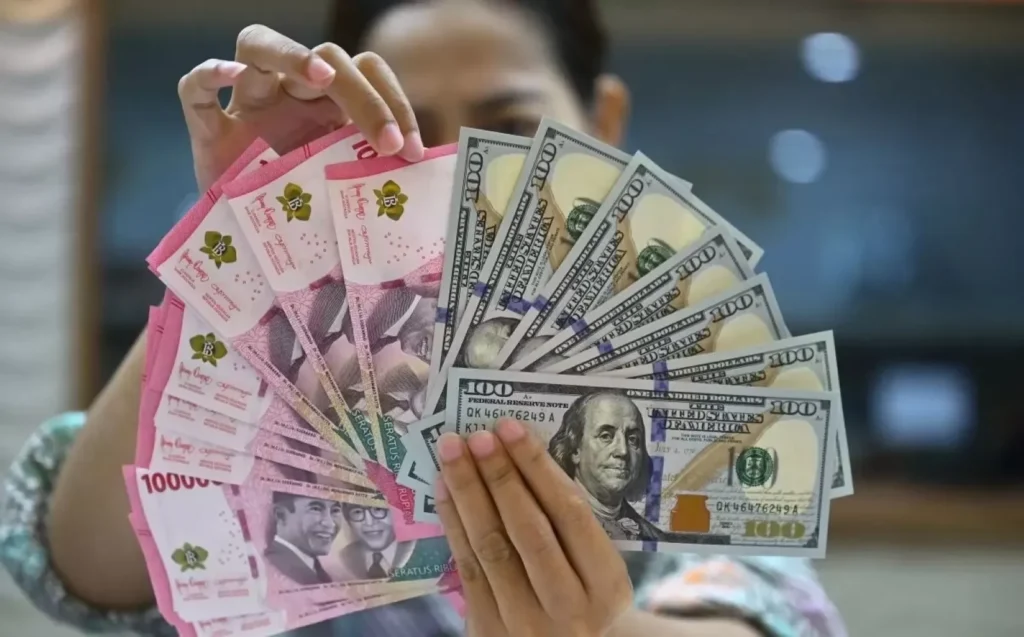
A slight but noteworthy shift occurred on Indonesia’s currency boards Tuesday morning: the rupiah opened stronger, trading at Rp16,750 against the US dollar. While a routine fluctuation in global finance, this movement carries tangible, immediate implications for the international community driving Bali’s economy—foreign investors, expatriate residents, and tourism businesses alike.
The appreciation, a 0.21% gain from the previous close, comes amid a complex global backdrop. The US dollar index (DXY) remains resilient, buoyed by robust economic data and shifting expectations around Federal Reserve policy. For emerging markets like Indonesia, this sustained dollar strength typically spells pressure, making the rupiah’s morning uptick a fragile reprieve rather than a decisive trend reversal.
The Bali Ground Truth: A Double-Edged Currency Swing
Beyond the charts, the exchange rate translates directly into on-the-ground realities in Bali.
- For Foreign Investors & Developers: A stronger rupiah decreases the local purchasing power of foreign capital. For those funding villa projects or hospitality ventures with US dollars or euros, construction and land costs become nominally more expensive. This can prompt budget recalibrations or a tactical pause, awaiting a potentially more favorable entry point. For long-term investors, currency volatility now sits alongside regulatory risk as a key variable in Bali’s investment equation. The signal is one of short-term stability, not a permanent bullish shift.
- For Tourism & Hospitality Businesses: There is a marginal silver lining. Businesses that import goods—from fine wines to building materials—will see their costs slightly reduced. However, this benefit is often fleeting and secondary to the primary driver of Bali’s tourism health: the strength of the tourists’ own currencies and their disposable income.
- For Expatriates & Digital Nomads: The impact is personal. For those earning in strong foreign currencies like the US dollar, a stronger rupiah means their monthly income converts into fewer Indonesian rupiah. This effectively raises the local cost of living, from villa rentals to dining out. It serves as a potent reminder that Bali’s famed affordability is not a fixed guarantee but a variable equation tied to global capital flows.
A Fragile Strength in a Volatile World
Analysts caution that the rupiah’s strength is tenuous, with potential pressure pushing it toward a range of Rp16,750 to Rp16,850. The primary drivers remain external: the trajectory of the US dollar, Federal Reserve policy, and global risk sentiment. This is not a market forecast, but a snapshot of how global forces can tilt the local economic equation in Bali overnight.
This underscores the fundamental reality for Bali: the island’s economic vitality is inextricably linked to its status as an emerging market destination. While a stronger rupiah may offer brief, tactical advantages for some, it exists within a much larger and more volatile system. For the businesses and individuals who have built their lives around Bali’s allure, understanding these currency dynamics is not an academic exercise but a crucial component of financial resilience.
In Bali, currency moves don’t stay on trading screens. They quietly reshape daily life, arriving in rent negotiations, construction budgets, and business plans often faster than people expect.