
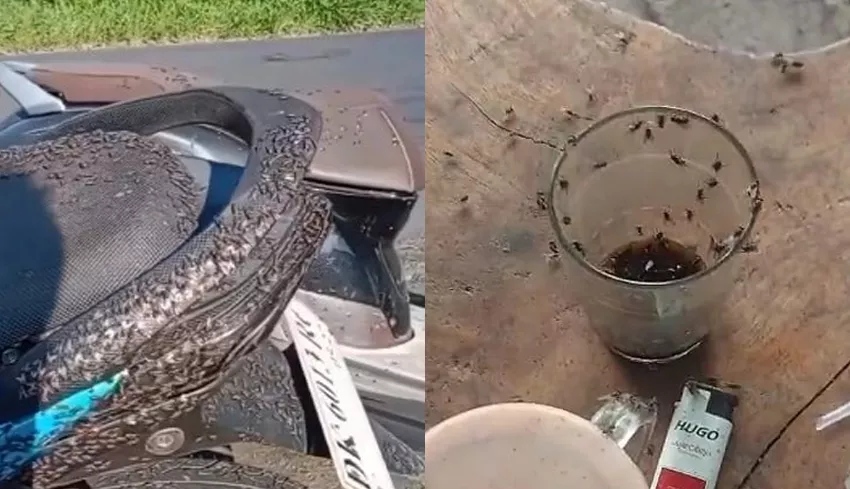
KINTAMANI, Bangli, Bali — Every year, when the rainy season reaches Bali’s central highlands, the district of Kintamani faces an unwelcome visitor: a dramatic influx of flies.
This year is no exception. Swarms of the insects are visible across villages and tourism corridors, raising concerns among residents as well as businesses that depend on the calm image of Mount Batur and Lake Batur.
Authorities say the causes lie in a combination of climate and agricultural habits. The Head of Agriculture, Food Security, and Fisheries of Bangli Regency, I Nyoman Sarma, explained to detikBali that the problem becomes acute because many farmers use untreated animal manure as fertilizer on large areas of farmland, particularly waste from chicken livestock.
“The cause is complex. One of them is livestock waste from animal manure, especially chicken,” Sarma stated. “They use it just like that without prior processing, such as fermentation. It should not be spread directly but go through a composting process from waste to nutrients.”
Kintamani’s vast agricultural sector remains the backbone of Bangli. More than 362,000 farmers tend around 575,050 hectares of volcanic, often dry soil to produce tomatoes, onions, and Bali citrus. Organic matter is essential for those crops, and because of that dependence officials believe a total prohibition on direct manure use would not be realistic.
“Try to imagine if it is forbidden, they will not be able to produce tomatoes, onions, oranges, our needs,” Sarma added, pointing to the daily food supply of the island.
The impact on tourism is already visible. Visitors come to Kintamani expecting cool air and clean terraces, yet the seasonal swarm interrupts meals and outdoor activities.
Sarma acknowledged the difficulty of creating one standardized solution, partly because chemical sprays could disturb guests and the environment. For now, hotels and cafes rely on local measures such as traps, screens, and enclosed dining spaces.
Provincial government advisories and training programs continue to promote proper composting and fermentation of manure, but adoption moves slowly in rural Bangli.
The annual fly influx therefore exposes the meeting line between two economies that share the same ground. Kintamani must protect its agricultural heart while preserving the serenity that attracts global travelers.
Officials said reform will depend on practical steps rather than slogans. The marine and agriculture offices plan to extend education to villages and tourism operators, encouraging waste to be processed before touching the soil.
Until that happens, the district will again carry the burden of managing flies season by season while keeping the doors open for anyone who comes to enjoy Mount Batur’s horizon.
#heybalinews