
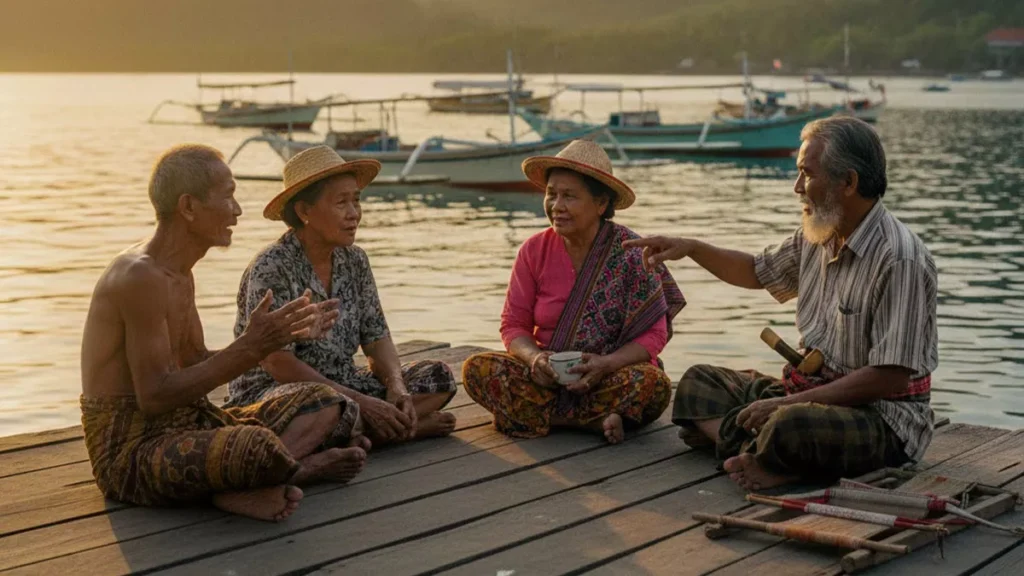
Beyond its famed natural beauty, the gateway to Komodo is home to a rich tapestry of indigenous cultures—seafaring nomads, highland farmers, and migrant traders—who have coexisted for generations.
LABUAN BAJO, Flores — As a rising global tourism destination, Labuan Bajo is celebrated for its dramatic landscapes and marine biodiversity. Yet, the true essence of this Flores port town lies in its people—a harmonious blend of four distinct ethnic groups whose traditions define the region’s unique cultural identity.
Historically a trading port, Labuan Bajo has long been a crossroads. This convergence has fostered a community where the indigenous Bajo and Manggarai coexist with the Bima (Mbojo) and migrant Bugis peoples, creating a vibrant, multi-ethnic society.
1. The Bajo: Guardians of the Sea
Known as “Sea Nomads,” the Bajo people are renowned maritime experts. Believed to have origins in the southern Philippines, their lives are intrinsically linked to the ocean, often spent on traditional boats (lepa-lepa) or stilt houses over water. Their culture reflects this bond through music and dance depicting fishing, sailing, and reverence for the sea. A cornerstone of their belief system is the Mappaleppe ceremony, a ritual asking for safety and blessings from ancestors before voyages.
2. The Manggarai: Keepers of Highland Tradition
The Manggarai are the dominant ethnic group in western Flores, known for a strong customary law system and sacred rituals. They are famed for the dynamic Caci dance, a whip-fighting performance between two men. Their agricultural practice is equally distinctive, organized around a spider-web-like land division system called Lodok. Key ceremonies like Penti (harvest thanksgiving) and Reba (New Year) underscore their deep connection to land and tradition.
3. The Bima (Mbojo): Heirs of an Agricultural Legacy
Hailing from eastern Sumbawa, the Bima people have a strong identity rooted in their language, local wisdom, and royal history. Traditionally led by seven chieftains (Ncuhi), their society is predominantly Muslim, yet retains indigenous beliefs like Pare No Bongi, which honors ancestral spirits. Historically part of an agricultural “golden triangle” with Makassar and Ternate, farming remains central, complemented by women’s skilled rattan and lontar leaf weaving.
4. The Bugis: The Seafaring Migrants
The Bugis, originating from South Sulawesi, are a significant migrant community in Labuan Bajo, having settled in waves since the mid-20th century due to conflict and trade expansion from the Gowa Sultanate. Renowned as skilled sailors and traders, they have maintained their traditions, such as the Mappalette Bola house-moving ceremony and the philosophical code of Siri’ Na Pacce (honor and solidarity), while also integrating with local customs.
This pluralism is Labuan Bajo’s quiet strength. The peaceful coexistence of native and migrant communities, each preserving its unique heritage while sharing the same landscape, adds a profound layer of cultural richness to the destination’s world-famous natural allure.
Hey Bali News explores the diverse cultural landscapes of Indonesia’s premier destinations.