
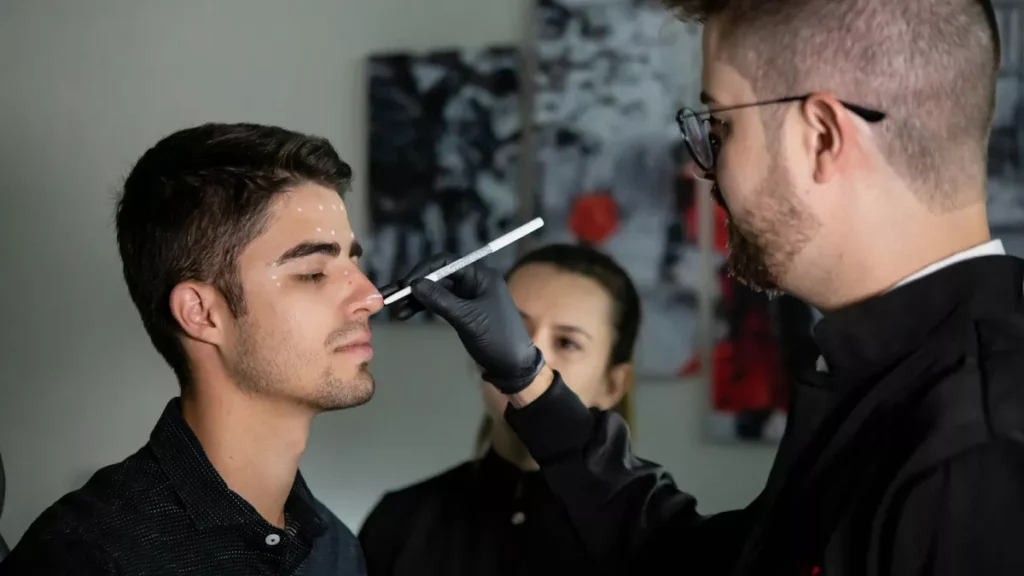
New industry data reveals a profound global shift, with cosmetic procedures for men nearly doubling in six years, highlighting a transformation in social norms and a booming market led by younger generations and specific regional cultures.
PARIS, France — The global landscape of aesthetic medicine is undergoing a significant demographic shift. According to data released by the International Society of Aesthetic Plastic Surgery (IMCAS) and reported by Agence France-Presse (AFP), the number of cosmetic surgical procedures performed on men worldwide surged by 95% between 2018 and 2024. This near-doubling of male engagement in cosmetic surgery underscores a rapid evolution in global beauty standards and concepts of masculinity.
The trend is even more pronounced for non-surgical treatments like injectables, laser therapies, and chemical peels, which saw a 116% increase among men during the same period. This contrasts with a slower, though still significant, growth rate of 59% for surgical procedures and 55% for non-surgical treatments among women.
A Regional and Generational Phenomenon
The data identifies clear hotspots driving this change. “Younger men and those in the Middle East and Latin America are particularly interested in undergoing these procedures,” IMCAS reported. This regional concentration suggests the trend is deeply intertwined with local cultural values, social media influence, and evolving perceptions of male self-presentation.
“The shift, which is very prominent in the Middle East and Latin America, reflects a deep transformation of social norms and increased acceptance of cosmetic procedures by men,” the IMCAS market analysis stated. Furthermore, Generations Z and Millennials are accessing cosmetic medicine significantly earlier in life than previous generations, indicating a normalization of these interventions as part of routine personal grooming and career investment.
Market Leaders and Future Growth
While the United States remains the single largest market, accounting for about 45% of global surgical demand in 2025, future growth is projected to be strongest elsewhere. Growth in the US is expected to moderate, while the Asia-Pacific region is forecast to see cosmetic procedures rise by around seven percent annually through 2030. This points to a future where beauty ideals and the industry that serves them become increasingly decentralized and culturally specific.
A Reflection for Bali’s Culture of Refinement
For observers in Bali, an island with its own deep and refined aesthetic traditions—from the precise lines of temple carvings to the elegant gestures of classical dance—this global trend offers a fascinating counterpoint. Where Balinese culture has long honed the artistry of the body through discipline, ritual, and adornment, the modern global trend represents a turn to technology and surgery for enhancement.
This international surge in male cosmetic procedures invites a broader conversation happening in Bali and beyond: how cultures worldwide are renegotiating the boundaries of beauty, self-improvement, and identity. Whether through the spiritual and physical discipline of Bali’s traditional arts or the clinical precision of a cosmetic clinic, the pursuit of an idealized form remains a powerful, and evolving, human endeavor. The IMCAS data provides a clear metric for one increasingly mainstream path in that age-old pursuit.