

The Indonesian rupiah has fallen to Rp 17,784 against the US dollar.
For economists and financial analysts, the number signals pressure on imports, inflation risks, and currency volatility. But in Bali, where thousands of foreign residents measure daily life less through exchange-rate charts than supermarket receipts and café bills, the effects are appearing somewhere far more ordinary.
At the dinner table.
Indonesia produces much of its own food domestically. But several staples woven into everyday consumption — beef, garlic, soybeans, sugar, and wheat — still depend heavily on imports. As the rupiah weakens against the dollar, import costs rise. Those increases move quietly through supply chains before eventually reaching restaurants, coffee shops, neighborhood warung, and grocery shelves across the island.
For expats living in Bali, the shift is becoming increasingly visible in small ways.
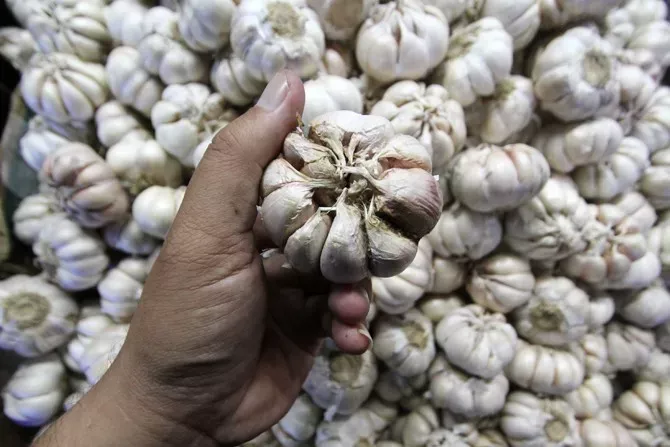
Garlic costs more at local markets. Imported butter disappears faster from supermarket refrigerators. Certain brands quietly reduce package sizes. A flat white ordered in Canggu or Ubud may arrive in the same cup as last year, but with thinner margins built into every ingredient behind it.
The inflation does not always announce itself loudly.
Sometimes it arrives as a smaller block of tempeh wrapped in thinner plastic.
The Cost of Imported Basics
Data from Indonesia’s National Strategic Food Price Information Center shows the pressure building across several categories tied directly or indirectly to imported commodities.
Quality 1 beef has climbed to Rp 147,450 per kilogram, while quality 2 beef now sits at Rp 139,050. Medium-sized garlic has reached Rp 38,650 per kilogram. Premium sugar stands at Rp 20,020.
For many Indonesians, these increases are difficult enough. For foreign residents accustomed to cooking with imported dairy products, wheat-based foods, beef, coffee creamers, protein supplements, or Western-style ingredients, the impact spreads wider through daily spending habits.
Bali’s international café culture — particularly in areas like Seminyak, Canggu, and Ubud — depends heavily on products linked to global supply chains. Butter, cream, cheese, flour, chocolate, and coffee syrups all become more expensive when the rupiah weakens sharply against the dollar.
Businesses rarely absorb those costs forever.
Some raise prices directly. Others reduce portions quietly. Some do both.

The Quiet Expansion of Shrinkflation
The phenomenon already has a name familiar across much of the world: shrinkflation.
Prices remain the same, but the product itself becomes smaller.
In Indonesia, tempeh and tofu producers are among the first to feel the pressure because soybeans remain heavily dependent on imports. As soybean costs rise, producers face a difficult calculation: increase prices and risk losing customers, or reduce product size while keeping prices stable enough to avoid attention.
Many choose the second option.
The same logic now appears across products consumed heavily in Bali’s expat economy. Butter portions shrink. Bakery servings become slightly smaller. Dessert slices thin out at the edges. Packaged products maintain familiar prices while quietly losing grams.
The changes are subtle enough that consumers often notice them emotionally before they recognize them mathematically.
A grocery run feels more expensive. A café bill stretches slightly further than expected. The refrigerator empties faster.
Nothing dramatic happens in a single purchase.
It is the accumulation that changes the feeling of everyday life.
The Ripple Beyond Food
The weakening rupiah affects more than imported ingredients.
Indonesia still relies on imported fuel products and transportation-related equipment. As dollar-denominated costs rise, logistics costs increase alongside them. Distributors transporting food between ports, warehouses, supermarkets, and restaurants absorb higher operational expenses that eventually feed into retail pricing.
For Bali’s foreign residents, the impact becomes visible across dozens of ordinary transactions rather than one major financial shock.
Scooter fuel. Bakery prices. Imported toiletries. Protein powder. Wine. Electronics. Air-conditioning maintenance. Coffee beans sourced internationally. Delivery fees.
Each increase appears manageable on its own.
Together, they slowly reshape monthly budgets.


A Strange Paradox for Expats
For expats earning in US dollars, euros, or Australian dollars, the weaker rupiah creates a confusing contradiction.
On paper, foreign currency holders appear stronger. The same dollar now converts into more rupiah than before.
But daily life inside Indonesia still operates within the rupiah economy itself, where inflation and import pressures continue moving independently of exchange-rate advantages.
A stronger dollar helps.
It does not stop supermarket prices from rising.
For expats earning locally in rupiah — teachers, hospitality workers, nonprofit employees, or foreign residents employed by Indonesian businesses — the pressure becomes more immediate. Their salaries remain largely unchanged while food, transportation, and imported consumer goods continue climbing in price.
Retirees living on fixed overseas pensions occupy a middle ground. The exchange rate cushions some of the impact, but even favorable currency conversion cannot fully offset shrinking product sizes or rising living costs across Bali’s service economy.
Bali’s Everyday Economy
Bali has long marketed itself internationally as an affordable tropical destination where foreign residents can maintain lifestyles that would cost significantly more in Sydney, London, Los Angeles, or Singapore.
That calculation still holds true for many.
But the gap narrows when imported inflation enters daily routines.
A breakfast café that depends on imported butter and dairy products feels the currency pressure differently than a local warung serving rice, vegetables, sambal, and locally sourced ingredients. Foreign residents accustomed to imported foods, specialty coffee culture, and Western-style consumption patterns often experience inflation earlier because their spending habits intersect more directly with imported supply chains.
The effects become visible in places tourists rarely notice at first glance:
smaller pastries in café display cases, reduced serving sizes, thinner cuts of imported beef, and supermarket shelves where familiar products quietly disappear between shipments.
More Than an Exchange Rate
For longtime expats in Bali, none of this feels entirely new.
The rupiah has weakened before. Prices have risen before. Markets adjust. Businesses adapt. Life continues.
But the slide to Rp 17,784 per dollar changes the psychological atmosphere surrounding everyday spending. The exchange rate no longer exists only inside banking apps or financial headlines. It appears in grocery baskets, café menus, and household budgeting decisions across the island.
Beef costs more. Garlic costs more. Imported butter stretches less far than it used to.
And even when a stronger foreign currency buys more rupiah, it cannot prevent a smaller package from arriving at the checkout counter.