

BADUNG, Bali — A viral video that sparked outrage across Bali last week has led to the arrest of three foreign nationals, including the woman at the center of the content. Police have identified the female performer as MMJL, a 23-year-old French national known online as “Slo.”
The case, which drew widespread attention for its use of an ojek (motorcycle taxi) jacket as a prop, has highlighted the growing presence of adult content creators operating in Bali—and the legal risks they face when local symbols and customs are drawn into their work.
Who Is Slo?
According to Badung Police Chief AKBP Joseph Edward Purba, MMJL is an adult content creator who produces explicit videos for paid platforms such as OnlyFans and X (formerly Twitter). Her online persona, “Slo,” is active on social media, where she posts beach photos and lifestyle content alongside links to her paid accounts.
“Slo is an adult video content creator,” Purba said during a press conference. “She distributed the content through her manager to platforms like OnlyFans and X.”
Her activities, however, extended beyond what her visa permitted.
How the Video Was Made
The video that went viral was not a solo project. Police say Slo worked with two other foreign nationals:
- NBS, a 24-year-old Italian man, who appeared as the male performer wearing the ojek jacket
- ERB, a 26-year-old French man, who acted as her manager and uploaded the content
The ojek jacket was purchased from a local store for approximately Rp 300,000 (around $18). According to investigators, the jacket was used deliberately to attract attention and make the content go viral.
“The Italian national used the ojek jacket to attract attention and make it viral,” Purba explained.


A Visa for Tourism, Not Adult Content
Immigration records show that Slo entered Indonesia on February 21, 2026, using a Visa on Arrival (VoA) intended for tourism purposes. Her stated purpose of visit was tourism. Instead, authorities say, she produced explicit content at a villa in the Pererenan area of Mengwi.
Gde Oki Rizky Aryadhika Heris, head of the Ngurah Rai Immigration Office’s Traffic and Immigration Control division, noted that once the video went viral, immigration authorities flagged Slo as a “subject of interest.”
“She entered on February 21 using a Visa on Arrival intended for tourism,” Heris said. “Once the viral news emerged, we immediately flagged her as a subject of interest until she was eventually arrested at the airport.”
The Investigation and Arrest
The case began with a cyber patrol that identified the viral video. Investigators traced the content and interviewed an ojek driver who had previously worked with the group. The driver had appeared in light-hearted social media videos with Slo, providing police with a lead.
When authorities learned that two of the suspects—Slo and NBS—were planning to leave Bali for Thailand, they coordinated with immigration officials. The pair were detained at I Gusti Ngurah Rai International Airport on March 13. ERB was arrested separately in the Canggu area three days later.
A Social Media Persona

Outside of the explicit content, Slo maintained a curated public presence. Her Instagram account, @slobyme, features photos of her traveling across Bali, posing at beaches, and engaging with local culture. Another account, @sloforminside, shows collaborations with Indonesian social media figures, including a popular ojek driver influencer known as @ojolmagank.
These posts, investigators say, helped establish a presence that made her viral video more visible—and more damaging to the local community.
Legal Consequences
The three suspects face charges under Indonesian law. They are being investigated under Article 407 of Indonesia’s 2023 Criminal Code, which carries penalties ranging from six months to ten years in prison, as well as Article 45 Paragraph (1) of the Electronic Information and Transactions (ITE) Law, which carries a maximum sentence of six years.
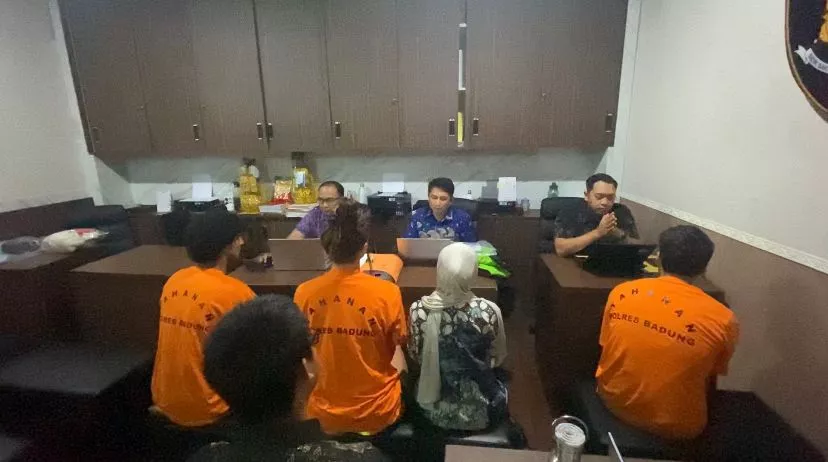
Police have seized evidence including three iPhones, a DJI Osmo camera, a MacBook Air, and the ojek jacket used in the video.

A Reminder for Foreign Visitors
For Bali’s large expatriate and long-term visitor community, the case is a stark reminder that the island’s hospitality has limits. While Bali welcomes millions of tourists each year, activities that exploit local symbols, disrespect cultural norms, or violate immigration rules carry serious consequences.
The use of the ojek jacket—a symbol of a profession that supports thousands of Balinese families—drew particular criticism. It created confusion online, with some viewers mistakenly linking the video to actual ojek drivers.
Police emphasized that the three suspects were not Indonesian citizens and that the ojek jacket was purchased specifically for the video.
What Comes Next
The investigation is ongoing, with all three suspects currently in police custody. Immigration authorities have indicated that, regardless of the criminal proceedings, the suspects’ visas are likely to be revoked, and deportation will follow any legal resolution.
For Slo and her collaborators, a trip to Bali that began with tourism visas has ended in detention. For Bali, the case serves as another chapter in the ongoing effort to balance openness with accountability—and to protect the cultural symbols that define the island’s identity.