
For three years, the residents of Gili Meno have watched their island slowly run dry.
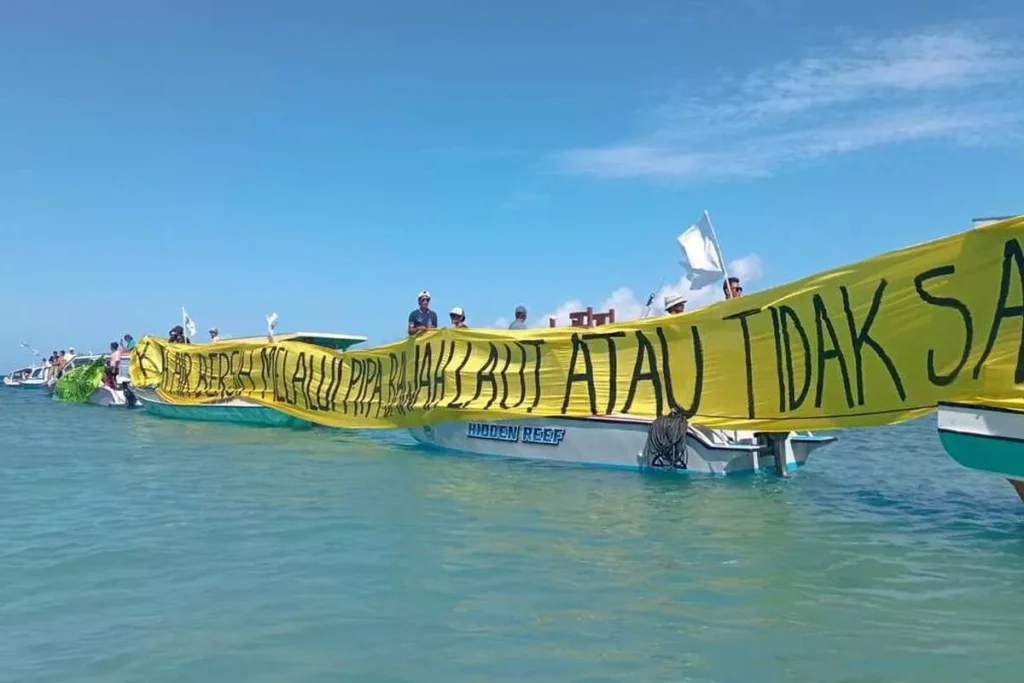
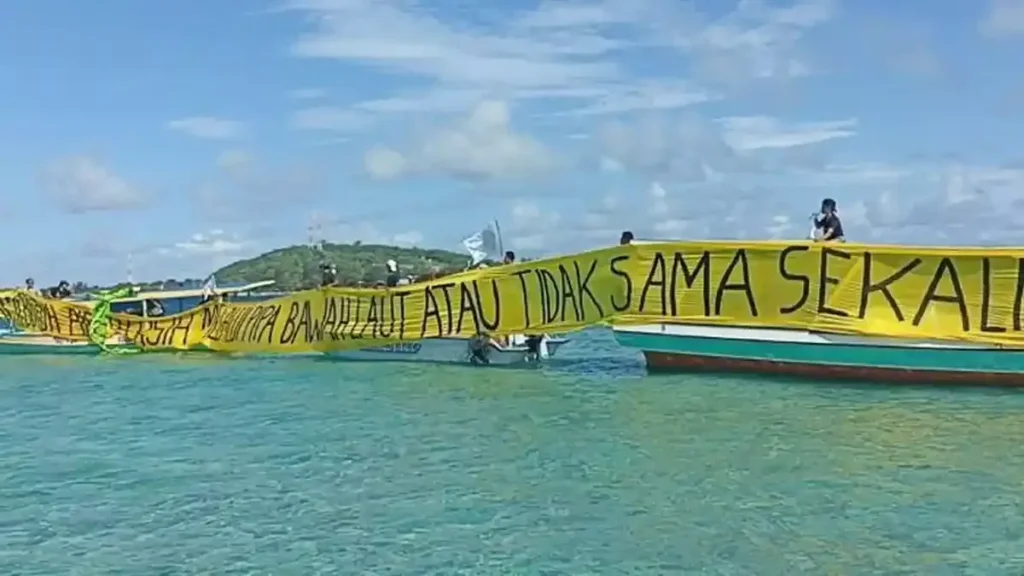
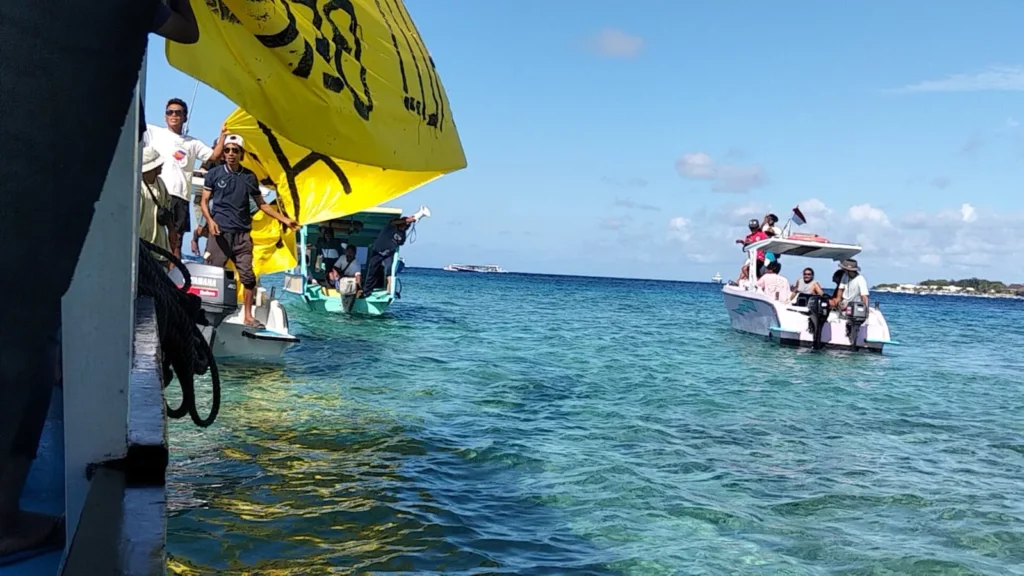
On Thursday, May 21, 2026, they decided the protest could no longer stay on land.
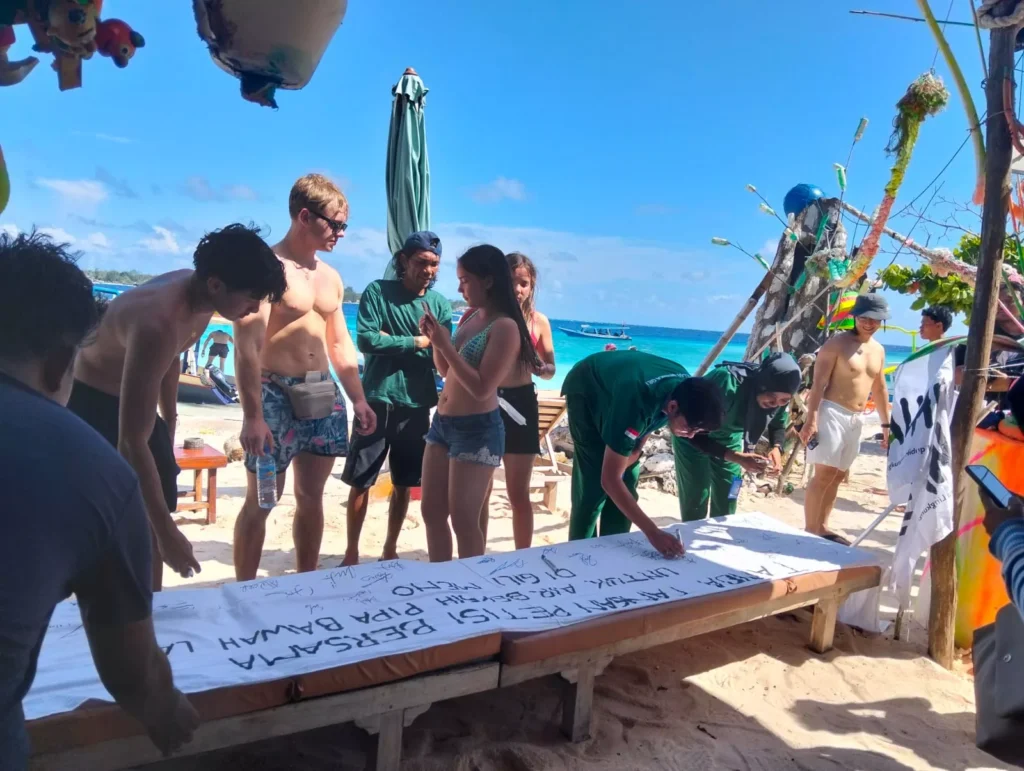
In the shallow turquoise water surrounding the small island off Lombok’s northwest coast, residents stood beside a protest banner stretched across the sea itself. No stage. No government officials. No amplified speeches. Just salt water, coral beneath their feet, and years of exhaustion carried into public view.
Gili Meno has long been marketed as the quietest of Lombok’s three famous Gili islands — a slower alternative to the nightlife of Gili Trawangan and the family-oriented cafés of Gili Air. Honeymooners come for silence. Divers come for sea turtles and blue coral. Travel websites describe the island as untouched.
But behind the postcard image, residents say daily life has become defined by something far more basic than tourism.
Clean water.
And after three years without reliable access to it, many say patience has collapsed alongside the island’s infrastructure.
“We Have Had to Let Go of Our Economic Growth”

“We have had to let go of our economic growth,” said Masrun, head of Gili Meno’s hamlet, during an interview on Thursday. “Our community was developing. Now it is weakening. All because of this clean water crisis.”
For drinking and cooking, residents now purchase refill water at Rp 15,000 per gallon.
On the Indonesian mainland, the cost would already feel expensive. On a small tourism island where livelihoods rise and fall with visitor numbers, residents describe it as suffocating.
“On top of buying clean water, we also rely on rainwater,” Masrun said.
Rainwater storage has become part of ordinary survival. Tourism income remains seasonal. Water bills continue regardless.
The contradiction has become increasingly difficult for residents to ignore.
Tourists arrive daily for crystal-clear snorkeling conditions and underwater attractions that generate revenue for North Lombok Regency. They stay in beachfront bungalows, eat at small warungs, and post photographs of clear blue water that, paradoxically, many residents say they cannot safely use inside their own homes.
“And then they leave,” one resident said quietly near the shoreline protest, “without knowing how difficult water has become here.”
The Pipeline That Never Came
For residents, the proposed solution has never sounded particularly complicated.
Bring water from mainland Lombok through an underwater pipeline.
The concept is neither experimental nor unrealistic. Similar infrastructure systems already supply electricity, telecommunications, and freshwater to island communities in many parts of the world.
According to Amri Nuryadin, director of the environmental advocacy organization Walhi NTB, residents first pushed for the pipeline proposal during meetings with North Lombok’s legislative council in 2023.
“There was already discussion about the pipeline,” Amri said. “That was considered the logical solution.”
But the project never materialized.
Instead, local authorities handed water management responsibilities to a private company, PT Tiara Cipta Nirwana (TCN), which introduced a seawater reverse osmosis system, commonly known as SWRO — technology designed to convert seawater into freshwater through desalination.
The system solved one problem while creating another.
The Waste Returning to the Reef

Desalination plants produce freshwater, but they also produce concentrated brine waste — highly saline discharge that environmental groups say can damage surrounding marine ecosystems if released improperly.
According to Walhi NTB, the discharge from the SWRO system was released back into surrounding waters near Gili Meno.
Residents and environmental groups say the impacts became visible in the ecosystem that sustains the island’s tourism economy itself: coral reefs, marine biodiversity, and the underwater attractions that draw divers and snorkelers from around the world.
The irony is difficult to miss.
The same sea marketed internationally as paradise became both the source of the island’s water solution and the place where its environmental consequences allegedly returned.
An investigation by BKKPN Kupang, a national marine conservation agency, concluded that the waste discharge had polluted nearby waters and threatened marine ecosystems surrounding the island.
The findings were serious enough that Indonesia’s Ministry of Marine Affairs and Fisheries revoked PT TCN’s operational license in 2024.
Residents say the company continues operating regardless.
“Local government handed over governance of a basic human right — clean water — to a corporation,” Amri said. “We deeply regret this. We are disappointed.”
Paradise Above Water, Crisis Below It
For travelers visiting Gili Meno, the crisis remains largely invisible at first.
The beaches still appear calm. Sea turtles still move through clear water near the reef. Sunsets still soften the horizon each evening behind rows of small beachfront accommodations.
But behind kitchens, bathrooms, and storage tanks across the island, residents describe a daily struggle that tourists rarely see.
The water in guesthouse showers may come from limited or inconsistent sources. Restaurants absorb rising operational costs tied directly to purchased freshwater supplies. Families ration usage carefully during dry periods while continuing to serve an international tourism industry built around comfort and escape.
The island’s quiet atmosphere, long marketed as part of its charm, now carries another interpretation for some residents.
Exhaustion.
An Island Waiting
Masrun still wants the underwater pipeline.
Three years after residents first raised the issue publicly, the request has not changed.
Neither has the reality facing many families on the island.
Two hundred sixty-seven households continue living without stable access to clean water. The corporation’s license was revoked. The desalination controversy remains unresolved. The reef remains under pressure. And residents continue buying water gallon by gallon while surrounded by the sea.
On Thursday, they carried that frustration directly into the ocean itself.
For visitors arriving in Gili Meno searching for silence, the island still offers it.
But now, beneath the quiet, there is also protest.