
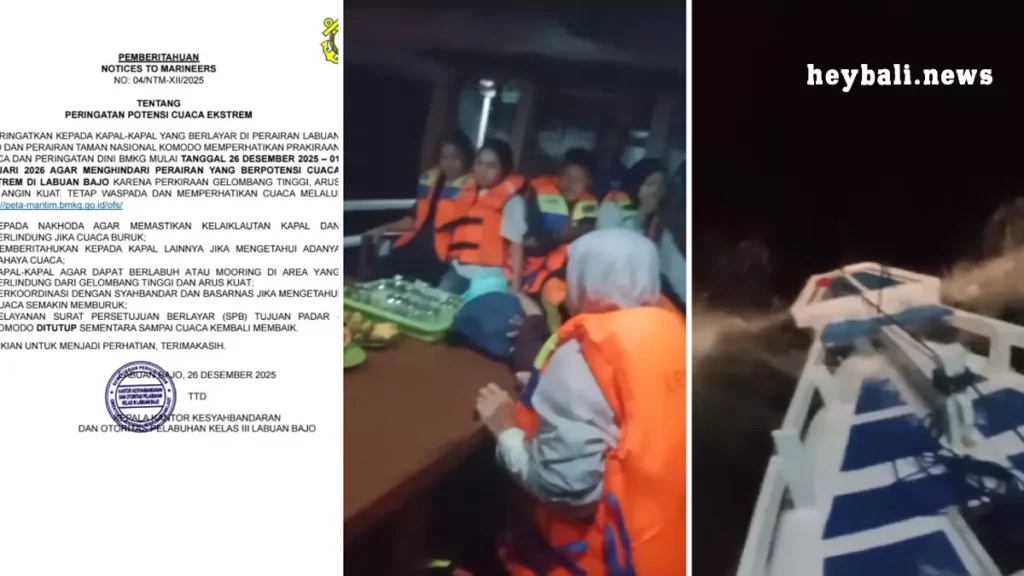
LABUAN BAJO, Indonesia — An urgent marine radio broadcast on December 27, 2025, has brought the real-world impact of distant cyclones into sharp focus for the tourism industry in Komodo National Park. A video of the transmission, in which the Harbormaster and Port Authority (KSOP) of Labuan Bajo issues a direct order to all vessels, shows how swiftly official safety protocols are enacted in response to severe weather.
The clear instruction in the video is for all vessels to avoid sailing near or approaching Padar Island and the southern coasts of Komodo Island immediately due to dangerous sea conditions. This official directive overrides all planned tour itineraries for the day, requiring operators to reroute their journeys to safer, more sheltered areas.
The Unseen Threat: Oceanic Swell from a Distant Storm
The danger prompting this closure is not a local storm, but a powerful “swell”—large, relentless waves generated by a cyclone system churning far to the south of Indonesia. These waves travel vast distances across the open ocean, arriving at the Komodo archipelago as a deep, rolling, and chaotic sea state that is particularly hazardous for the liveaboard boats and passenger ferries that navigate these waters.
The reality of this threat was confirmed firsthand by captains on the same radio frequency. One crew member reported his vessel was already being thrown about by waves reaching approximately 2 meters (6.5 feet), making travel toward the south impossible and highlighting the critical need for the official warning.
Official Directive: An Immediate Safety Shutdown
The KSOP’s order constitutes a formal, temporary closure of the exposed southern routes within the national park. This is a standard but critical maritime safety procedure designed to prevent capsizing, injury from violent boat motion, and potential search-and-rescue emergencies.
“All tours are expected and required to adjust their travel routes,” the authority’s message emphasized, redirecting traffic to calmer destinations like Rinca Island. The video underscores the professional coordination among mariners, who used Channel 16—the international hailing and distress frequency—to relay warnings and share updates, demonstrating a community-wide commitment to safety.
Urgent marine radio broadcast from Komodo National Park, Dec 27, 2025.https://t.co/X6mca7HXNn#Komodo #LabuanBajo #IndonesiaTravel #MarineSafety #StormAlert #SwellWarning #TravelUpdate #KomodoNationalPark #BoatTour #SafetyFirst #Maritime #Cyclone #WeatherAlert #ExploreIndonesia pic.twitter.com/J12itZGZd8
— Hey Bali (@Heybaliinfo) December 27, 2025
Guidance for Travelers: Flexibility is Essential
For international tourists and expatriate guides in the region, this incident is a direct lesson in tropical maritime travel.
- Expect & Accept Last-Minute Changes: If you have a tour booked, contact your operator for the revised itinerary. A reputable company’s priority will be safety, not sticking to an original plan in unsafe conditions.
- Heed Official Warnings: The harbormaster’s order is final. Respect the expertise behind the decision, which is based on real-time data from the Indonesian meteorological agency (BMKG) and on-the-ground reports.
- Follow the Right Sources: For live updates, follow the official KSOP Labuan Bajo social media channels. Avoid relying solely on unofficial sources for critical safety information.
- See the Opportunity: Destinations like Rinca Island offer superb Komodo dragon viewing and dramatic landscapes. Adapting your plans is key to a safe and still-enjoyable experience in a dynamic environment.
This urgent radio broadcast and the swift regulatory response highlight a fundamental truth of adventure travel in Indonesia: the sea commands the schedule. The proactive closure of Komodo’s southern routes, while disruptive, is a non-negotiable measure that protects lives and underscores the serious responsibility of operating in one of the world’s most magnificent—and occasionally unforgiving—marine parks.