
BANGLI, Bali — A car slows along a mountain road in Kintamani. A woman steps forward, raises her hand, and asks for payment.
The moment, captured on video and shared widely over the weekend, has reignited a long-running question in Bali’s tourism landscape: what exactly are visitors paying for when they enter Kintamani—and who decides?
In the footage, filmed on Jalan Raya Penelokan, one of the main routes through the Kintamani highlands, a tourist is stopped and asked to pay Rp 25,000 per person. The caption accompanying the video expresses confusion: entering Kintamani, it suggests, now comes with a roadside fee.
For some viewers, the scene was familiar. For others, it raised new concerns about transparency, consistency, and the experience of traveling through one of Bali’s most iconic destinations.
Local authorities say the system is neither new nor informal. But the way it is encountered, they acknowledge, is not always clearly understood.
A System Decades in the Making
According to Dirga Yasa, head of the Bangli Tourism Office, the road shown in the video has been part of a designated paid tourism zone since 1993.
What has changed over time is not the existence of the fee, but how it is managed.
Initially overseen by a private foundation, Yayasan Bintang Danu, the system was later brought under the authority of the Bangli regional government. Today, Kintamani is one of five officially designated tourist sites in the regency, alongside Penglipuran Village, Penulisan Village, Trunyan Village, and Kehen Temple.
The current framework is governed by Regional Regulation No. 5 of 2023, which formalizes tourism levies as part of the region’s revenue system.
In that context, officials say, the fee is not a roadside charge—but an entry ticket to a regulated tourism area.
How the Fee Works
In practice, however, the experience can feel less structured.
Fees vary depending on the visitor: foreign tourists are charged Rp 50,000 per person, domestic visitors Rp 25,000, and Bali residents Rp 10,000. Collection takes place at several designated entry points, operating between 8:00 a.m. and 5:00 p.m.
But Kintamani is not a closed site. It is a network of roads, viewpoints, cafés, and villages—an open landscape rather than a gated attraction.
That openness creates ambiguity.
Some travelers pass through without stopping. Others pause for a meal or a view. And in those moments, the distinction between transit and tourism can become blurred.
“There are those who say they are just passing through,” Dirga Yasa said, “but then stop at a café along the way.”
The result is a system that, while legally defined, is not always intuitively experienced. What authorities view as a tourism levy can, for visitors, feel like an unexpected roadside toll.
Between Policy and Perception
The viral video has tapped into a broader tension that runs through Bali’s tourism industry: how to balance the need for revenue with the expectation of seamless travel.
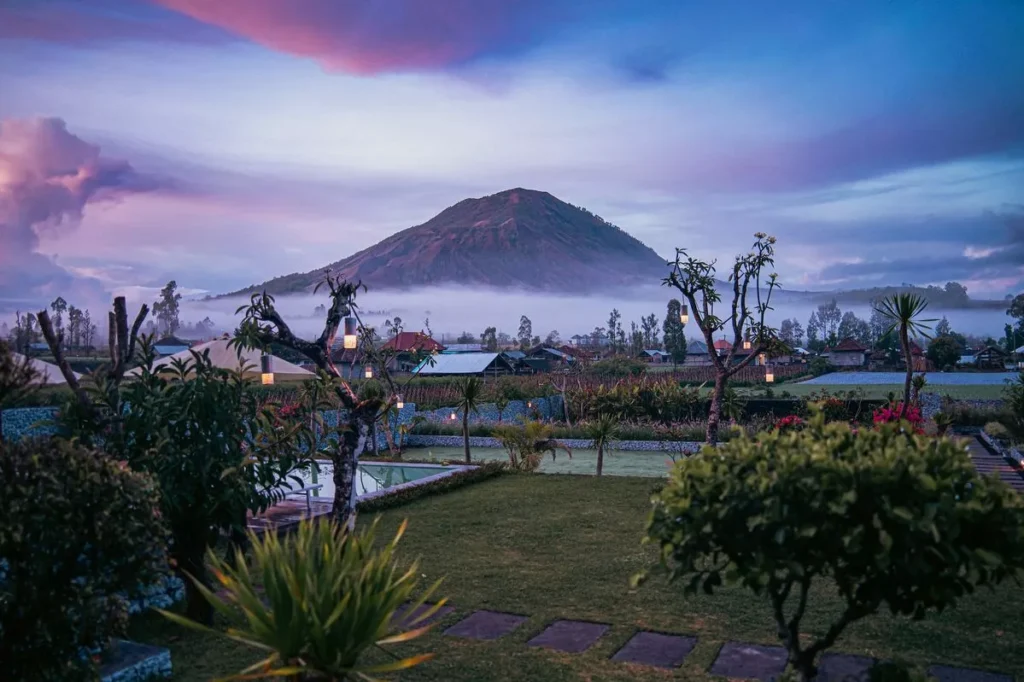
Kintamani, with its panoramic views of Mount Batur and Lake Batur, is one of the island’s most visited highland destinations. Managing visitor flow, maintaining infrastructure, and funding local services all require resources—and tourism levies are one way to generate them.
But the manner of collection matters.
When visitors encounter a fee without clear signage or prior explanation, the experience can shift—from contributing to a destination to questioning its legitimacy.
What is routine for local authorities can feel unexpected, and at times arbitrary, for those encountering it for the first time.
What Travelers Should Know
For visitors planning a trip to Kintamani, the key is understanding that the fee itself is not new—but the experience of encountering it can vary.
Travelers should expect to pay when entering designated tourist areas during operational hours. Those who are simply passing through or heading to temples may qualify for exemptions, though this is not always consistently applied in practice.
Clear communication with ticket staff can help, as can carrying small denominations of cash, as some collection points may not support digital payments.
A Question of Clarity
The system in Kintamani has been in place for more than three decades. But the viral video highlights a challenge that extends beyond this one location.
In an era where a single moment can reach millions, long-standing practices are being seen—and questioned—by a global audience.
For local authorities, the issue is no longer just about regulation, but about perception: whether the system is understood as it is intended.
For visitors, it raises a different question.
Not whether the fee exists—but whether the way it is experienced makes sense.