

Stand in line at any coffee shop in Canggu on a weekday morning, and you’ll see the full spectrum: someone ordering a no-frills long black before a surf session, someone else carefully specifying oat milk and “extra hot, no foam” for their latte, and someone waiting on an iced Vietnamese coffee while scrolling Instagram. According to psychological research, that lineup might be revealing more than just caffeine preferences.
Several studies have explored whether the way people take their coffee correlates with personality traits. Researchers are quick to caution that these findings are correlational, not causal, meaning they can’t be used to definitively diagnose anyone’s character based on their drink order. Still, the patterns are interesting enough that they’ve become a recurring subject of psychological inquiry.
The Research Behind the Trend
One of the most frequently cited studies comes from a 2015 paper published in the journal Appetite by researchers at the University of Innsbruck, involving nearly 1,000 adult participants. The study examined the relationship between taste preferences, including a liking for bitter flavors like black coffee, dark chocolate, and tonic water, and various personality dimensions. It found that people who preferred bitter tastes scored slightly higher on traits associated with the so-called “Dark Triad”: Machiavellianism, narcissism, and psychopathy, along with a trait researchers call “everyday sadism.” The correlation, researchers emphasized, was modest, not a diagnosis.
Separately, clinical psychologist Dr. Ramani Durvasula surveyed roughly 1,000 coffee drinkers for her book “You Are WHY You Eat,” testing personality traits like extraversion, warmth, and perfectionism alongside coffee preferences. It’s worth noting this wasn’t a peer-reviewed academic study, but a self-reported survey, still, its findings have been widely referenced across psychology and lifestyle publications.

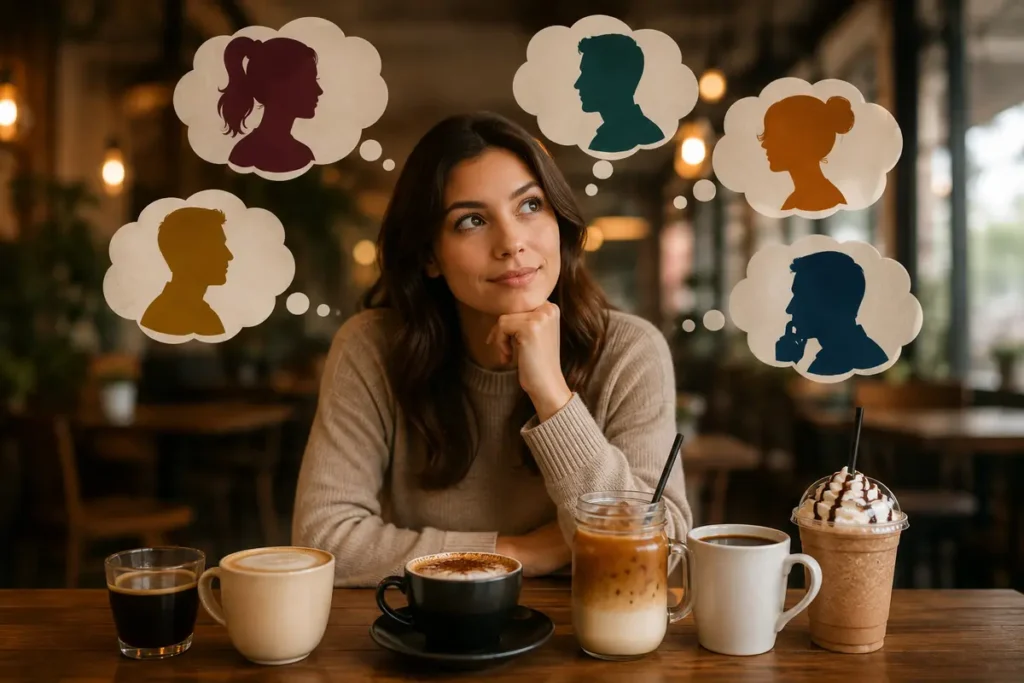
Black Coffee: Straightforward, Independent, and Tolerant of Bitterness
Black coffee drinkers are frequently associated with straightforward, no-nonsense personalities who value simplicity. They tend to be purists, direct communicators, and confident, avoiding small talk in favor of getting to the point.
Black coffee drinkers are also often described as ambitious, hardworking, and drawn to challenge. Their tolerance for bitterness is sometimes framed as a metaphor for tolerance of discomfort or difficulty more broadly. Many tend to be more inwardly focused, appreciate quiet time, and favor structured, efficient routines, useful context for anyone who’s noticed the solo long black drinkers occupying corner tables at Bali’s co-working cafés, headphones in, laptop open, no interest in conversation.
Latte and Cappuccino: Warmth Meets Perfectionism
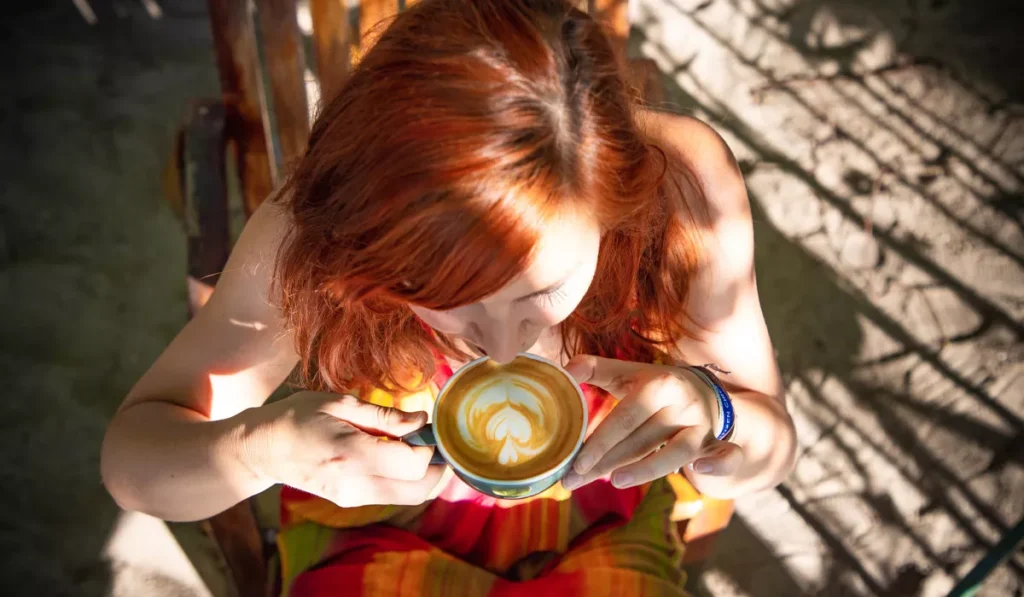
Latte drinkers tend to be associated with warm, people-pleasing personalities. They often show a genuine desire to help others and can be generous to a fault. These individuals enjoy comfort and warmth, both in their drink and their social environment, and tend to be open, sociable, and adaptable across different situations.
That said, Durvasula’s research suggests latte drinkers may also experience anxiety about how others perceive them, sometimes overextending themselves at the expense of their own needs, showing slightly more neurotic tendencies.
Cappuccino drinkers, meanwhile, are often described as perfectionists who value control. Durvasula’s research found they tend to be more obsessive, controlling, sensitive, and health-conscious. At the same time, cappuccino drinkers are often described as appreciating life’s finer things, having sophisticated taste, enjoying intellectual discussion, and being somewhat more creative and bold than their latte-drinking counterparts, a description that might resonate with the flat white and cappuccino crowd populating Ubud’s design-forward cafés.
Instant, Decaf, and Sweet Drinks: A Window Into Lifestyle
Instant coffee drinkers tend to be associated with relaxed, pragmatic personalities. They’re often described as easygoing, sometimes prone to procrastination, and less focused on rigid planning, preferring to enjoy life as it comes and prioritize present happiness over long-term structure.
Decaf drinkers, by contrast, are often linked to detail-oriented, health-conscious personalities. Durvasula’s research found they tend to be more meticulous, health-focused, and occasionally controlling, often making health-conscious lifestyle choices like regular exercise and diet planning, while valuing balance and inner calm.
Sweet or blended coffee drinkers, think Frappuccino or Mocha-style drinks, tend to be associated with bold, sociable personalities. They’re often described as spontaneous, imaginative, and playful, drawn to trends and enjoying time with others, though sometimes prone to impulsive or less health-conscious decisions.
Preferences for specialty or ethically sourced coffee may also reveal certain traits. A 2019 study found that individuals who scored higher on extraversion and conscientiousness were more willing to pay a premium for coffee produced by farmer cooperatives or carrying “fair trade” labels, relevant in a place like Bali, where the specialty coffee scene, kopi luwak aside, has increasingly leaned into direct-trade and small-batch sourcing as a selling point.
A Necessary Caveat
Most of this research reflects correlation, not direct causation, meaning coffee preference doesn’t definitively determine personality. Coffee choice can also be shaped by dietary needs, health conditions, cultural background, budget, and simple habit. Every individual is unique, and not everyone will neatly fit the personality description tied to their usual order, including anyone whose “usual” changes entirely depending on whether they’re working, relaxing, or nursing a hangover at brunch in Seminyak.
Frequently Asked Questions
Does the type of coffee someone orders really reflect their personality?
Not entirely. Some studies have found correlations between coffee preferences and certain personality traits, but these relationships are correlational, not causal. Personality is shaped by many other factors beyond drink choice.
Why are black coffee drinkers often linked to specific personality traits?
Black coffee drinkers are often described as simple, confident, and practical. Some studies have also found correlations with certain personality traits, though these findings don’t apply universally to everyone who drinks it black.
What personality traits are commonly linked to latte drinkers?
Latte drinkers are generally associated with warmth, sociability, and a tendency to help others. They also tend to enjoy comfort and show warmth in social interactions.
Can someone’s coffee preference change along with their personality?
Yes. Coffee preferences can shift with age, lifestyle, health conditions, and life experience, meaning a drink order doesn’t necessarily reflect a fixed personality over time.
What factors influence why someone chooses a particular type of coffee?
Beyond taste, coffee choice is shaped by culture, habit, health needs, caffeine tolerance, budget, and what’s available on a café’s menu, all of which matter just as much as, if not more than, personality.