
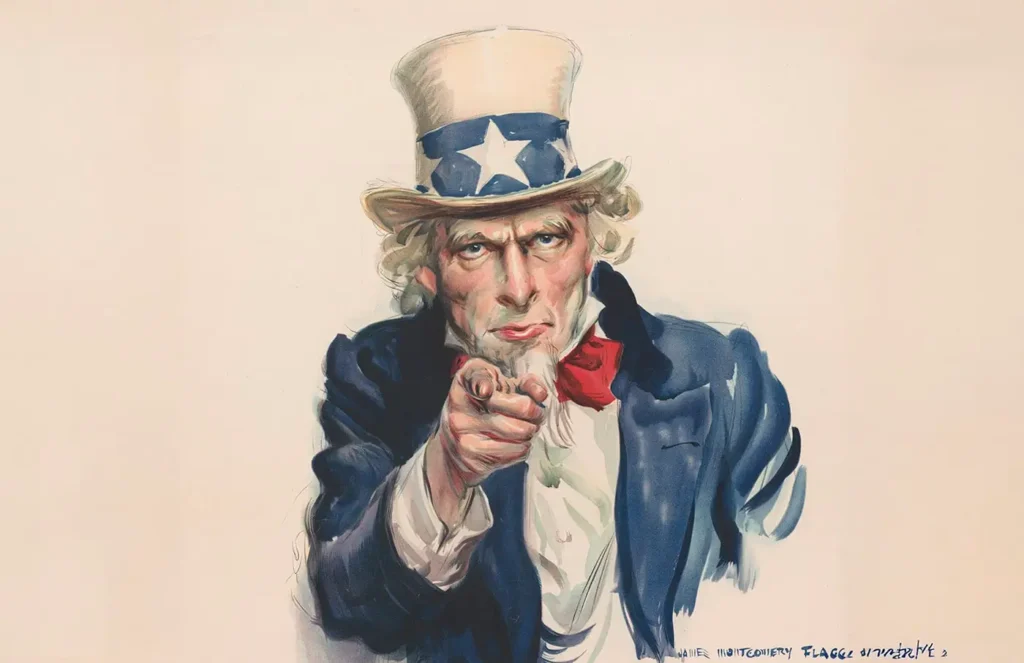
For more than two centuries, “Uncle Sam” has been one of the most recognizable symbols of the United States.
The white-haired man in a star-spangled top hat has appeared on military recruitment posters, political cartoons and patriotic campaigns around the world. Yet surprisingly, the famous nickname did not begin with a president, a military leader or a founding father.
Instead, historians trace its origins to an ordinary meat packer from upstate New York.
According to the History Channel, the man behind the legend was Samuel Wilson, a businessman from Troy, New York, who supplied barrels of beef to the U.S. Army during the War of 1812.
Each shipment was stamped with the letters “U.S.” to indicate that the goods belonged to the United States government.
But soldiers reportedly turned the markings into a joke.
Rather than reading “U.S.” as “United States,” they jokingly claimed the initials stood for “Uncle Sam,” referring to Samuel Wilson, who was well known among military suppliers.
The nickname quickly spread beyond army camps and eventually became a popular way of referring to the U.S. government itself.
From Local Joke to National Symbol
By the 1830s, newspapers across the United States had begun using “Uncle Sam” as a nickname for the federal government.
The image evolved further through the work of influential political cartoonists, most notably Thomas Nast, who helped shape the public’s perception of Uncle Sam as a tall, bearded figure dressed in patriotic clothing.
The version recognized around the world today, however, arrived during World War I.
In 1917, illustrator James Montgomery Flagg created the now-iconic recruitment poster showing Uncle Sam pointing directly at the viewer beneath the words:
“I Want You for U.S. Army.”
The poster became one of the most influential pieces of wartime propaganda ever produced and firmly established Uncle Sam as the personification of the United States.
Official Recognition
Although the nickname had been widely used for generations, it was not until 1961 that the U.S. Congress officially recognized Samuel Wilson as the historical inspiration behind Uncle Sam.
Today, the character remains one of America’s best-known national symbols, representing the U.S. government in everything from political satire to military recruitment and popular culture.
Ironically, the man whose name became synonymous with an entire nation was never a politician or military hero. He was simply a businessman whose initials on government supply crates inspired a joke that eventually became part of American history.