





























The story of Dewi Astutik has captured attention across Southeast Asia, not only for the scale of the crimes attached to her name, but also for the mystery surrounding her identity. What began as a routine investigation into a small heroin case eventually unraveled a multinational narcotics network connected to the Golden Triangle, with Dewi positioned as one of its key operators.
The staggering figure attached to her latest case—two tons of methamphetamine worth an estimated Rp 5 trillion—raises deeper questions about how a migrant worker managed to infiltrate and coordinate such a vast transnational operation.
Even her identity remains clouded. In the village listed on her Indonesian ID card, residents recognize her face but say they have never known a woman named “Dewi Astutik.” Instead, locals know her only by the initials PA, a name tied to her long history as an Indonesian migrant worker.
A Familiar Face With an Unfamiliar Name
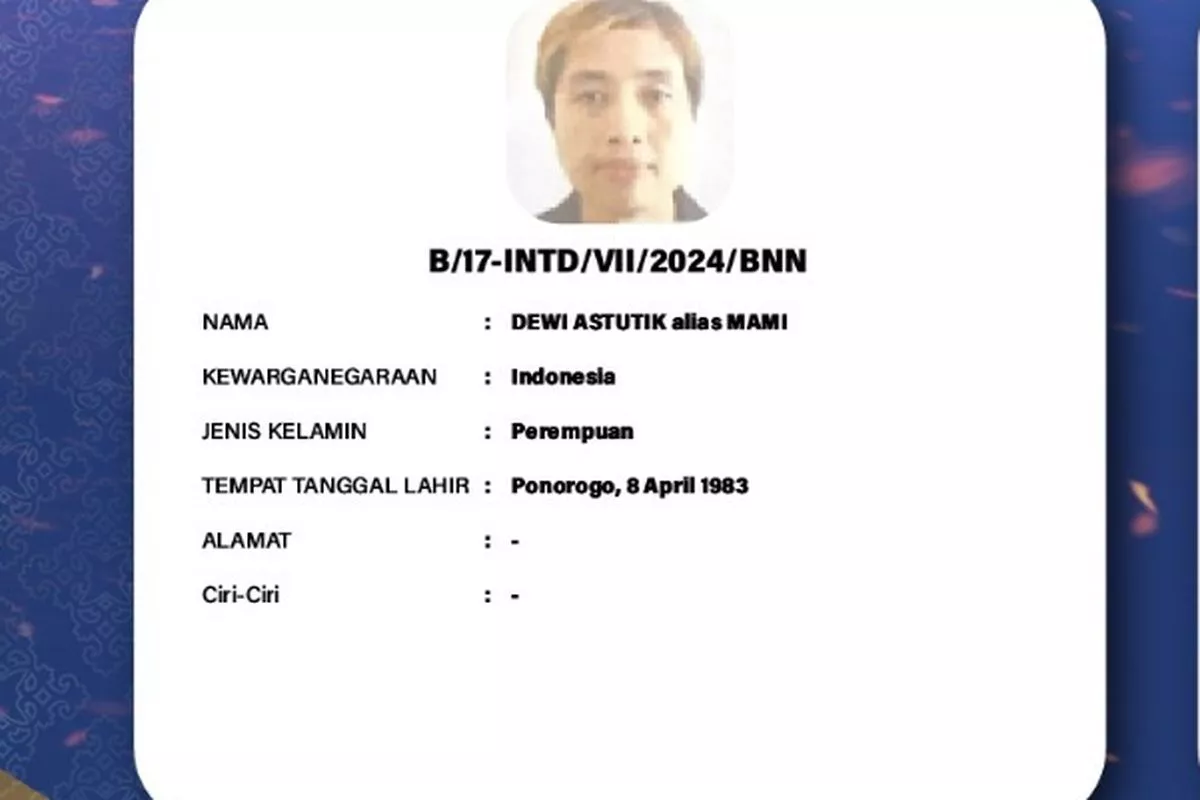
According to the photocopied ID card, Dewi Astutik was listed as a resident of Sumber Agung in Balong District, Ponorogo. But when Kompas.com visited the village, the head of the hamlet, Gunawan, stated clearly that no one by that name lives there.
“If there is someone here named Dewi Astutik, we don’t know her. But the address is correct, and we recognize the woman in the photograph,” he told Kompas.com. He confirmed that the woman in the picture is known locally as PA, a migrant worker who spent years working in Hong Kong, Taiwan, and most recently Cambodia.
Another resident, Sri Wahyuni, echoed the same account.
This is the first of many inconsistencies that have raised questions about Dewi’s personal history, her movements across countries, and how she became entangled in a high-level trafficking operation spanning Indonesia and mainland Southeast Asia.
When Dewi Astutik First Appeared on BNN’s Radar
Her name first emerged in the records of Indonesia’s National Narcotics Agency (BNN) during a heroin case involving 2.76 kilograms at Soekarno-Hatta Airport.
On 24 September 2024, a man identified as ZM arriving from Singapore was caught carrying the heroin. During questioning, ZM said the package was intended for SS.
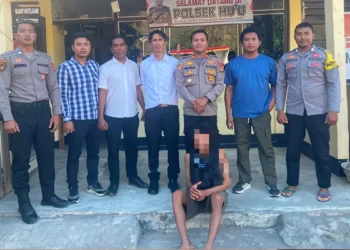
BNN moved quickly, arresting SS and later identifying AH, the handler instructing both men to collect heroin from Dewi Astutik in Cambodia. AH was arrested in Medan.
From this operation, Dewi surfaced as more than a distributor—she was identified as a “bos kurir,” a recruiter and coordinator managing Indonesian couriers across multiple countries.
The Rp 5 Trillion Meth Operation
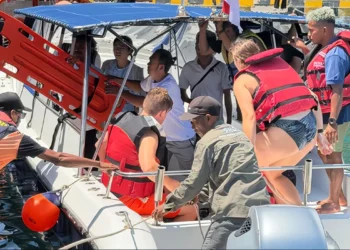
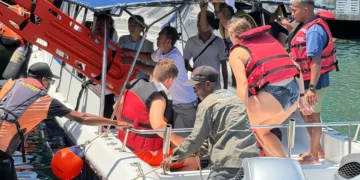
The 2024 case turned out to be only the beginning. Dewi’s name reappeared in a far larger operation: the seizure of two tons of crystal methamphetamine from the vessel Sea Dragon Tarawa in the Riau Islands on 22 May 2025. The shipment’s estimated value—Rp 5 trillion—illustrates the financial power of the network she was connected to.
Four Indonesian crew members aboard the vessel were believed to be directly tied to Dewi.
BNN stated that the couriers’ travel tickets were purchased by someone linked to her, indicating centralized coordination from abroad.
“We can confirm that the couriers’ tickets were booked by someone connected to Dewi Astutik,” said BNN Chief Commissioner General Marthinus Hukom in an interview with KompasTV.
He added: “Dewi Astutik played a key role in the recruitment process.”
Authorities estimate that over 110 Indonesian couriers may have been recruited under her direction.
An International Fugitive Since 2024
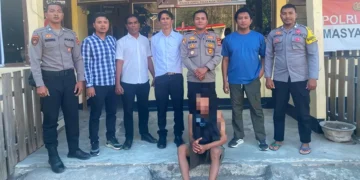
Dewi had been listed as an international fugitive since 2024, after BNN issued a Red Notice through Interpol. On 2 December 2025, she was finally arrested in Sihanoukville, Cambodia, during a joint operation involving BNN, Interpol, Cambodian police, the Indonesian Embassy in Phnom Penh, the Defense Attaché, and Indonesia’s military intelligence agency.
She was intercepted on her way to a hotel lobby before being taken to Phnom Penh for identity verification and interagency processing. She is expected to be flown back to Indonesia for intensive investigation.
Why This Case Matters to Global Readers—and Bali
While the case is centered around Java, Sumatra and Cambodia, its implications ripple far wider. Bali, a hub for international travelers and expatriates, is not immune to the side effects of large narcotics networks operating in the region:
- Major drug networks often use tourist hubs as transit or recruitment points
- Increased law-enforcement operations typically lead to tighter airport and port security
- Trafficking routes across Southeast Asia frequently adapt, affecting regional travel patterns
- Cases of migrant worker exploitation highlight vulnerabilities among Indonesians working abroad
For Bali’s global community—residents, digital nomads and long-stay travelers—understanding regional security dynamics is essential. High-value narcotics operations often bring a rise in money laundering attempts, courier recruitment, and cross-border movements that can influence policing and public safety across Indonesia.
The arrest of Dewi Astutik closes one chapter but opens many questions about the structure, sophistication, and reach of the networks operating behind her. As investigations continue, Bali’s visitors and expatriates can expect heightened scrutiny at entry points and a stronger push from Indonesian authorities to track cross-border criminal activity.