


































DENPASAR, Bali — In a direct challenge to the official narrative that has circulated for weeks, British content creator Bonnie Blue has publicly contradicted Indonesian authorities over the severity of her punishment following a high-profile deportation from Bali. In an exclusive interview with 9 News Australia, the 26-year-old adult performer asserted that her ban from re-entering Indonesia lasts only six months, starkly refuting widespread reports of a decade-long prohibition.
“It’s a lie. I’m not banned for 10 years. It’s only six months… Here is my letter,” Ms. Blue stated, indicating a document she claimed was an official notice from authorities.
Her claim introduces a new layer of controversy to a case that has become a flashpoint in Bali’s ongoing struggle to balance its global tourist appeal with the enforcement of local norms and laws. It raises pointed questions about transparency and the consistency of public communication from officials on the island.
A Case of Shifting Charges and Conflicting Timelines
Ms. Blue was deported earlier this month after her involvement in the so-called “Bangbus” incident, where she was filmed in the open tray of a utility vehicle with a group of Australian “Schoolies” graduates. The viral video led to a police investigation and the deportation of 15 Australians in total.
Initially detained on suspicion of violating Indonesia’s stringent Anti-Pornography Law, she was ultimately processed for a far lesser offense. Official deportation documents cited a traffic violation—illegally carrying passengers in a vehicle’s cargo bed—which carried a fine of approximately $19.
The discrepancy at the heart of the current dispute concerns the travel ban’s duration. Following her deportation, senior immigration officials told local and international media that Ms. Blue faced a 10-year ban from Indonesia, a penalty framed as a serious consequence for behavior deemed to violate public order and morality.
Expert Analysis: Deterrence vs. Administrative Reality

The contradiction highlights a procedural nuance familiar to legal practitioners dealing with immigration cases in Bali.
“There is often a gap between the immediate, strong deterrent message officials wish to send and the final administrative ruling,”
Explained Max Widie, S.H., a Jakarta and Denpasar -based immigration lawyer whose firm frequently represents foreign nationals in complex visa and deportation proceedings.
“Announcing a severe penalty like a 10-year ban serves as a public warning. However, if the legally codified outcome is a standard six-month ban and that isn’t clearly communicated, it risks creating public confusion and can undermine the credibility of the authorities,” Widie noted.
His perspective is grounded in extensive on-the-ground experience navigating Bali’s immigration system for an international clientele, offering a practical view of how enforcement narratives can diverge from bureaucratic outcomes.
Legal experts note that the two timeframes represent vastly different levels of immigration sanction. A six-month administrative ban is a standard, reversible penalty for minor visa or regulatory infractions. A 10-year ban is typically reserved for severe or repeated criminal violations.
The Broader Implication: A Test of Credibility
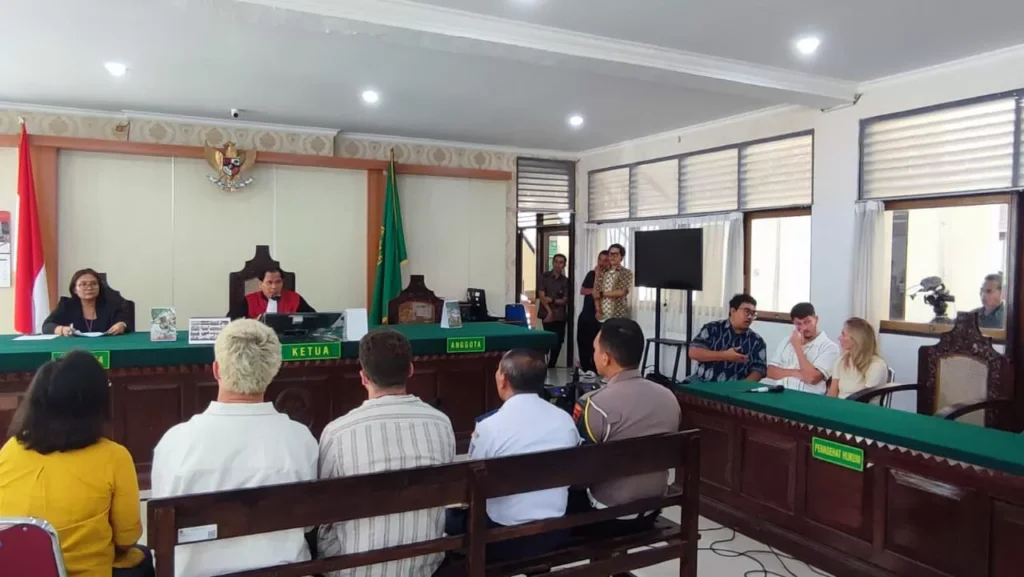
For Bali’s authorities, the contradiction is more than a clerical detail. The “Bangbus” case was managed as a high-profile demonstration of enforcement, intended to reassure a local public sensitive to perceived moral transgressions by foreigners. Ms. Blue’s public denial, backed by her claim of documentary proof, strikes at the narrative of resolute and unambiguous authority.
The situation presents a delicate challenge: maintaining a firm stance on cultural norms while ensuring public statements are meticulously aligned with legal outcomes. As Bali continues to navigate its dual identity as a Hindu-cultural stronghold and a global tourism hub, consistency in word and deed becomes paramount.
The ultimate question lingering after Ms. Blue’s interview is not merely about the duration of one influencer’s travel ban, but about how Bali’s institutions manage truth and perception in an era where every official statement can be contested on a global stage.















Comments 1