




























Table of Contents
An exclusive investigation with a Labuan Bajo maritime expert shifts the blame from a mechanical fault to a lethal combination of speed, darkness, and a deadly wave.
That night, the Flores Sea held a devastating mystery that has now become a national tragedy. The sinking of the KM Putri Sakinah in the waters off Labuan Bajo is not just an accident report; it is an acute riddle that leaves a painful question: how could a vessel founder so swiftly, as if swallowed whole by the night, that four of its passengers were trapped in their cabins, meeting their end in a space meant for rest?a
The official narrative circulating so far often hinges on a simple phrase: “sudden engine failure, the ship was hit by waves.” Yet, to the ears of seasoned mariners who have spent nearly a lifetime navigating the currents and swells of Nusa Tenggara, that narrative sounds too simplistic, even raising major doubts. Could a catastrophe this fatal truly begin with a routine technical event called “engine failure”?
Based on an exclusive interview by Giostanovlatto, Founder Hey Bali News with a senior ship captain—also a vessel owner—with 25 years of experience traversing the Labuan Bajo seas, the veil begins to lift. His decades of experience are not merely about steering, but about understanding the very “breath” of the local waters. From his deep-dive analysis, two most plausible scenarios have emerged, sharply contradicting the simple “sudden engine failure” narrative. These scenarios do not just relate to the cause of the sinking, but more importantly, they highlight massive logical gaps in the sequence of events and call into question the responsibility on deck.
This is no longer just about vicious waves. This is about choices, procedures, and potential negligence in the darkness that decided the fate of eleven lives. Let us delve in.
1 Scenario 1 (The Questionable Version): Sudden Engine Failure Due to Technical Issues
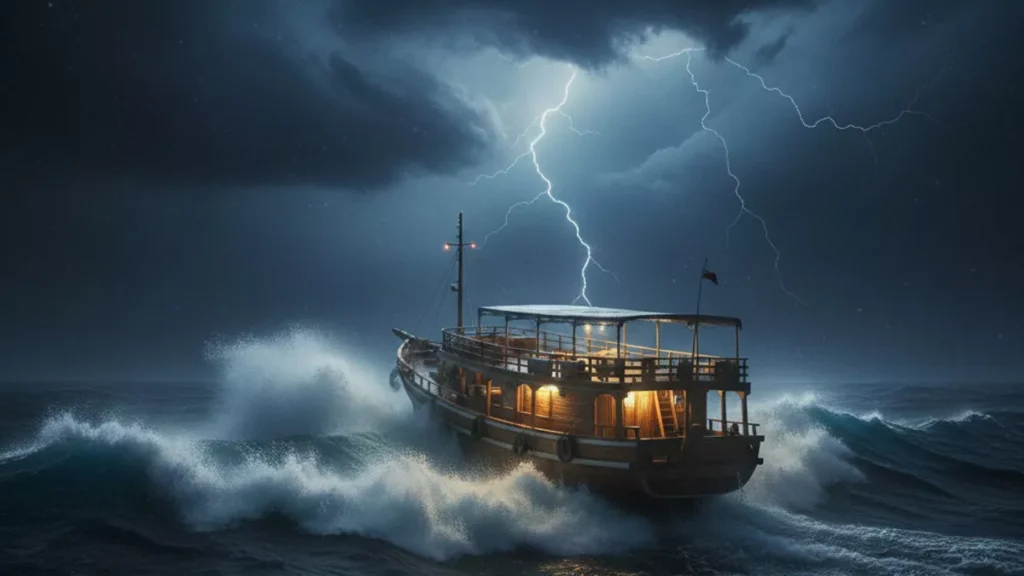
If we follow the initial, widely circulated narrative, the sequence of events is linear: the ship was cruising, then the main engine suddenly died. Without power, the hull turned beam-on, forming a 90-degree angle to the wind and current. In this vulnerable position, the vessel became a passive pawn, battered by waves, slowly listing, and eventually capsizing before sinking.
However, according to the senior captain’s analysis, it is precisely within this “pure engine failure” scenario that the greatest anomaly lies. He points to a fundamental law of the sea: time.
“In a situation where the engine fails and the ship is beam-on like that,” he explains, his voice calm yet assured, “the process from loss of control to actually sinking is not instant. It takes time. At the very least, 10 to 15 minutes before the vessel reaches a critical, unsalvageable condition.”
That 10-15 minute window is a golden opportunity—a ‘golden hour’ in maritime emergency protocol. It is more than enough time for an alert captain and crew to:
- Attempt to start an emergency generator or fix the issue.
- Most critically: sound the alarm, wake all passengers, and conduct an orderly evacuation to the open deck equipped with life jackets and rafts.
Here, logic begins to clash with the bitter facts of what transpired. If the engine truly failed suddenly and the crew still had full situational control, why was not a single one of the four passengers sleeping in the lower cabins successfully evacuated? Why were they all found trapped in rooms they should have been able to leave?
The senior captain then poses a more fundamental question, about the hierarchy of danger within the vessel’s own structure. “One thing is undeniable in a pure engine failure scenario,” he states. “The person in the most peril, the first to be trapped, is the bas or engineer on duty in the engine room.“
The reason is simple and brutal: the engine room is located at the lowest part of the ship’s hull. If water begins to ingress, that compartment floods first. If the ship lists, the exit from the engine room is also the first to be blocked.
“Logically, in a disaster like this, the first casualty should be the bas. But the reality? The bas and crew on the upper deck survived, while the guests in the lower cabins—whose location is still higher than the engine room—became the victims. This makes no sense if we adhere to the ordinary engine failure scenario,” he asserts.
In other words, Scenario 1 creates more questions than answers. It presents a profound contradiction: an accident with a chronology that should have allowed time for evacuation, yet ended with fatalities in the place where people should have been most likely saved. The successful rescue of the entire crew, including the bas, stands as strong evidence that demolishes the foundation of this scenario.
If “engine failure” was not the sole cause that sank the ship in seconds, then what truly happened in the Flores Sea that night? The illogic of Scenario 1 naturally leads us to another explanation—one more coherent with the field facts, a scenario that is far quicker, more brutal, and more reflective of a fundamental error in decision-making on deck.
2 Scenario 2 (The Most Likely Version): The Ship “Submarines” Due to High Speed in Heavy Swell
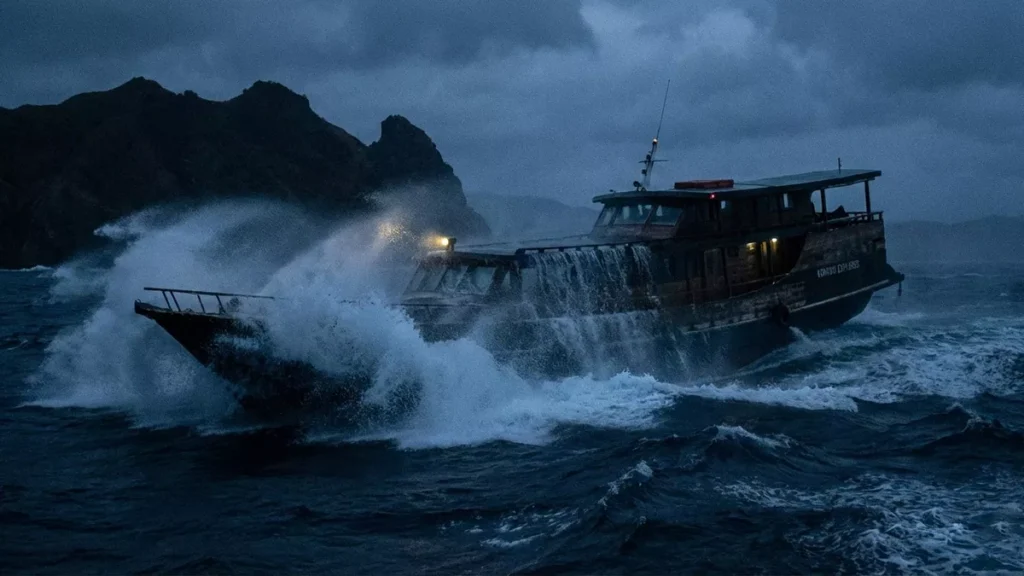
Building on the weaknesses of Scenario 1, our senior captain then presents a reconstruction that is far darker, swifter, and more technical. This scenario does not begin with the sound of an engine suddenly falling silent, but with a decisive navigational error.
“Imagine the ship was moving at full speed, around 13 to 15 knots,” he begins, painting the picture of that night. “That’s already fast. Then, it was also being pushed by a strong underlying current, common in the straits around Padar. On a pitch-black night—no moon, possibly with mist or low cloud—the helmsman on the bridge could not see the detailed surface of the sea ahead.“
Then, a wave two meters high arrived. Under normal conditions at a prudent speed, the ship would lift its bow, riding up that swell. However, with high speed aided by the current, something fatal occurred.
“What happened wasn’t a rise. Instead, the ship’s bow ‘plunged’ or ‘submarined’. Its front was pushed and submerged into the body of the wave, like a spoon scooping water,” he explains plainly. In maritime terms, this phenomenon is often called “pitchpoling” or “submarining”, where the vessel’s forward section is arrested by the mass of the wave water, while its momentum from behind drives it to “dive” downwards.
The consequences are instantaneous and cascading:
- Massive, Rapid Water Ingress: The moment the bow submarined, the sea was no longer confronted but embraced. A colossal volume of water instantly flooded the forward part of the ship through the anchor locker, ventilation, and deck seams (scuppers).
- Engine Failure as a RESULT, not a CAUSE: That incoming water immediately filled the engine room, located in the lower forward section. The large diesel engine died because it was swamped, not due to a mechanical fault. This is the key point: the engine failure was a symptom of the disaster already in motion, not its trigger.
- Cabin Doors Locked by Water Pressure: The guests in the lower cabins, who may have been jolted awake by a hard impact or the booming sound of water, would have immediately met a dead end. Their cabin doors, facing the direction of the incoming water, would have been instantly subjected to the external pressure of a water column. Pushing it open from the inside, in a state of panic and likely on a tilting floor, would have been a near-impossible endeavor. “The water pressure is immense. It’s like trying to push a door held shut by a car,” the captain analogizes.
This scenario, he argues, is the most logical and consistent with all the facts:
- Speed of the Event: It explains why there was no time for evacuation. The disaster unfolded in seconds to minutes, not 10-15 minutes.
- Victims’ Position: It explains why the four guests in the lower cabins were trapped (doors pressurized by water), while the crew on the upper deck and bridge could immediately jump or reach for life rafts.
- Fate of the Engineer: It explains why the bas could survive. If water entered from the front and above, he still had a chance to flee the engine room aft or upward before it completely filled.
- Refuting Pure Force Majeure: “This wasn’t merely ‘nature’s fury’,” he states firmly. Another vessel, the KM Kifatsa, which heard early reports over the ship-to-ship radio, immediately turned around and canceled its trip to Padar. “That is proof that information about the hazardous sea conditions was already circulating among mariners that night. The decision to continue driving the ship at high speed in the darkness was a flawed risk calculation, a decisive human error.“
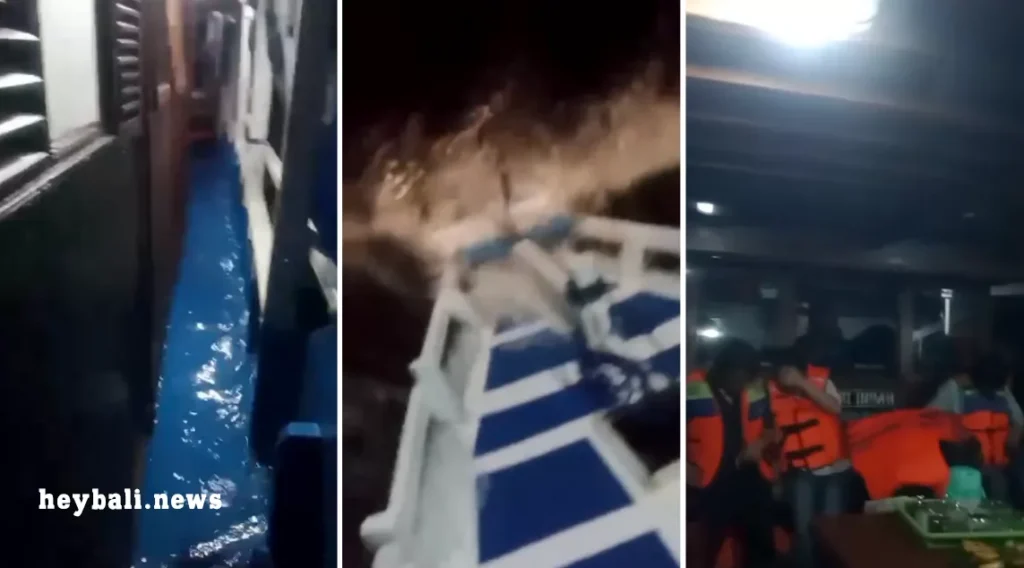
Thus, Scenario 2 does more than offer a technical explanation. It shifts the entire framework of the incident. The KM Putri Sakinah tragedy is not a story of a “rogue engine” betraying its crew mid-sea. It is the story of a vessel being steered into an extreme situation, where the laws of physics then took over with fatal consequences. In this narrative, “engine failure” is not the beginning of the story, but a midpoint—already too late—in a chain of events that began with a choice at the helm.
3 Conclusion: From Mystery to Accountability
The two scenarios laid out above present two vastly different paths of logic leading to the same, sorrowful point: a grave at the bottom of the Flores Sea. Yet, only one stands firm when tested against the hard facts: four passengers perished trapped below, the entire crew survived, and the event unfolded with terrifying speed.
The first scenario, “Engine Failure,” resembles a fragile alibi. It collapses under fundamental questions about time and the hierarchy of danger aboard. It fails to explain why emergency procedures were not executed, and most tellingly, why the crew’s fate was far better than that of the guests, who should have been easier to save. This scenario leaves a profound unease about the negligence and omission that may have occurred on deck.
In stark contrast, the second scenario, “The Ship Submarines,” arrives with a terrifying coherence. It requires no assumptions about failed evacuation protocols because it eliminates the very time needed for them. This scenario directly connects the dots: high speed, pitch-dark night, an unseen swell, and a fatal navigational error. It explains everything with the undeniable laws of physics: massive water ingress will kill the engine, seal the doors, and dictate who gets the last chance to jump.
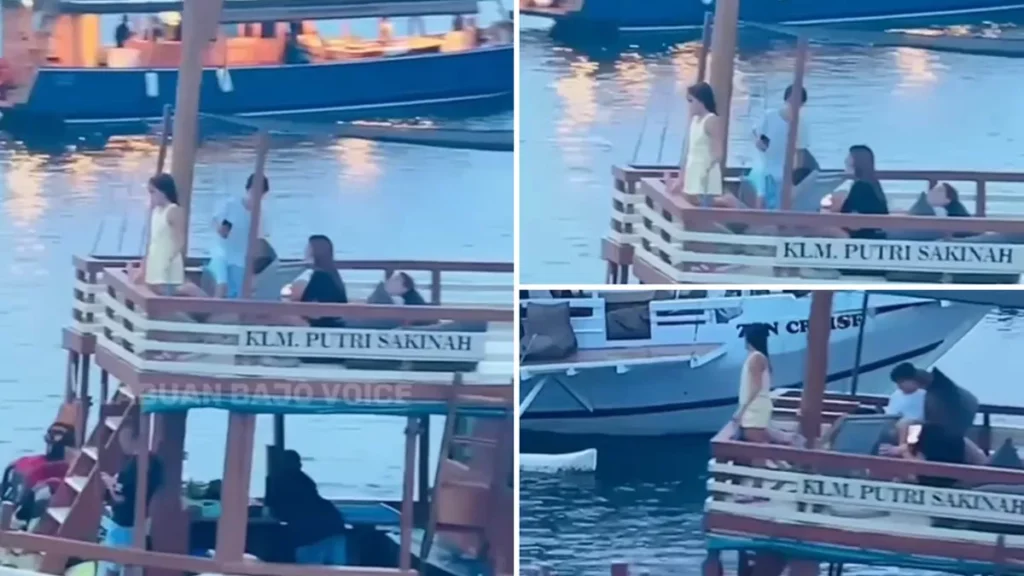
A Narrative Shift: From Act of God to Malpractice
The senior captain’s analysis decisively shifts the narrative of this tragedy from the realm of “an unfortunate act of God” to that of “an accident caused by negligence”—which carries the strong potential of being operational malpractice.
This is no longer about a two-meter wave that suddenly appeared. This is about:
- The decision to sail in extreme conditions.
- The judgment to maintain high speed in darkness.
- The responsibility of a captain as the ultimate authority who understands both the character of his vessel and the character of the sea he traverses.
The fact that another vessel turned back upon hearing weather information is irrefutable proof that the risks that night were knowable and should have been anticipated.
Final Message: The Sea Forgive a Mistake, But Not Negligence
The KM Putri Sakinah tragedy must be a turning point. It is not merely another accident statistic, but a costly lesson written in lives. The Flores Sea, for all its beauty, remains a sovereign force of nature. It may forgive a minor navigational error, but history proves it almost never forgives negligence accompanied by overconfidence.
A thorough, transparent investigation is absolutely imperative—not to find a scapegoat, but to break the chain of identical errors so it is never repeated. Night sailing SOPs, captain qualifications for extreme routes, the emergency readiness of tourist vessels, and a stricter culture of safety must become the focus.
#HeyBaliNews | Giostanovlatto
VIDEO: “God, are we sinking?”
— Hey Bali (@Heybaliinfo) December 27, 2025
A terrifying night at sea near Padar Island, Komodo National Park.https://t.co/X6mca7HXNn#VIDEO #Komodo #PadarIsland #LabuanBajo #Indonesia #BreakingNews #SeaConditions #ExtremeWeather #MaritimeSafety #BaliTravel #HeyBaliNews pic.twitter.com/Myal561uQa