


























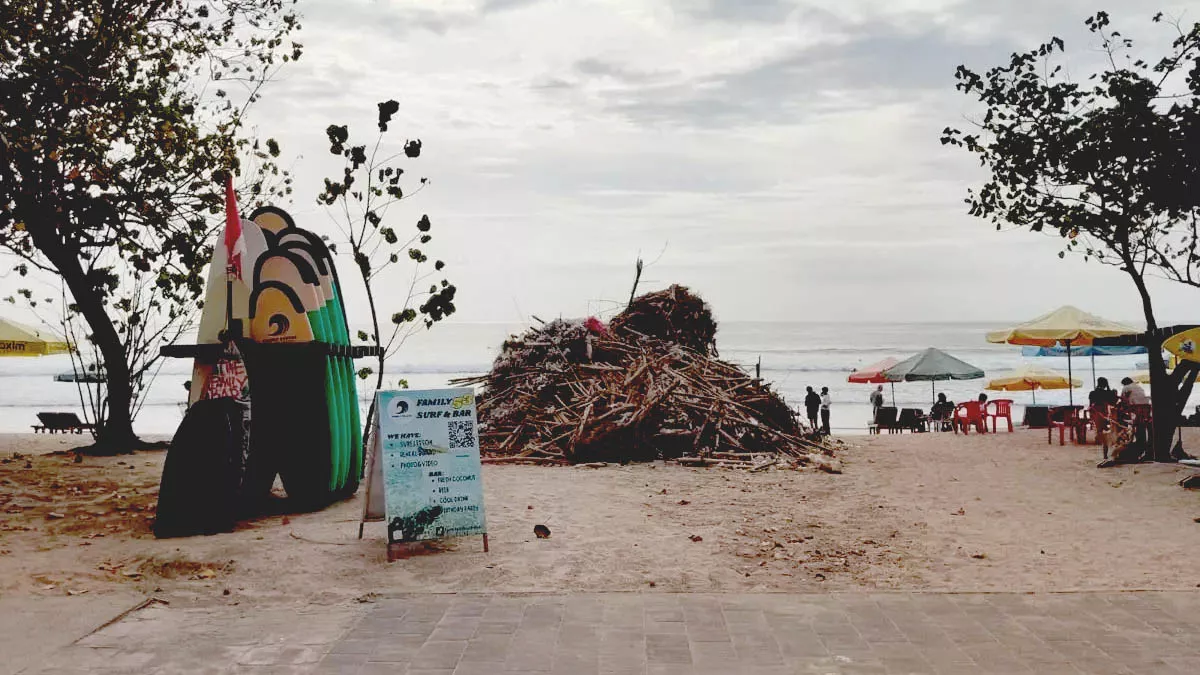
KUTA, Bali – On the final afternoon of 2025, Kuta Beach presented a jarring tableau of Bali’s dual realities. While tourists strolled along the iconic shoreline, a far less picturesque feature competed for their attention: monumental piles of uncollected garbage, some reaching three meters in height, sat decomposing just steps from the sand.
Despite overcast skies that promised no dramatic sunset, the beach pathway buzzed with its typical year-end activity. Visitors navigated the promenade, some carrying children, past the familiar rows of food vendors selling everything from meatballs to grilled corn. A traffic diversion scheme kept the adjacent road unusually clear, but it did little to alleviate the visual clutter mounting at key entry points.
The most striking sights were not the surfers catching the day’s last waves, but the open landfills forming at the beach gates. In front of hotels like Tribe and Mamaka, bundled mounds of mixed waste lay unattended, spilling onto pathways. A more severe scene unfolded near the entrance facing the CK shopping area, where a small mountain—composed predominantly of plastic water cups, timber, bamboo, coconut shells, and other refuse—towered over the scene, an unavoidable eyesore for every arriving visitor.
This stark juxtaposition—international leisure set against a backdrop of profound neglect—speaks volumes about the ongoing struggle between Bali’s tourism economy and its environmental management. For observers like Giostanovlatto, a tourism analyst and founder of Hey Bali News, the scene was a grim parody of seasonal festivity.
“What we are witnessing here is Bali’s unintended, recycled Christmas tree,” he remarked critically. “It has all the layers and textures—plastic, wood, organic waste—stacked monumentally. It’s only missing the twinkling lights.”
His analogy cuts to the heart of a persistent issue: the island has launched highly publicized campaigns and invested in waste-to-energy projects to tackle its chronic garbage crisis. Yet, as 2025 drew to a close, the scene at its world-famous beach suggested a stubborn gap between rhetoric and reality, between the vision of a “green” Bali and the daily logistics of managing its consumption.
"Wow, check out this stunning new mountain range they just added to the beach! 🏔️ Nature is truly healing. A 5-star luxury experience for anyone who loves the smell of 'organic' plastic in the morning. #EcoFriendly #ZeroWaste #kuta #beachday #SustainableTourism #bali pic.twitter.com/cDts6BVjJI
— Hey Bali (@Heybaliinfo) December 31, 2025
For the global tourists and expatriates who call Bali home, the sight is a familiar disappointment. It underscores a cyclical challenge: the very volume of visitors that sustains the local economy also generates waste that overwhelms local systems, especially during peak periods. As the new year approaches, the uncollected heaps on Kuta Beach serve as a gritty, undeniable reminder that the island’s paradise image remains precariously balanced against the weight of its own refuse.
#HeyBaliNews