


































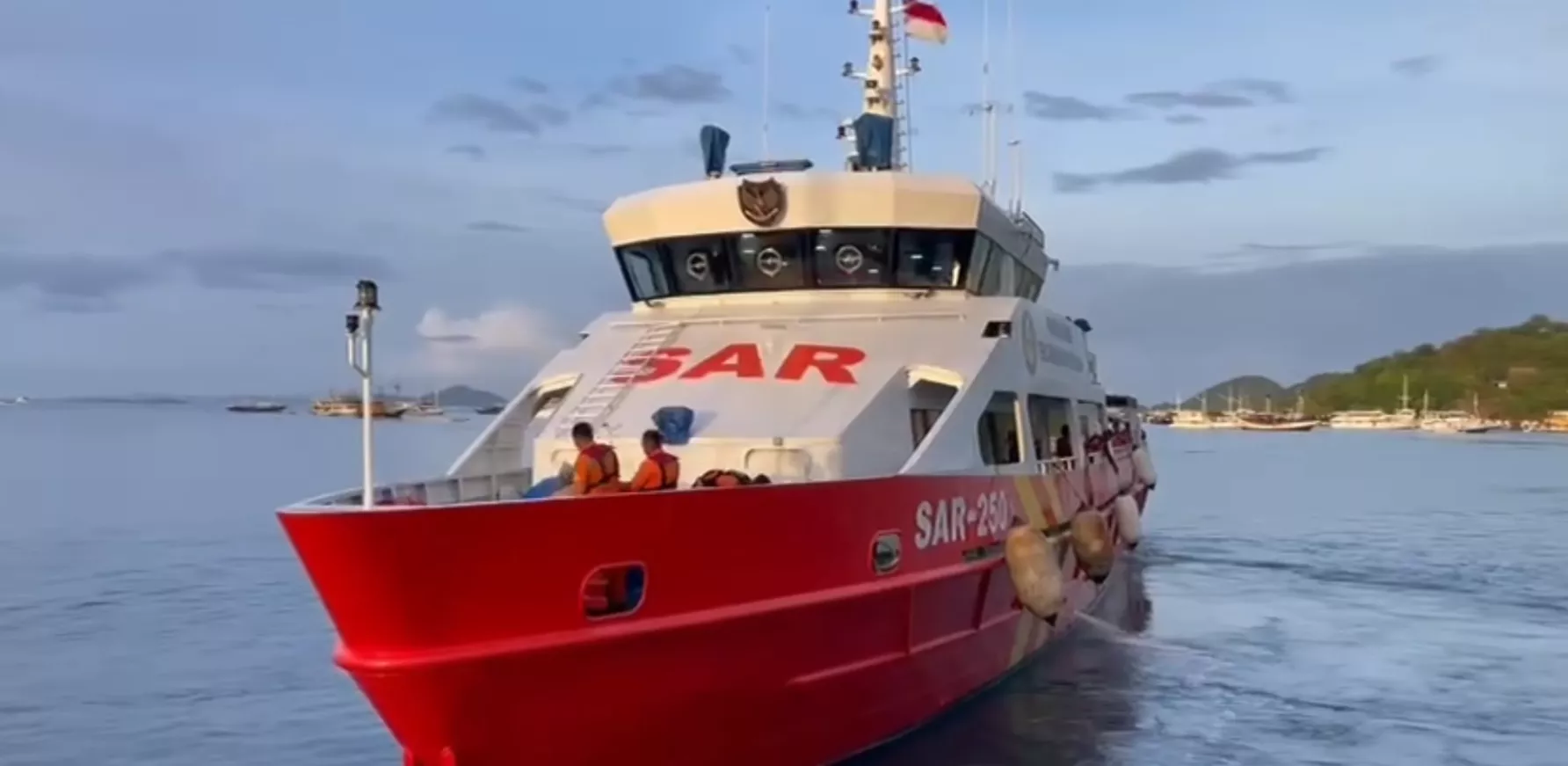
LABUAN BAJO, Indonesia — The search for the missing KM Putri Sakinah and the two boys presumed with it has encountered a formidable natural adversary: the seabed itself.
Authorities have revealed that the search area, centered on a suspected deepwater trench in the Padar Strait, presents technical challenges at the very edge of their operational capabilities.
The primary obstacle is depth. The underwater terrain in the focus area, believed to be the vessel’s sinking point, plunges sharply beyond 200 meters.
This exceeds the effective range of the sonar systems deployed by the search teams, which can reliably scan only to depths of approximately 150 meters.
“The depth the sonar can read is around 150 meters. The radius it can read at 100 meters depth is also unreadable because the underwater current is strong enough to push it, so it cannot read accurately,” explained Fathur Rahman, Head of the Maumere Search and Rescue Office.
This combination of extreme depth and powerful sub-surface currents creates a “shadow zone” where technology falters, preventing a clear picture of the seabed.
Describing the area as a steep-sloped trench, Fathur noted that depths can plunge from 30 to over 200 meters in a short distance. Despite the challenges, technical sweeps have covered over 100% of the planned search grid, yet have yielded no definitive trace of the main wreckage.
This revelation contextualizes the painstaking, days-long effort in Komodo National Park.
The operation is not merely searching a vast area but is grappling with one of the ocean’s most difficult environments—a deep, fast-moving undersea canyon that can scatter debris and hide objects from even advanced sensors.
As the search continues into its critical final phase, teams are forced to rely on a combination of technology, surface sweeps, and carefully calculated dives, all while contending with the immutable realities of the deep sea.