


































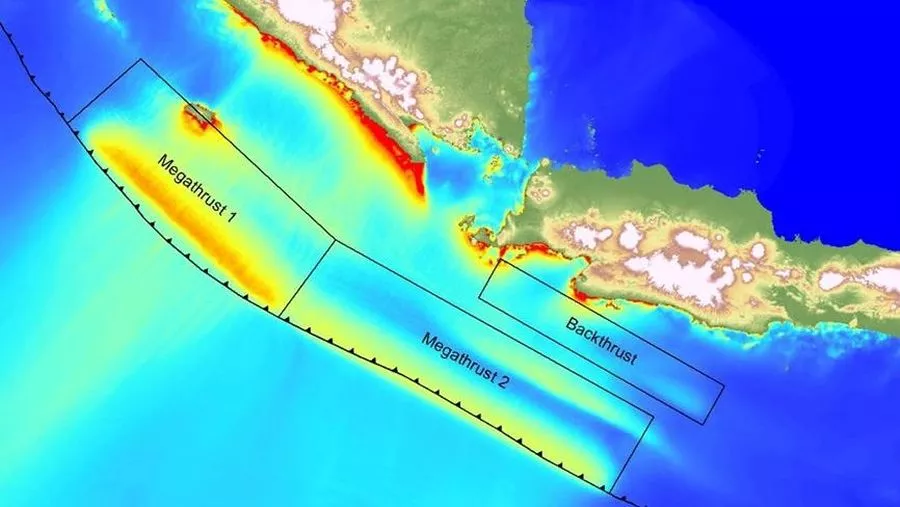
New hazard map shows increased seismic risk, with Bali located along a high-risk subduction segment
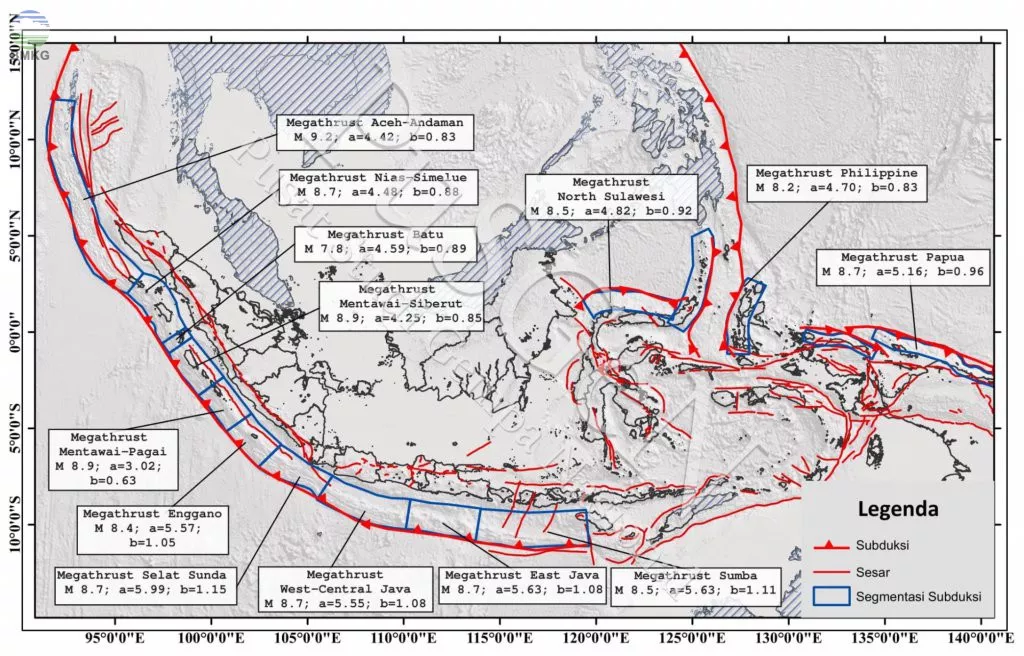
BADUNG, Bali — Indonesia’s updated 2024 Earthquake Source and Hazard Map has identified 14 megathrust zones across the archipelago, highlighting a higher level of seismic risk than previously understood and drawing attention from international researchers, including scientists from Japan.
The revised map, released by Indonesian authorities, shows denser hazard contours in several regions compared to the 2017 version—an indication of stronger potential ground shaking and accumulated tectonic stress.
Among those closely examining the findings is Kosuke Heki, a professor at Hokkaido University, who says Indonesia’s geological characteristics closely resemble Japan’s Nankai Trough—one of the most active megathrust regions in the world.
Parallels With Japan’s Seismic History
Speaking during his time as a visiting researcher at Badan Riset dan Inovasi Nasional, Heki pointed to similarities in how tectonic stress builds along subduction zones in both countries.
“We understand that magnitude 8 earthquakes in Japan occur at intervals of approximately 50 to 100 years. This was our classical view before major earthquakes occurred,” he said.
While predicting the exact timing of earthquakes remains beyond current science, Heki stressed that long-term monitoring of crustal deformation is essential for risk mitigation.
He highlighted the importance of Global Navigation Satellite Systems (GNSS) and seafloor geodesy in detecting how stress accumulates beneath the Earth’s surface.
“We see seismic coupling locking almost along the entire trench axis. Even at shallow plate boundaries, strain continues to accumulate for the next earthquake,” he explained..
The Role of Slow Slip Events
Heki also pointed to “slow slip events”—gradual tectonic movements that often occur before major earthquakes.
Although these movements are barely perceptible, they may provide early signals of changing stress conditions beneath the surface.
“These phenomena have been observed repeatedly in the Nankai Trough and other regions of Japan. One such event could potentially trigger the next major earthquake,” he said.
For Indonesia, developing the ability to detect these signals could significantly improve early warning and disaster preparedness.
A Country of Active Subduction Zones
Indonesia sits along a vast chain of active subduction zones stretching from Sumatra through Java, Bali, Lombok, and into eastern regions such as Maluku.
Heki noted that this geological setting gives Indonesia a strong opportunity to build monitoring systems comparable to those in Japan.
“Currently, I am working on this issue in Indonesia,” he said, pointing to ongoing scientific collaboration between the two countries.
What the New Map Reveals
The updated hazard map underscores the scale of seismic energy stored beneath Indonesian waters.
The Aceh-Andaman megathrust shows the highest potential, with an estimated maximum magnitude of 9.2. The Java megathrust, running along the island’s southern coast and extending eastward, carries a potential magnitude of 9.1.
Other significant zones include Mentawai-Siberut, Mentawai-Pagai, and Enggano, each with the potential to generate earthquakes approaching magnitude 9.
Seismic Gaps Raise Long-Term Concerns
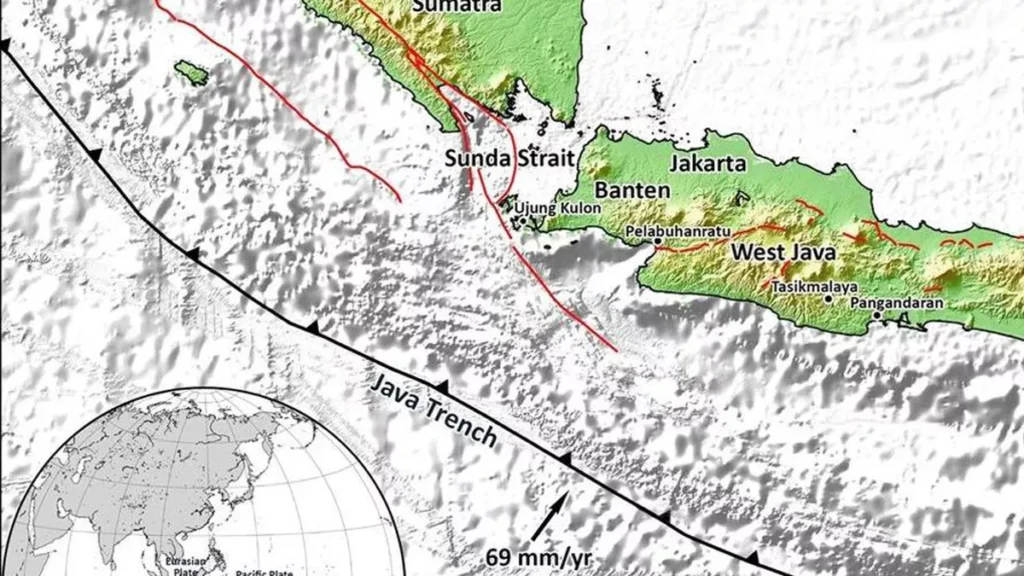
Indonesia’s Badan Meteorologi Klimatologi dan Geofisika has also highlighted two megathrust segments—Sunda Strait and Mentawai-Siberut—as being in a “seismic gap” condition.
These areas have not released significant energy for centuries, with the last major earthquakes recorded in 1757 and 1797.
The agency cautioned that this does not mean an earthquake is imminent.
“What this means is that energy continues to accumulate because no major earthquake has occurred for a long time. It does not indicate that an earthquake will happen in the near future,” BMKG said in an official statement.
What It Means for Bali
For Bali, the findings reinforce its position along an active tectonic boundary within the broader Java–Bali–Nusa Tenggara subduction system.
While most earthquakes felt on the island are small to moderate, the surrounding megathrust system is capable of generating much larger events.
For residents, investors, and millions of visitors each year, the message is not one of alarm—but of awareness.
Indonesia shares the same seismic reality as countries like Japan and Chile: earthquakes cannot be predicted with precision, but their risks can be better understood and managed.
With stronger monitoring systems and continued scientific collaboration, experts say the focus remains on preparedness—ensuring that when a major event occurs, its impact can be minimized.