


































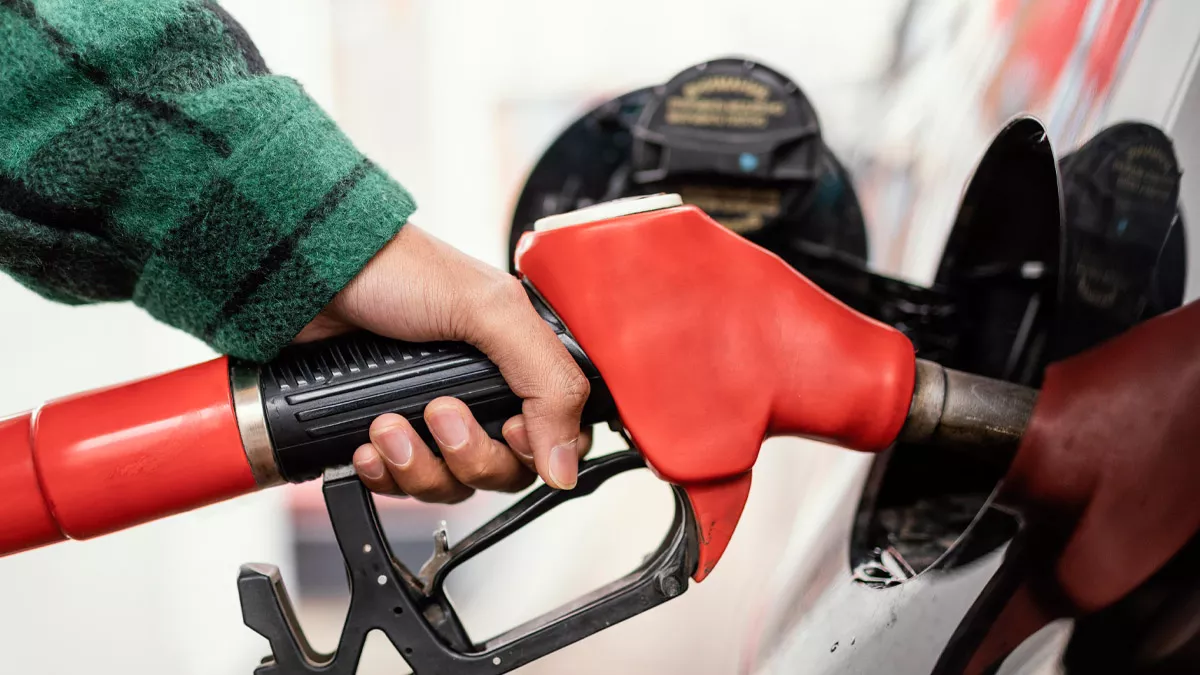
JAKARTA — As fuel prices climb across Southeast Asia, a regional pattern is becoming clear: higher global oil costs are reaching consumers almost everywhere—except Indonesia.
For travelers heading to Bali, the difference is already noticeable.
In neighboring countries, filling up a tank has become significantly more expensive in recent weeks. But in Indonesia, prices at the pump remain unchanged, insulated—at least for now—from the volatility reshaping global energy markets.
The contrast is not accidental. It reflects a deliberate policy choice, one that carries both short-term stability and long-term consequences.
A Region Feeling the Pressure
Since late February, escalating tensions in the Middle East—particularly involving the United States, Israel, and Iran—have pushed global crude prices higher. The ripple effects are now visible across Southeast Asia.
- In Malaysia, fuel prices have risen sharply over consecutive weeks, with both petrol and diesel climbing to multi-week highs.
- In Singapore, one of the region’s most market-driven economies, gasoline prices have jumped by roughly 20 percent in less than a month.
- In Thailand, authorities have approved increases across gasoline and diesel categories, passing global costs directly to consumers.
Across the region, the mechanism is straightforward: higher crude prices translate into higher retail fuel prices.
Indonesia is the outlier.
Indonesia’s Stability—By Design
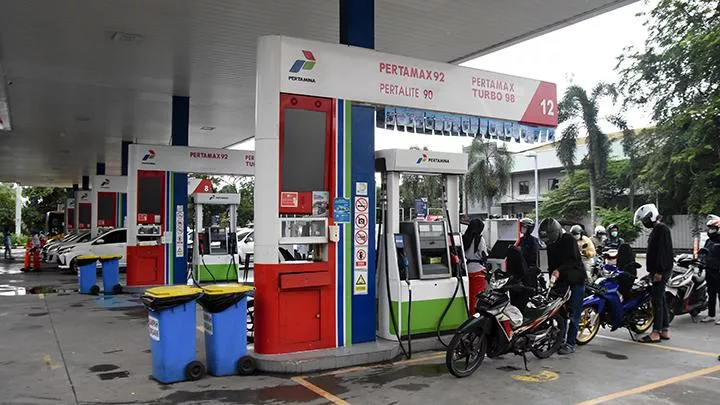
At fuel stations across Jakarta, Bali, and beyond, prices have barely moved.
Subsidized fuel products remain fixed:
- Pertalite (RON 90): Rp 10,000 per liter
- Diesel: Rp 6,800 per liter
Non-subsidized fuels have also stayed stable, with Pertamax and its variants showing no meaningful adjustments in recent weeks.
This stability is not the result of market forces. It is policy.
Indonesia heavily subsidizes fuel, absorbing fluctuations in global oil prices to protect consumers and maintain economic stability. In effect, the government acts as a buffer between global volatility and domestic prices.
But that buffer is not free.
Indonesia is not immune to rising oil prices—it is simply absorbing them.
What This Means for Bali Travelers and Expats
For visitors and residents in Bali, the impact is immediate and practical.
- Travel costs remain predictable: Renting a scooter or car costs the same as it did weeks ago, despite rising global energy prices.
- Daily expenses stay stable: Fuel-dependent activities—from transport to logistics—are shielded from sudden price spikes.
- Tourism operators gain certainty: Businesses can plan without adjusting pricing for fuel volatility, at least in the short term.
In a region where costs are rising, Indonesia offers a rare pocket of price stability.
The Trade-Off Beneath the Surface
The divergence between Indonesia and its neighbors highlights a deeper policy divide.
Countries like Singapore and Thailand largely allow market pricing to reflect global realities. Consumers pay more when oil prices rise—but governments avoid heavy fiscal burdens.
Indonesia has chosen a different path.
By keeping prices stable, the government absorbs the cost through subsidies. As global oil prices increase, so does the strain on public finances.
Each approach carries trade-offs:
- Market pricing: transparent, but volatile for consumers
- Subsidized pricing: stable, but fiscally expensive
For now, Indonesia is prioritizing stability.
A Regional Gap That’s Growing
For travelers moving across Southeast Asia, the differences are becoming increasingly visible.
A journey from Singapore to Kuala Lumpur to Bali now reveals not just different cultures—but different energy policies.
In one country, fuel prices fluctuate weekly. In another, they remain unchanged despite global shocks.
That divergence is reshaping cost structures across tourism, logistics, and daily life.
What Comes Next
The key question is not whether global oil prices will remain volatile—they likely will.
The question is how long Indonesia can maintain its current approach.
Fuel subsidies have historically been adjusted during periods of fiscal pressure. If global prices remain elevated, policymakers may eventually face a choice: continue absorbing the cost, or pass some of it on to consumers.
For now, the shield remains in place.
The Bottom Line
For Bali, the impact is clear: fuel remains affordable, predictable, and insulated from global shocks.
But unlike in neighboring countries, the true cost is not visible at the pump.
It is carried elsewhere.
Hey Bali News will continue to monitor fuel price developments and their impact on Bali’s tourism economy, cost of living, and investment landscape.