



























DENPASAR – There is a version of Bali that still exists postcards. It speaks of misty rice terraces, the scent of frangipani, and the melodic hum of Hindu offerings carried on the breeze. It is a billion-dollar fantasy sold to the 17 million tourists who descend upon this island every year.
But behind that veil, in the dense alleyways of Denpasar Barat, another Bali is gasping for air.
Here, the breeze carries no frangipani. It carries the cloying, acrid stench of decay. Since the provincial government ordered the closure of the Suwung Final Processing Site (TPA)—the island’s primary landfill—garbage trucks have stopped coming. Mountains of black plastic bags now line the curbs, festering under the tropical sun.
“We pay our retribution fees every month. But no one comes to pick up the trash,” said Tri Widiyanti, chairwoman of the Bali Online Journalists Association (IWO) and a resident of Denpasar Barat. Speaking at a recent forum, her voice carried the exhaustion of a mother and the precision of a journalist.
“This is a grand policy without infrastructure. Without technical staff. It has created a new kind of suffering,” she added. “We don’t have modern transfer stations. We don’t have decomposers. We only have the smell.”
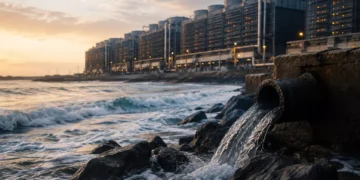
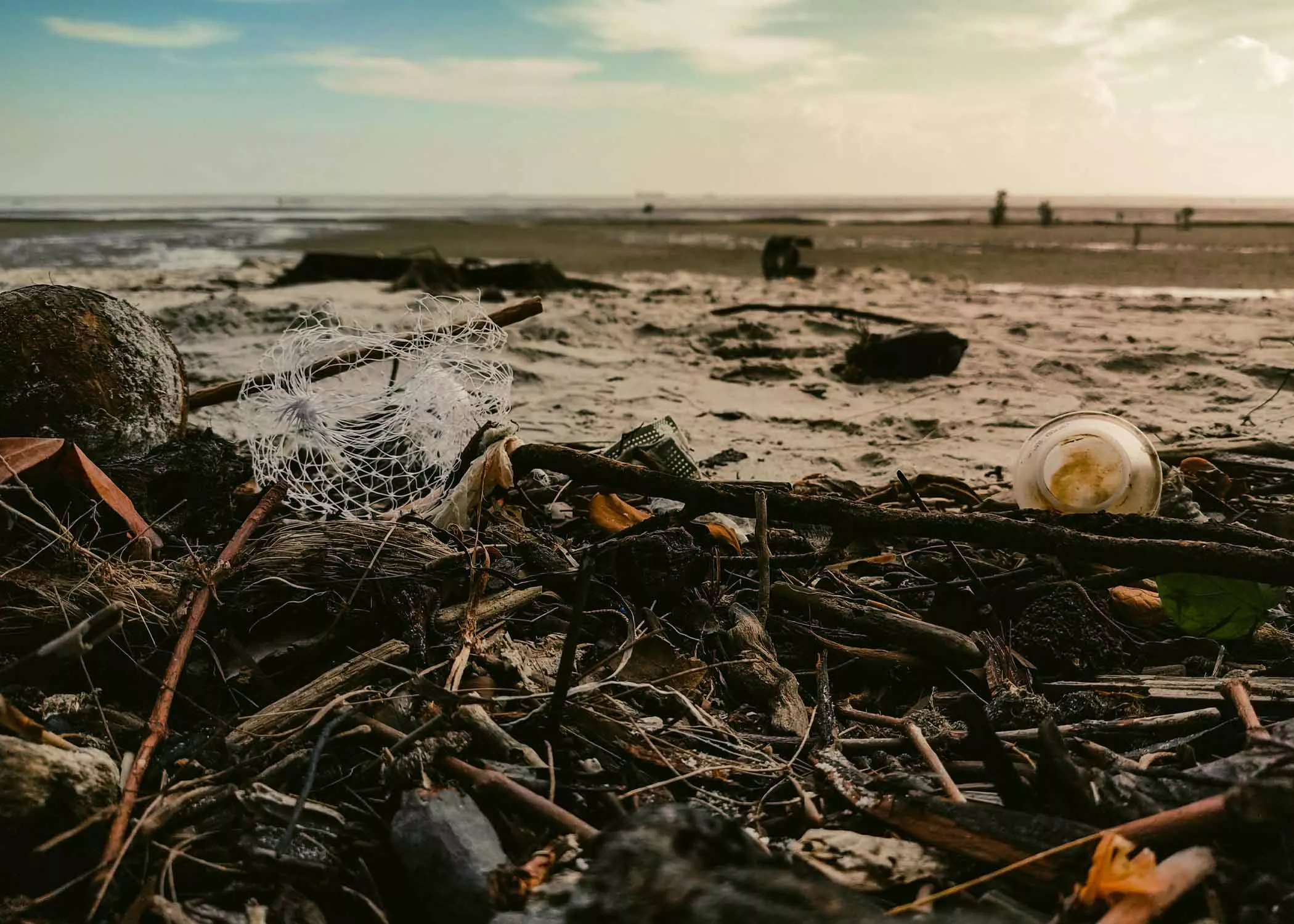
Bali is facing a brutal paradox. In a desperate bid to save its tourism industry from environmental collapse—and to scrub its international image of the “garbage island” epithet—the government shut down the leaky, overloaded Suwung landfill. The logic was sound: stop the ocean pollution and the burning eyesore.
But the execution has been a catastrophe for the Balinese people.
“A Social Time Bomb”
The closure was meant to be a victory lap for environmental reform, forcing a transition to a high-tech Waste-to-Energy plant (PLTSa). Instead, it has exposed the rot beneath the paradise.
While tourists in Canggu and Seminyak sip $10 smoothie bowls, residents in Denpasar are holding their breath. The waste that once went to Suwung has nowhere to go. The “collect-haul-dump” system that served the city for decades has been switched off, but the “sort-from-source” system promised in its place has not yet arrived.
Local activists call it a “social time bomb.”
The tension is so acute that community leaders are now threatening to take the fight to the international stage. Citing the right to a healthy environment—a basic human right—residents have raised the possibility of filing a complaint with Amnesty International.
For the global reader, this is the hook. Bali isn’t just losing a beauty contest; it is violating the fundamental rights of its citizens to maintain a luxury tourism product.
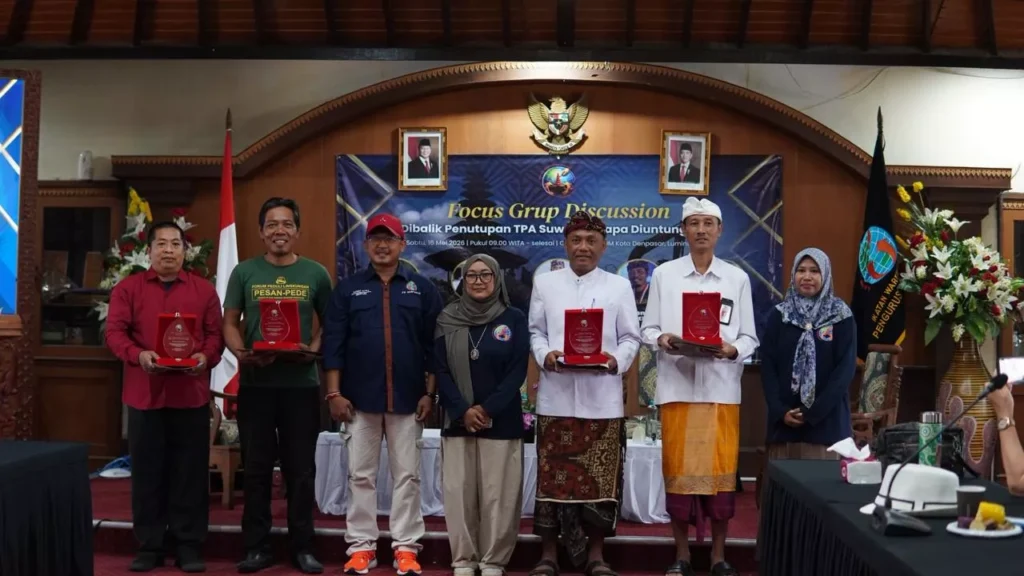
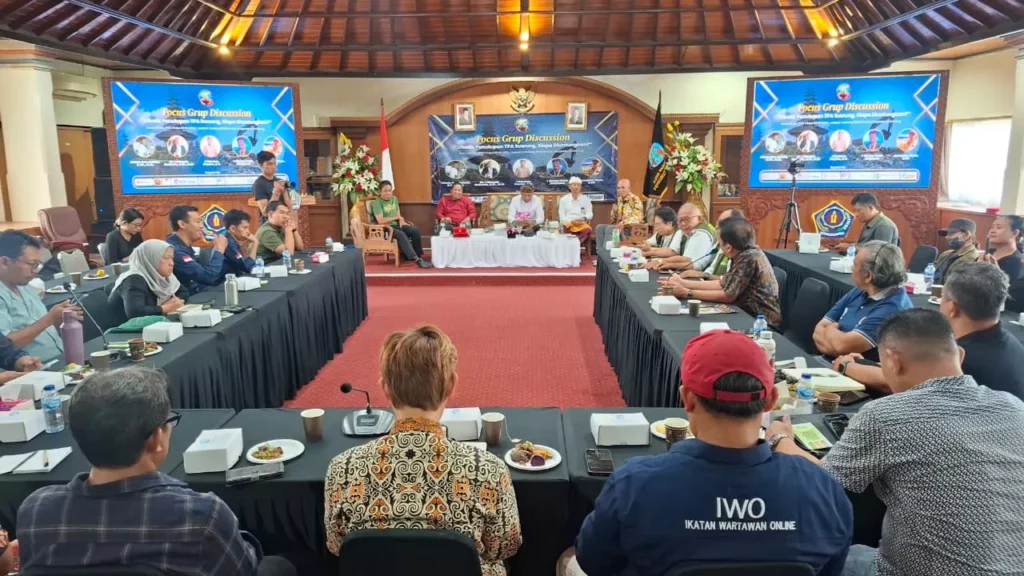
“We are talking about environmental justice,” said one participant at a heated Focus Group Discussion organized by IWO Bali over the weekend. “The world sees Bali as a living museum. But the people who keep the museum running are being forced to live in the back room, which is now a garbage dump.”
The Numbers Don’t Lie: An Island Overloaded
To understand the crisis, one must look at the brutal mathematics of the island.
Dr. I Nengah Muliarta, an academic and environmental scientist, laid out a terrifying statistic during the discussion. Based on carrying capacity, the island of Bali was designed by nature to comfortably sustain 1.5 million people.
Today, that number has ballooned to 4.5 million permanent residents, plus an annual influx of 10 million domestic tourists and 3 to 4 million foreign visitors.
“This is not just a waste problem,” Dr. Muliarta told the forum. “This is a problem of spatial planning and political will. We are asking a system built for a small village to process the waste of a megacity.”
The government’s response—building a massive PLTSa—is a long-term bet. But as I Wayan Balik Mustiana, a grassroots waste practitioner, noted, technology cannot fix a broken spirit.
“See this plastic bottle?” Mustiana asked the room, holding up a mineral water container. “It was a tool to help us drink. But the moment it is empty, we call it ‘evil trash’ and throw it away. We pay a fee, and we think it’s the government’s problem. This is the abdication of responsibility.”
Mustiana argues that 80% of household waste is organic and could be composted in a backyard. The remaining 20%, he claims, could be managed at the village (desa adat) level using the ancient Balinese philosophy of Tri Hita Karana (harmony with God, people, and nature).
But that requires a cultural shift that the government’s top-down closure order failed to inspire.
The Sound of Silence from the South
The contrast is starkest in Badung, the regency that houses the tourism heartland of Kuta and Legian.
Officials there admit they have a dual reality. In North Badung (rural), people are willing to sort their trash. In South Badung (urban-tourism), a recent audit found that only 6% of waste is organic; the rest is plastic, diapers, and industrial packaging.
“We have implemented a strict pick-up schedule. Monday and Thursday for organic, the rest for residual waste,” said a Badung official. The result? The number of trucks hauling waste to the remaining facilities has dropped from 240 to 190 units. Progress, but not victory.
Yet for the people of Denpasar Barat, those statistics are academic. What is real is the fly infestation. What is real is the rat population booming in the gutters.
As the government races to build new Transfer Stations (TPS) by 2026—adding five more to the existing 23—the current reality is that Bali is a island caught between two eras.
It has killed the old way (dumping) before the new way (circular economy) has learned to walk.
Who is really paying the price?
Back in the alleyways of Denpasar, the answer is clear.
The closure of TPA Suwung was supposed to be a win for everyone: cleaner beaches for tourists, better health for locals, higher land values for investors.
Instead, it has become a stress test for inequality.
The government argues that in the long run, the closure will force the “death” of the throwaway culture. Legislator I Nyoman Suyasa insists that once the PLTSa runs at full capacity, the air will clear, the sea will heal, and hotel occupancy will rise.
But for a mother trying to cook dinner while flies swarm her kitchen window because the garbage hasn’t been picked up in two weeks, the “long run” is a luxury she cannot afford.
The question hanging over the Island of the Gods is no longer about logistics. It is about morality.
Is Bali’s environmental policy serving the postcard—or the people?
As one activist put it bluntly at the close of the FGD: “If the government doesn’t have the full will to solve this, we will just be having this same conversation next year. But the pile of trash will be higher.”