
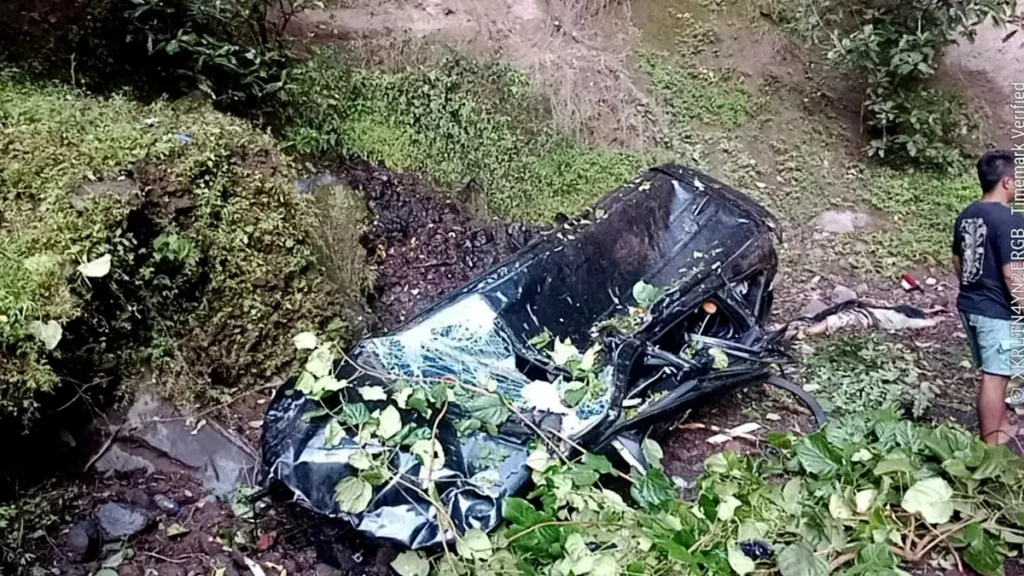
KARANGASEM, Bali — The road from Rendang to Kubu winds through some of Bali’s most dramatic landscapes: steep hills, dense forest, and sheer drops that reveal the island’s volcanic backbone. It is beautiful. It is also unforgiving.
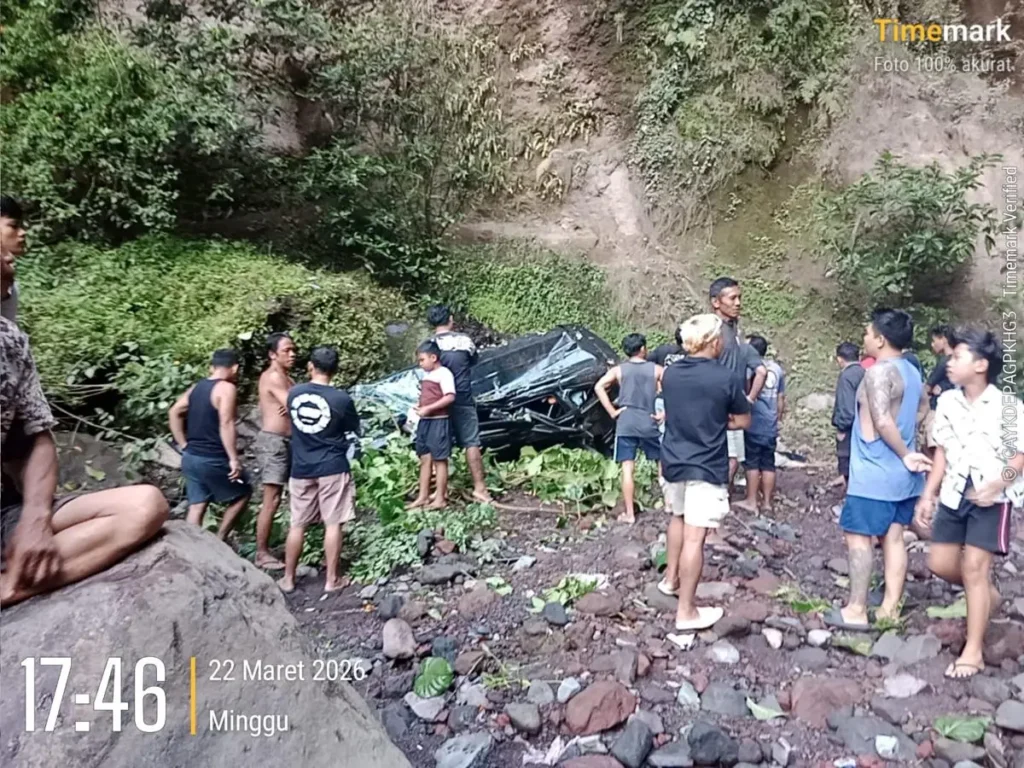
On Sunday afternoon, a black Daihatsu Terios lost control on a wet curve along this route and plunged into a 100-meter ravine. The driver, I Gede Eri Setiawan, a 31-year-old private sector employee from the nearby village of Tianyar, was found dead at the bottom.
The accident, which occurred around 5:00 PM, was a single-vehicle incident. But the details that emerged afterward—a winding road, a slippery surface, and the presence of alcohol—paint a picture of a tragedy that was as predictable as it was preventable.
A Road That Demands Respect
The Rendang–Kubu route is known to locals as a jalur ekstrem—an extreme path. It is not the smooth, well-lit highway of Bali’s south. It is a narrow, twisting mountain road where gradients shift suddenly and guardrails are often absent.
On Sunday, the asphalt was wet, adding another layer of risk to an already treacherous stretch. According to police, Setiawan was traveling from Rendang toward Kubu when he approached a curve. The vehicle left the road, rolled over the edge, and fell approximately 100 meters before coming to rest.
Rescuers who reached the scene found the car wrecked and the driver unresponsive. He sustained severe injuries: a deep gash to his forehead, fractures in both legs, and other trauma that proved fatal.
A Night of Celebration, A Fatal Decision
Before the crash, Setiawan had attended a traditional ceremony in Banjar Dinas Bonyoh, a village within the same district. According to witness statements collected by police, he had consumed alcohol during the gathering before getting behind the wheel.
The combination was lethal: alcohol, a slippery road, and a curve perched above a 100-meter drop.
Police have not yet confirmed whether alcohol was the primary cause, but its presence in the sequence of events is clear. The message that followed—from local authorities, from community leaders, and from the facts of the case itself—was simple: drinking and driving on Bali’s mountain roads is not a gamble worth taking.

A Familiar Tragedy on Unforgiving Terrain
The Kubu district, where the accident occurred, is no stranger to fatal crashes. Its roads wind through steep topography, with long stretches that lack lighting or barriers. During the rainy season, the asphalt becomes slick, and visibility drops.
For drivers unfamiliar with the terrain—and even for those who know it well—the margin for error is narrow.
In this case, Setiawan was a local resident, not a tourist. His death is a reminder that the risks on Bali’s roads extend to everyone, regardless of nationality or familiarity with the island. The same roads that carry travelers to hidden waterfalls and remote beaches also carry families, workers, and neighbors—and all are subject to the same physics.
What the Numbers Don’t Show
Bali’s traffic accident statistics are tracked, reported, and analyzed. But numbers rarely capture the full story.
Behind each data point is a family, a village, a community that gathers at a funeral instead of a celebration. In Kubu, the loss of a 31-year-old resonates beyond the immediate family. It is a collective grief—and a collective warning.
A Call for Caution, Not Fear
Police who investigated the scene emphasized two key points for drivers navigating Bali’s more challenging roads:
- Slow down on unfamiliar or winding routes. Speed that feels manageable on a straight road can become dangerous on a curve—especially when the road is wet.
- Do not drink and drive. Alcohol impairs judgment, reaction time, and coordination. On a road with no guardrails, there is no room for error.
These are not new messages. But each accident serves as a reminder of why they matter.
The Road Ahead
For those who live in Bali’s eastern regencies, the Rendang–Kubu road is a necessary artery—a connection between villages, markets, and the wider island. It is not a road to be avoided, but one to be respected.
For visitors exploring beyond the tourist centers, the same applies. Bali’s interior offers some of the island’s most spectacular views, but reaching them requires navigating roads that were not designed for speed.
The accident that took Setiawan’s life was not caused by a single factor. It was the intersection of a wet road, a sharp curve, a driver’s impaired judgment, and terrain that leaves little room for recovery.
In that intersection lies the tragedy—and the lesson.
Hey Bali News encourages all drivers to exercise extreme caution on mountain roads, to avoid alcohol before driving, and to recognize that Bali’s beauty often comes with risks that demand respect.