
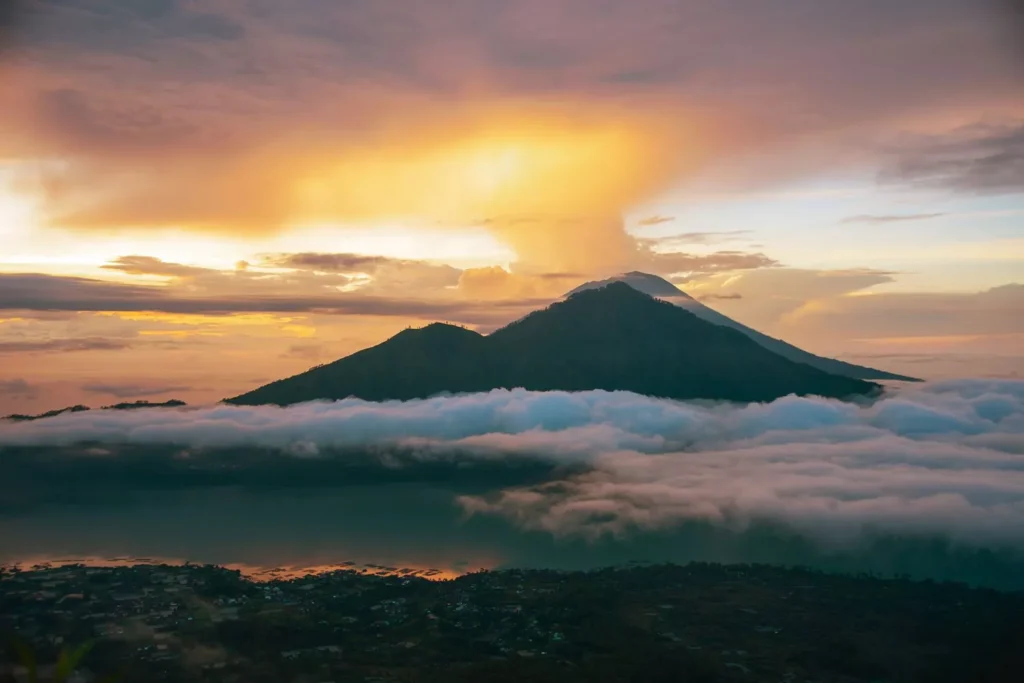
BANGLI, Bali — Most visitors know Mount Batur as one of Bali’s most photographed sunrise hikes. Few realize that exactly 100 years ago, one of the volcano’s most destructive eruptions forced entire communities to abandon their homes and rebuild their lives elsewhere, forever reshaping the cultural landscape travelers see today.
Now, a century after the 1926 eruption known locally as Rarud Batur, the Indigenous community of Batur is marking the anniversary with the inaugural Batur Village Festival, a week-long event running from August 2 to August 8, 2026, that combines history, culture, sports, art, and community reflection.
Rather than commemorating the eruption through a single ceremony, organizers say the festival has been designed as a living tribute to the resilience of the people who survived one of Bali’s defining natural disasters.
“From the beginning, we wanted the 100th anniversary of Rarud Batur to become more than a ceremonial event,” festival chairman I Made Santika said in a statement. “We want it to become a collective movement to revive the history, culture, and spirit of our ancestors.”
Remembering a Village That Had to Move
The 1926 eruption devastated settlements surrounding Mount Batur, forcing residents to relocate and rebuild what is now known as Batur Traditional Village. For many Balinese, the event remains one of the island’s most significant historical disasters, not simply because of the volcanic destruction, but because it transformed where and how an entire community lived.
To help visitors understand that history, one of the festival’s signature events will retrace the original evacuation route taken by villagers as they fled from Batur Let toward Bayung Gede before eventually establishing today’s traditional village.
Organizers describe the historical walk as both an educational experience and a tribute to generations who rebuilt their lives after losing their homes.
More Than a Cultural Festival
The week-long program begins with the Batur Caldera Run before expanding into a wide range of cultural, educational, and artistic events.
Highlights include a theatrical performance recreating the story of the 1926 eruption and the community’s relocation, a seminar examining the centennial of Batur’s resettlement, painting exhibitions, performances by students from the Indonesian Institute of the Arts (ISI) Bali, youth discussions, traditional music competitions, cultural literacy contests, and screenings of films documenting Batur’s heritage.
Visitors can also attend workshops on bamboo preservation, tourism guide training, a Kintamani coffee seminar, traditional costume showcases, cultural parades, and performances by local and national musicians.
Looking Beyond Tourism


Community leaders say the anniversary is also intended to spark conversations about the future of the Batur region, which has become one of Bali’s fastest-growing tourism destinations.
Jero Penyarikan Duuran Batur said remembering the sacrifices made by earlier generations is essential as tourism continues to expand around Mount Batur.
“The centennial is not only a moment to reflect on history,” he said. “It also reminds us to keep our historical roots as the foundation for facing future development.”
He added that while tourism has created new opportunities around Mount Batur, protecting the living traditions and cultural landscape of the Indigenous community remains equally important.
Why It Matters for Travelers
For travelers planning to visit Mount Batur this August, the festival offers something rarely available on Bali’s busy tourism calendar: the opportunity to experience the island not simply through its scenery, but through the stories of the communities that have lived alongside an active volcano for centuries.
While sunrise hikes reveal one side of Mount Batur, the Batur Village Festival reveals another, showing how one of Bali’s most iconic landscapes is also the setting of one of its most enduring stories of survival, resilience, and cultural renewal.