


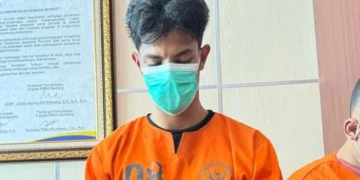



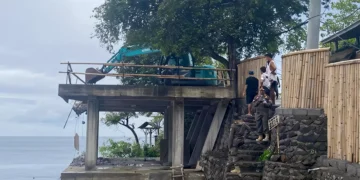















BALI – At a moment when Bali is struggling to confront a deepening waste crisis, a 17-second viral video has delivered an uncomfortable jolt to public trust. The footage, recorded during heavy rainfall in Banjar Uma Buluh, Canggu, shows a government staff member from the Badung branch of Indonesia’s General Elections Commission, known as the KPU, discarding trash directly into a drainage channel.
The act was brief, almost casual. Its impact was not.
As flood risks rise and landfill capacity collapses across the island, the image of a public official adding to the problem rather than preventing it struck a nerve. Within hours, the video spread across social media, provoking anger among residents who have been repeatedly urged to change their habits, sort waste at the source, and accept stricter environmental rules.
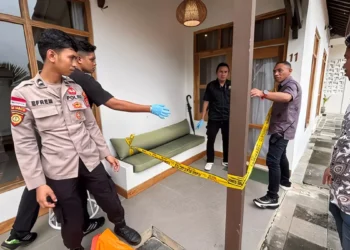
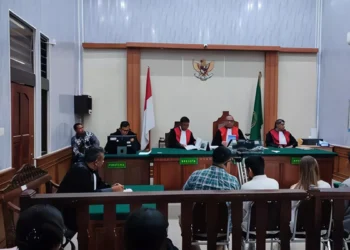
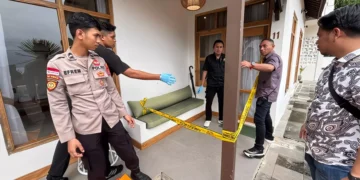
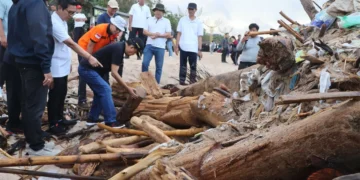
By evening, the chairman of KPU Badung, I Gusti Gede Agung Nakula, was on site, facing residents and cameras. His response was direct. He apologized.
“I, as Chairman of the Badung KPU, wish to convey my deepest apologies to the residents of Banjar Uma Buluh and the people of Desa Canggu,” he said. “What happened was a mistake, a negligence on the part of our staff.”
The incident occurred during intense rainfall, when water levels in the drainage system were already high. Disposing of waste at such a moment carries clear consequences. Blocked channels are a primary cause of flash flooding in Bali’s low-lying and coastal areas, including parts of North Kuta that already struggle with runoff during the wet season.
For many locals, the outrage was not only about littering. It was about contradiction.
Government offices are expected to model compliance with Bali’s regional regulations on waste management, which increasingly emphasize sorting, reduction, and processing at the source. When a public institution is seen violating the very principles it is meant to uphold, the credibility of enforcement weakens.
“This is not just about one person throwing trash,” said a community representative from Banjar Uma Buluh in the video. “We are all being asked to take this waste issue seriously. That applies to everyone.”
Nakula acknowledged that point. He pledged that the KPU Badung would not repeat the behavior and committed to working with the local banjar on environmental order, waste handling, and neighborhood safety. The meeting ended with handshakes and a declaration that the matter had been resolved amicably.

Yet the episode lingers as a symbol of a broader challenge.
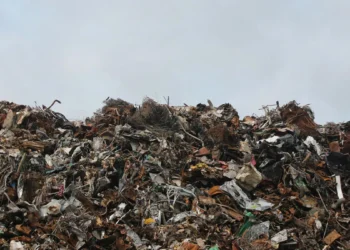
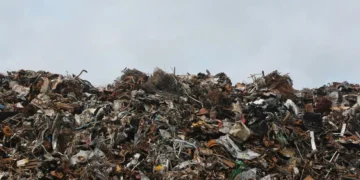
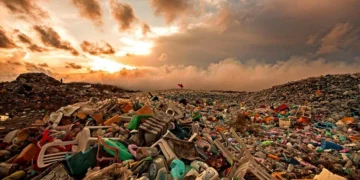
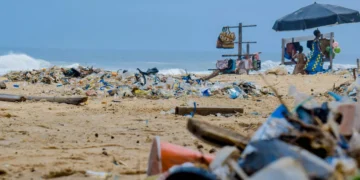
Bali’s waste emergency is no longer abstract. With the looming closure of the Suwung landfill and mounting pressure on districts to manage refuse independently, the island is navigating a difficult transition. Households are being told to compost. Businesses are being warned of sanctions. Villages are being mobilized. In that context, public institutions carry a heightened moral burden.
Environmental observers note that disposing of trash during heavy rain is among the most damaging habits, accelerating pollution into rivers and the sea. For an island whose economy and identity are inseparable from its natural environment, such actions resonate far beyond a single drain.
For expatriates and visitors, the video offers a revealing glimpse into Bali’s internal reckoning. The island’s environmental struggle is not a simple story of irresponsible tourists or overwhelmed villagers. It is also a test of governance, consistency, and example.
The resolution of the incident reflects something distinctly Balinese. Conflict is often addressed through dialogue, apology, and social reconciliation. That cultural mechanism worked here. But reconciliation does not erase responsibility.
As Bali asks its residents, businesses, and guests to adapt to stricter environmental realities, the expectation is clear. Leadership must begin at the top, and accountability must be visible.
The drain in Banjar Uma Buluh has been cleared. The larger system, however, still needs work.