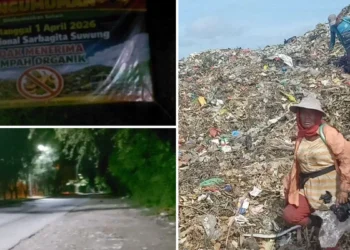


















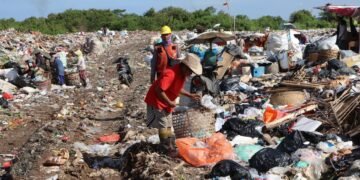
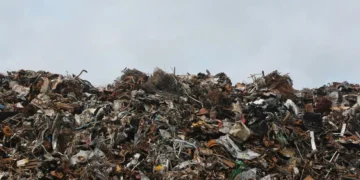
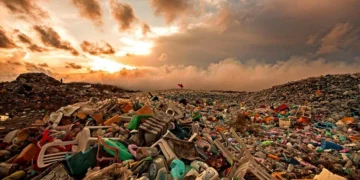
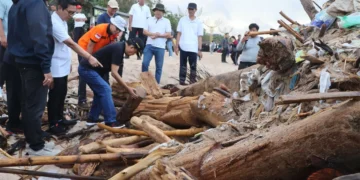

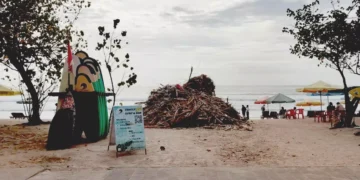

Denpasar, Bali — The Indonesian government has confirmed that Bali’s primary landfill, the Suwung Final Disposal Site (TPA) in Denpasar, will cease operations on 1 March 2026. The decision, announced following a high-level meeting on Monday, sets a firm two-month deadline for local authorities to implement a new waste management system before the site’s closure.
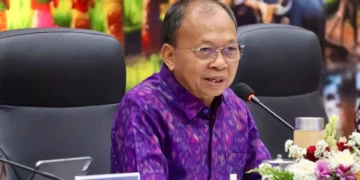
The announcement came from a meeting between Bali Governor I Wayan Koster and Indonesia’s Minister of Environment and Forestry, Hanif Faisol Nurofiq, which also included the mayors of Denpasar, Badung, and Bangli. Governor Koster emphasised the urgency, stating that regional governments must “move quickly” to prepare alternative solutions.
A Two-Month Deadline for Action
With the clock ticking, authorities have been directed to finalise contingency plans. Governor Koster explained that the central government has instructed them to “prepare steps for the next two months so that when the Suwung landfill is closed, a solution is already available to handle the waste problem, especially in Denpasar City and Badung Regency.”
As an immediate stopgap, the existing landfill in Landih Village, Bangli Regency, will be used as a temporary holding site. This facility, though not originally designated as a regional landfill, will be utilised under cross-regency cooperation agreements while a more permanent solution is built.
Long-Term Solution: Waste-to-Energy and Source Separation
The long-term plan centres on constructing a Waste-to-Energy (WtE) facility on the Suwung site, a project estimated to take approximately two years to complete. In the interim, the focus will shift aggressively to upstream waste management.
Denpasar and Badung are now directed to optimise waste processing at its source. This strategy includes maximising the use of modern composting facilities (teba), community-based waste processing sites (TPS3R), and integrated waste treatment plants (TPST). The goal is to drastically reduce the volume of waste needing final disposal.
“We hope this effort can optimise waste handling at the upstream level,” said Governor Koster. “The remainder is being prepared for the Bangli landfill, which will only be used as a temporary holding place.”
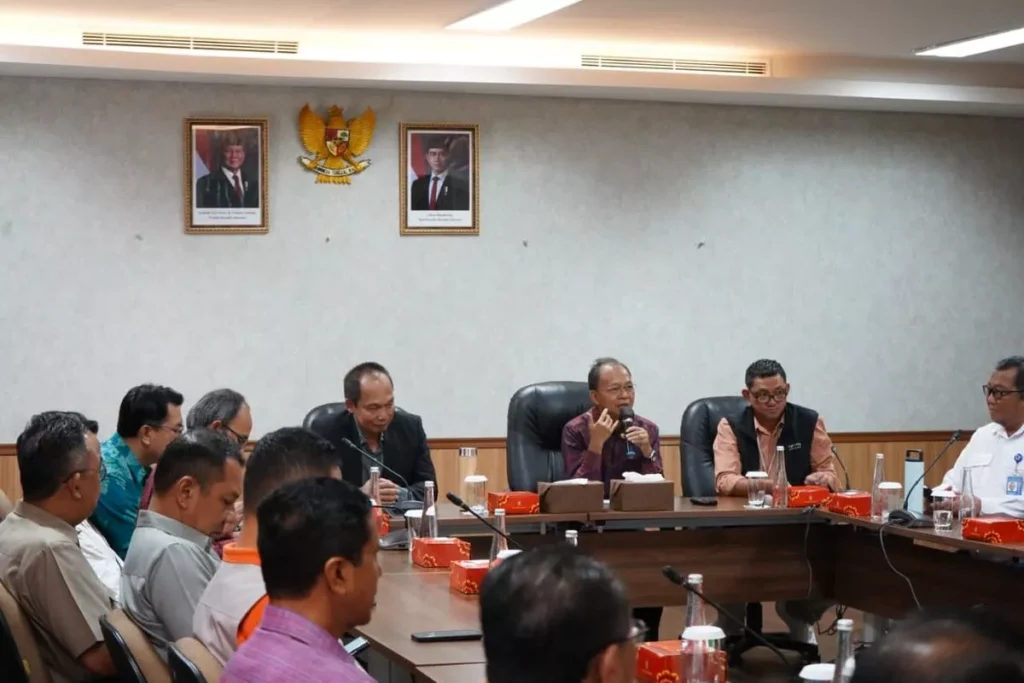
Minister Stresses Bali’s Global Reputation
Minister Hanif framed the issue as a matter of national pride, noting that waste management in Bali “concerns Indonesia’s face in the eyes of the world.” He clarified that closing Suwung does not represent a government failure but is part of a necessary transformation.
“Waste handling must be done very carefully,” the Minister stated. “We only have about two months to improve the facilities at the Bangli landfill so it can be used temporarily while waiting for the WtE project to be completed.”
He acknowledged the social and environmental consequences of using the Bangli site, reinforcing that aggressive upstream reduction is the primary strategy to minimise the waste sent there.
Implications for Bali’s Community
For Bali’s residents, businesses, and international community, this announcement signals a critical juncture in the island’s environmental management. The closure of Suwung, long a symbol of Bali’s waste crisis, presents both a significant challenge and an opportunity for systemic change. Success will depend on rapid, coordinated action from authorities and a collective commitment from all sectors of society to embrace reduction, separation, and responsible disposal practices in the coming months.