































Extreme weather that swept across Bali on Sunday, 14 December 2025, rippled far beyond flooded roads and storm-lashed coastlines, reaching one of the island’s most critical gateways: I Gusti Ngurah Rai International Airport.
According to airport authorities, at least 12 flights were disrupted as heavy rain, strong winds, and unstable atmospheric conditions forced pilots and air traffic controllers to take precautionary measures. The affected flights included international and domestic routes, underscoring how weather volatility during the rainy season can quickly cascade into widespread travel disruption.
Data compiled by local media show that six inbound flights were forced to perform go-arounds, aborting landings at the last moment due to unsafe conditions. Among them were flights operated by TransNusa from Guangzhou to Denpasar, Jetstar from Adelaide and Sydney, Garuda Indonesia from Melbourne, Wings Air from Lombok, and Lion Air from Makassar.
In other cases, aircraft were diverted altogether. One Lion Air flight from Jakarta (CGK) was rerouted to Surabaya, while a Wings Air flight from Lombok was forced to execute a Return to Base, flying back to its departure airport without landing in Bali.
Departures were also affected. Four outbound flights entered holding patterns, delaying takeoff as crews waited for weather conditions to improve. These included China Southern Airlines on the Denpasar–Guangzhou route, TransNusa flights to Perth and Jakarta, and a Cebu Pacific service bound for Manila.
Due to unfavorable weather conditions in the airspace surrounding I Gusti Ngurah Rai Airport, several flights experienced operational delays and diversions,” said Gede Eka Sandi Asmadi, Head of Communication and Legal Affairs at PT Angkasa Pura Indonesia, the airport operator, as quoted by Tribunnews, on Monday, 15 December 2025.
Airport authorities emphasized that safety considerations drove every decision. “We continue to coordinate closely with all stakeholders to ensure flight operations remain safe and orderly,” Eka Sandi said. “Passenger safety and security remain our top priority.”
A Broader Pattern of Disruption
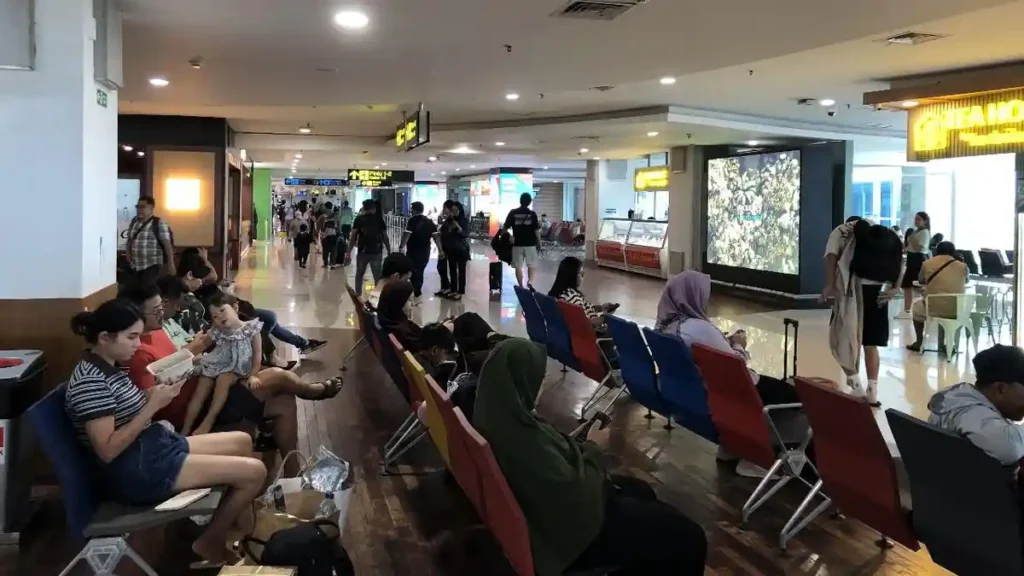
For travelers and long-term expatriates in Bali, the flight disruptions offer a clear signal of how extreme weather increasingly shapes mobility on the island, especially during peak monsoon months. While cancellations and diversions remain relatively limited in number, aviation experts note that even moderate storms can disrupt tightly scheduled international routes when visibility, wind shear, or runway conditions deteriorate.
The disruption also coincides with a broader period of meteorological instability, as authorities monitor tropical systems and heightened rainfall across southern Indonesia. For Bali, where tourism depends heavily on predictable air access, even short-lived weather events can have outsized effects on schedules, connections, and onward travel plans.
Practical Advice for Travelers
Airport officials urged passengers to monitor flight information directly through their airlines and to follow instructions from airport staff. Travelers arriving in or departing from Bali over the coming days are advised to allow extra time, remain flexible with connections, and prepare for last-minute schedule changes, particularly during afternoon and evening hours when storms are more likely.
As Bali navigates an increasingly intense rainy season, the events of 14 December serve as a reminder that weather disruptions are no longer exceptional. For visitors and residents alike, staying informed has become an essential part of traveling to and from the island.
Reported by Ferry Fadly
Written by Hey Bali Newsroom