




























Exclusive investigation uncovers raw footage filmed near temple sites, as insiders confirm Bali’s growing role in “porn tourism” — and a system slow to react.
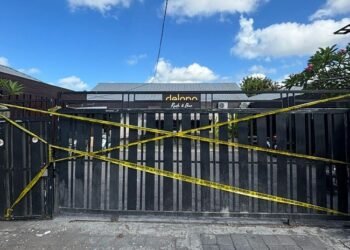
Hey Bali, Indonesia – The arrest of British performer Bonnie Blue and 17 others in a Pererenan villa last week was not an isolated scandal. It was a window into a deeper and increasingly visible problem: Bali is becoming a preferred base for segments of the global adult entertainment industry. Behind the spectacle of a single raid lies a pattern of exploitation that taps into Bali’s tourism infrastructure while creeping dangerously close to the island’s most sacred spaces.
An exclusive Hey Bali investigation, supported by raw footage obtained months before the Pererenan operation, points to a startling reality: Bali is no longer a location for occasional illegal shoots. It has become a functioning node in an international production network.
“The Bonnie Blue case only confirms what we’ve monitored for some time,” says Glostanovlatto, founder of Hey Bali. “These aren’t amateurs. This is an organized underground industry. What alarms us most is evidence suggesting some productions were staged near pura — temple zones meant for spiritual practice, not film sets. It erodes the cultural foundation of the island.”
The footage — discovered on a memory card from a confidential source — shows a professional crew operating inside a luxury villa framed by the classic panoramas that have become synonymous with Bali. The production style and tactics match the pattern observed by local journalists who first raised concerns in August 2025.
A Warning Ignored, and an Industry That Grew Bolder
Those early warnings came from a collaboration between Hey Bali and several local reporters, including journalist Ferry Fadly. Together, they documented recurring red flags: foreign nationals entering as tourists, quickly shifting between villas, transporting compact equipment, and working in tight, coordinated teams.
“We already had leads back then,” Fadly recalls. “The pattern was repetitive. But the response from the relevant authorities was, frankly, cold. It felt like our findings weren’t treated as urgent.”
That lack of urgency, he argues, created the very conditions the industry needed. “Had the initial investigation been taken seriously, a case as blatant as Bonnie Blue’s might not have unfolded.”
The inaction didn’t just delay enforcement — it signaled opportunity.
From “OnlyFans Getaways” to Full-Scale Productions
The rise of professional crews is only one layer of the problem. Bali’s villa market and scenic landscapes have also turned the island into a magnet for individual content creators — couples or solo performers producing adult material for subscription platforms under the guise of a holiday.
This “content tourism” blurs the boundary between leisure and commercial production. It also complicates detection, as the line between a vacation and a filming trip becomes intentionally ambiguous.
What set the Bonnie Blue case apart was its disregard for discretion — a principle the industry typically treats as survival. The group’s public use of social media hashtags such as #BangBusBiru, the notoriety of the main performer, and the scale of their operation made them impossible to miss.
“Most productions are far more careful and don’t flaunt their activities online,” Glostanovlatto notes.
Their mistake wasn’t the activity itself — it was visibility.
A Risk to Bali’s Reputation That Won’t Fade Easily
Observers warn that the long-term damage could extend far beyond legal cases. Bali has spent decades cultivating a global identity as a cultural, spiritual, and family-friendly destination. A shift in reputation toward being a go-to site for adult content production would take years — if not longer — to reverse.
Local residents also face unintended risks. Villa owners, drivers, and service providers may unwittingly facilitate productions, opening themselves to legal consequences despite having no knowledge of the true purpose behind a booking or request.
The industry’s ability to blend in makes this collateral exposure almost unavoidable.
Enforcement at a Crossroads
The critical question now is whether Bali’s enforcement strategy will remain reactive — mobilizing only after a case goes viral — or evolve into something more consistent and proactive.
“We provided evidence and data months ago,” says Glostanovlatto. “The issue now is whether authorities will use the momentum to uncover the broader network, or stop at this single group. If they don’t push further, another team — quieter and more disciplined — will take their place. And Bali will remain a production site.”
The Bonnie Blue case will proceed through the courts, but the larger story goes beyond one defendant. It forces Bali to confront a defining choice: accept a role as an easy target for an industry that sees culture as nothing more than scenery, or take systemic steps to safeguard the island’s spiritual, cultural, and legal boundaries.
The evidence has been on the table for months. The warnings have been repeated. What comes next will determine not just how this case ends, but what Bali becomes in the eyes of the world.